Frequently Asked Questions
Q: What does Leviticus 7:13 mean about bringing leavened bread with a thanksgiving offering?
A: Leviticus 7:13 teaches that when bringing a thanksgiving offering (Korban Todah), one must also bring loaves of chametz (leavened bread) along with it. Unlike most offerings where chametz is forbidden (e.g., Passover), here it is required. Rashi explains that this symbolizes human imperfection—since leavened bread rises, it represents our yetzer hara (evil inclination), reminding us to elevate even our flaws in serving Hashem.
Q: Why is leavened bread (chametz) allowed in a thanksgiving offering when it's usually forbidden?
A: The Talmud (Menachot 77a) notes that chametz is usually prohibited in offerings because it symbolizes arrogance (like dough that 'puffs up'). However, the thanksgiving offering is an exception because it represents gratitude in everyday life—where we must acknowledge Hashem even amid our human imperfections (symbolized by chametz). The Rambam (Hilchot Ma'aseh HaKorbanot 9:6) emphasizes that this teaches us to serve G-d in all aspects of life, not just in moments of purity.
Q: What practical lesson can we learn from the thanksgiving offering in Leviticus 7:13?
A: The Midrash (Vayikra Rabbah 9:7) teaches that the thanksgiving offering—with its leavened bread—reminds us to express gratitude even for ordinary, 'imperfect' moments. Just as chametz is part of the offering, we must thank Hashem for daily blessings, not just miracles. Today, this applies to saying Birkat HaGomel (a blessing of thanksgiving) after surviving danger, or simply cultivating daily gratitude through prayers like Modim in the Amidah.
Q: How many loaves of bread were brought with the thanksgiving offering?
A: The verse mentions 'loaves of leavened bread,' but the exact number is clarified in Leviticus 7:12-13 and the Talmud (Menachot 76b): four types of bread totaling 40 loaves—10 of each kind (matzah, oil-soaked matzah, leavened loaves, and a special leavened cake). Rashi explains this abundance reflects the joy of gratitude; one who is thankful should share generously with others, including the Kohen (priest) and the poor.


Context in Vayikra (Leviticus)
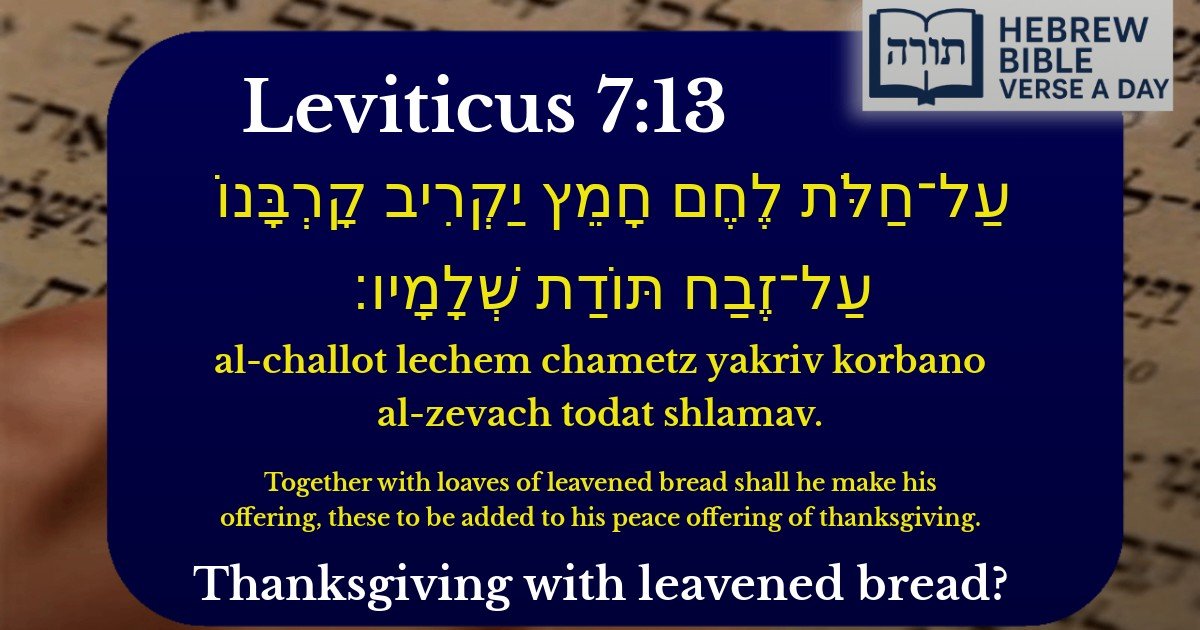
The verse (Vayikra 7:13) discusses the korban todah (thanksgiving offering), a subcategory of the shelamim (peace offering). Unlike most flour offerings, which require unleavened bread (matzah), the korban todah uniquely includes chametz (leavened bread) as part of its accompanying meal offerings.
Rashi's Explanation
Rashi (Vayikra 7:13) notes that the inclusion of chametz in the korban todah is exceptional, as leaven is typically prohibited in sacrificial offerings (e.g., Vayikra 2:11). He explains that this exception highlights the celebratory nature of the thanksgiving offering—leaven symbolizes expansion and joy, fitting for one expressing gratitude for deliverance from danger or distress.
Symbolism of Chametz in the Offering
The Talmud (Menachot 77a) elaborates that the korban todah includes both matzah and chametz to represent contrasting spiritual states:
Rambam's Perspective
In Moreh Nevuchim (3:46), Rambam suggests that the korban todah’s chametz serves a practical purpose: since the offering must be consumed within a day (Vayikra 7:15), leavened bread—which is more filling—ensures the meat is shared generously with others, reinforcing communal celebration.
Midrashic Insight
The Midrash (Vayikra Rabbah 9:7) connects this verse to the future era, teaching that all sacrifices will cease except for the korban todah, as gratitude to Hashem is eternal. The presence of chametz alludes to the enduring joy of recognizing Divine kindness in all circumstances.