

Join Our Newsletter To Be Informed When New Videos Are Posted
Hebrew Text
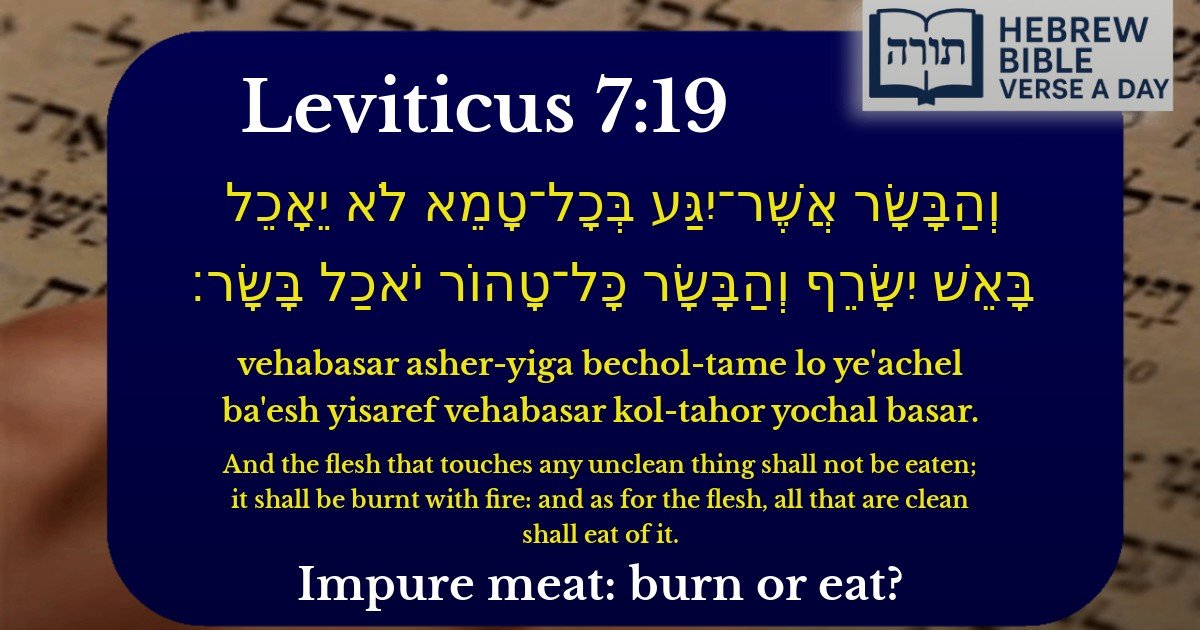
וְהַבָּשָׂר אֲשֶׁר־יִגַּע בְּכָל־טָמֵא לֹא יֵאָכֵל בָּאֵשׁ יִשָּׂרֵף וְהַבָּשָׂר כָּל־טָהוֹר יֹאכַל בָּשָׂר׃
English Translation
And the flesh that touches any unclean thing shall not be eaten; it shall be burnt with fire: and as for the flesh, all that are clean shall eat of it.
Transliteration
Vehabasar asher-yiga bechol-tame lo ye'achel ba'esh yisaref vehabasar kol-tahor yochal basar.
Hebrew Leining Text
וְהַבָּשָׂ֞ר אֲשֶׁר־יִגַּ֤ע בְּכׇל־טָמֵא֙ לֹ֣א יֵֽאָכֵ֔ל בָּאֵ֖שׁ יִשָּׂרֵ֑ף וְהַ֨בָּשָׂ֔ר כׇּל־טָה֖וֹר יֹאכַ֥ל בָּשָֽׂר׃
🎵 Listen to leining
Parasha Commentary
📚 Talmud Citations
This verse is quoted in the Talmud.
📖 Pesachim 76b
The verse is referenced in a discussion about the laws of sacrifices and the requirement to burn meat that has become impure.
📖 Zevachim 97b
The verse is cited in the context of discussing the proper handling and consumption of sacrificial meat, emphasizing the distinction between pure and impure states.
Verse Context
This verse appears in Vayikra (Leviticus) 7:19, within the section discussing the laws of kodshim (sacrificial offerings), specifically the zevach shelamim (peace offering). The Torah establishes strict purity requirements for those who may partake of sacrificial meat, emphasizing the sanctity of the offerings.
Rashi's Explanation
Rashi (Vayikra 7:19) clarifies that the phrase "the flesh that touches any unclean thing" refers to sacrificial meat that has come into contact with a source of tumah (ritual impurity). Such meat becomes disqualified and must be burned. Rashi further notes that the second half of the verse—"all that are clean shall eat of it"—teaches that only those in a state of ritual purity may partake of the sacrificial meat.
Rambam's Legal Perspective
In Mishneh Torah (Hilchos Ma'aseh HaKorbanos 10:8), the Rambam codifies this law, stating that sacrificial meat contaminated by tumah must be burned outside the camp, similar to other notar (leftover sacrificial meat) that becomes invalid. He emphasizes that this applies even if the meat was initially pure but later became impure.
Talmudic Discussion
The Gemara (Pesachim 76b) derives from this verse that sacrificial meat must be protected from tumah at all stages—during slaughter, processing, and consumption. The Talmud also links this law to the broader principle of machshirin (preparing food in a state of purity), underscoring the importance of maintaining holiness when handling sacred items.
Midrashic Insight
The Sifra (a halachic Midrash on Vayikra) elaborates that this verse teaches a dual obligation: not only must impure meat be burned, but those who are ritually pure must actively partake of the offering. This reflects the idea that kodshim are meant to be consumed with proper intent and in a state of spiritual readiness.
Practical Implications