

Join Our Newsletter To Be Informed When New Videos Are Posted
Hebrew Text
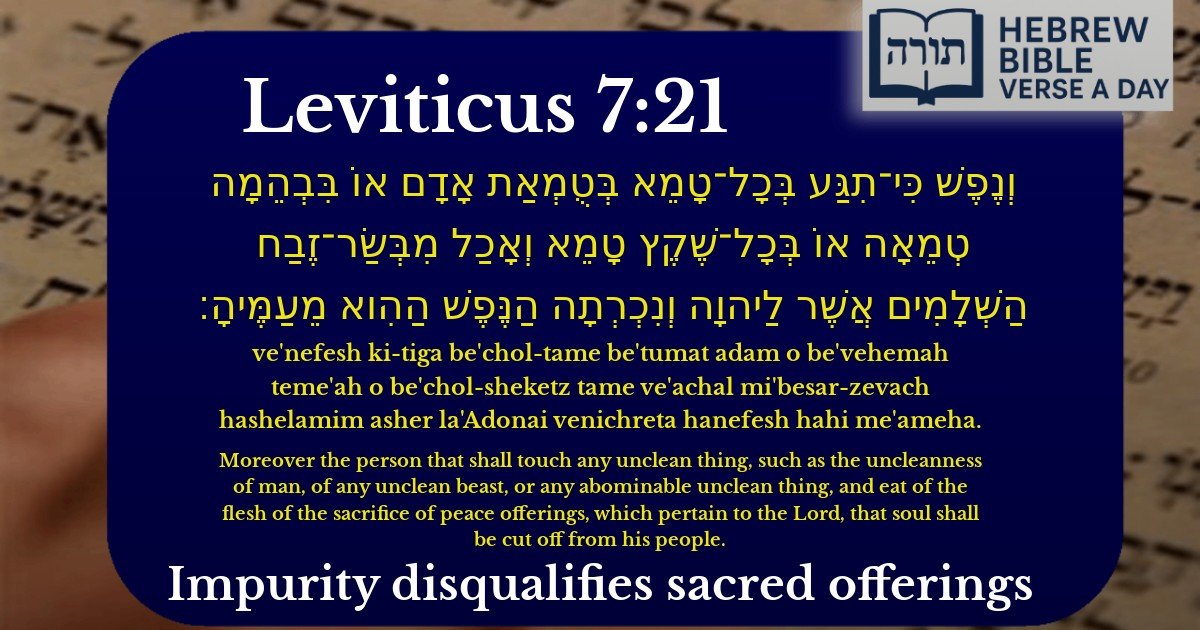
וְנֶפֶשׁ כִּי־תִגַּע בְּכָל־טָמֵא בְּטֻמְאַת אָדָם אוֹ בִּבְהֵמָה טְמֵאָה אוֹ בְּכָל־שֶׁקֶץ טָמֵא וְאָכַל מִבְּשַׂר־זֶבַח הַשְּׁלָמִים אֲשֶׁר לַיהוָה וְנִכְרְתָה הַנֶּפֶשׁ הַהִוא מֵעַמֶּיהָ׃
English Translation
Moreover the person that shall touch any unclean thing, such as the uncleanness of man, of any unclean beast, or any abominable unclean thing, and eat of the flesh of the sacrifice of peace offerings, which pertain to the Lord, that soul shall be cut off from his people.
Transliteration
Ve'nefesh ki-tiga be'chol-tame be'tumat adam o be'vehemah teme'ah o be'chol-sheketz tame ve'achal mi'besar-zevach hashelamim asher la'Adonai venichreta hanefesh hahi me'ameha.
Hebrew Leining Text
וְנֶ֜פֶשׁ כִּֽי־תִגַּ֣ע בְּכׇל־טָמֵ֗א בְּטֻמְאַ֤ת אָדָם֙ א֣וֹ ׀ בִּבְהֵמָ֣ה טְמֵאָ֗ה א֚וֹ בְּכׇל־שֶׁ֣קֶץ טָמֵ֔א וְאָכַ֛ל מִבְּשַׂר־זֶ֥בַח הַשְּׁלָמִ֖ים אֲשֶׁ֣ר לַיהֹוָ֑ה וְנִכְרְתָ֛ה הַנֶּ֥פֶשׁ הַהִ֖וא מֵעַמֶּֽיהָ׃ {פ}
*(אין פרשה בספרי ספרד ואשכנז)
*(אין פרשה בספרי ספרד ואשכנז)
🎵 Listen to leining
Parasha Commentary
📚 Talmud Citations
This verse is quoted in the Talmud.
📖 Zevachim 101b
The verse is discussed in the context of the laws regarding the consumption of sacrifices while in a state of impurity, particularly focusing on the consequences of eating peace offerings in an unclean state.
📖 Keritot 2a
The verse is referenced in a discussion about the penalties for various transgressions, including the penalty of being 'cut off' (karet) for eating sacrifices while impure.
Verse Context and Overview
This verse appears in Vayikra (Leviticus) 7:21, within the section detailing the laws of korban shelamim (peace offerings). The Torah warns of severe consequences for consuming sacrificial meat while in a state of ritual impurity (tumah). The penalty is karet (being "cut off" from one's people), a divine punishment indicating a severe spiritual breach.
Key Terms and Their Meanings
Halachic Implications
The verse establishes a prohibition against eating sacrificial meat while in a state of impurity. The Sefer Hachinuch (Mitzvah 143) explains that this law emphasizes the sanctity of sacrifices—they must be consumed with proper reverence and purity. The karet penalty underscores the severity of treating sacred offerings with contempt.
Spiritual Lessons from the Midrash
The Sifra (a halachic Midrash on Vayikra) links this verse to the broader concept that impurity distances a person from holiness. The Or HaChaim (Vayikra 7:21) adds that consuming sacred food while impure reflects a lack of appreciation for divine service, warranting karet as a corrective measure.
Practical Ramifications