

Join Our Newsletter To Be Informed When New Videos Are Posted
Hebrew Text
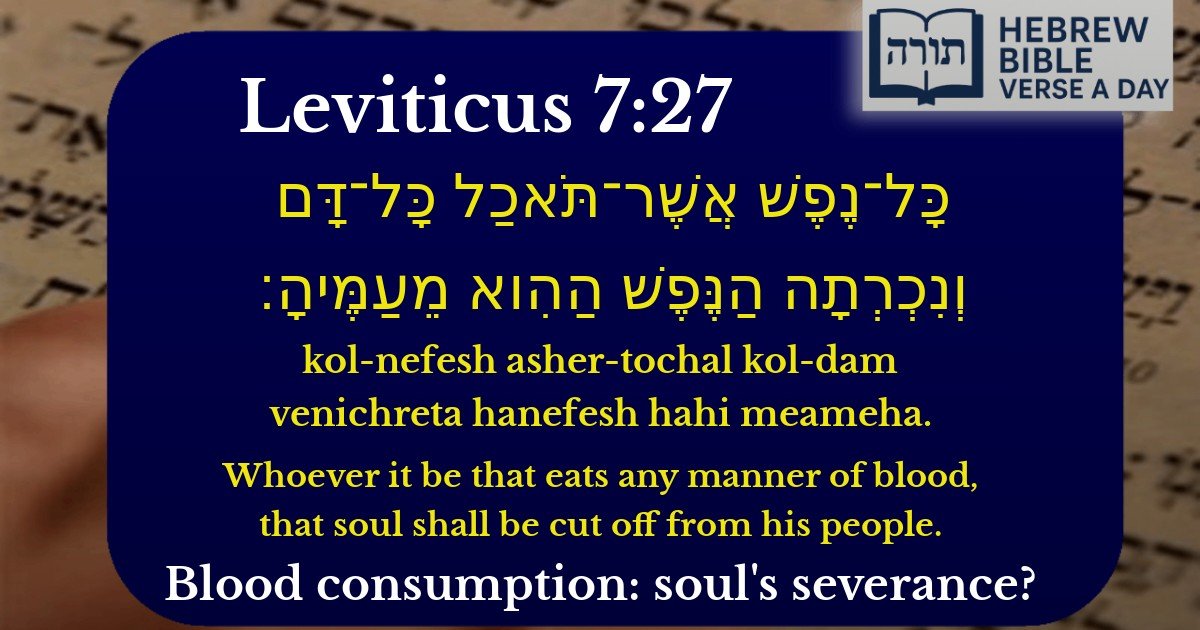
כָּל־נֶפֶשׁ אֲשֶׁר־תֹּאכַל כָּל־דָּם וְנִכְרְתָה הַנֶּפֶשׁ הַהִוא מֵעַמֶּיהָ׃
English Translation
Whoever it be that eats any manner of blood, that soul shall be cut off from his people.
Transliteration
Kol-nefesh asher-tochal kol-dam venichreta hanefesh hahi meameha.
Hebrew Leining Text
כׇּל־נֶ֖פֶשׁ אֲשֶׁר־תֹּאכַ֣ל כׇּל־דָּ֑ם וְנִכְרְתָ֛ה הַנֶּ֥פֶשׁ הַהִ֖וא מֵֽעַמֶּֽיהָ׃ {פ}
*(אין פרשה בספרי תימן)
*(אין פרשה בספרי תימן)
🎵 Listen to leining
Parasha Commentary
📚 Talmud Citations
This verse is quoted in the Talmud.
📖 Keritot 20b
The verse is cited in a discussion about the prohibition of consuming blood and the consequences of violating this commandment.
📖 Sanhedrin 56b
The verse is referenced in the context of the Noahide laws, which include prohibitions against consuming blood.
📖 Chullin 117a
The verse is mentioned in a discussion about the proper handling and prohibition of consuming blood from slaughtered animals.
Prohibition of Consuming Blood
The verse (Vayikra 17:14) states: "כָּל־נֶפֶשׁ אֲשֶׁר־תֹּאכַל כָּל־דָּם וְנִכְרְתָה הַנֶּפֶשׁ הַהִוא מֵעַמֶּיהָ" ("Whoever it be that eats any manner of blood, that soul shall be cut off from his people"). This prohibition is one of the most severe in the Torah, carrying the penalty of karet (excision).
Explanation of the Severity
Rashi (on Vayikra 17:11) explains that blood represents the life force (nefesh) of a creature, as stated in Devarim 12:23: "כִּי הַדָּם הוּא הַנָּפֶשׁ" ("for the blood is the life"). Consuming blood is thus akin to consuming the essence of life, which is reserved for Hashem alone in the context of sacrificial service. The Rambam (Hilchot Ma'achalot Asurot 6:1) further elaborates that this prohibition applies to all blood, whether from kosher or non-kosher animals, birds, or wild beasts.
Spiritual Implications of Karet
The punishment of karet signifies a spiritual severance from the Jewish people. The Talmud (Keritot 2a) discusses that this penalty applies only when the transgression is committed intentionally (be'mezid). The Midrash (Torat Kohanim 17:14) emphasizes that this mitzvah is so fundamental that its violation disrupts the individual's connection to the divine covenant.
Exceptions and Practical Halacha
Moral Lesson
The Sefer HaChinuch (Mitzvah 148) teaches that this prohibition instills reverence for life. By abstaining from blood, we acknowledge that life is sacred and belongs solely to Hashem. This mitzvah thus cultivates ethical sensitivity and respect for all living beings.