Frequently Asked Questions
Q: What does it mean when the verse says 'And the Lord spoke to Moshe, saying'?
A: This phrase appears frequently in the Torah to introduce divine commandments. According to Rashi, it emphasizes that Moshe received these words directly from Hashem, ensuring their authenticity and authority. The repetition of 'saying' (לֵּאמֹר) teaches that Moshe was to relay these words to the Jewish people.
Q: Why does the Torah keep repeating 'And the Lord spoke to Moshe'?
A: The Ramban explains that each repetition shows a new communication from Hashem to Moshe. This teaches us that every mitzvah is equally important and comes directly from Hashem. The Talmud (Yoma 4b) also notes that this phrasing indicates pauses between subjects, allowing Moshe time to understand each teaching properly.
Q: What can we learn from how Hashem spoke to Moshe?
A: The Midrash (Sifra) teaches that Hashem always spoke to Moshe clearly and with respect, serving as a model for how we should communicate with others. Additionally, the consistent phrasing reminds us that Torah teachings are not Moshe's own ideas, but divine instructions we must follow.
Q: Why is this introduction important before listing commandments?
A: Rashi explains that this introduction establishes the divine origin of the commandments that follow. The Rambam (Yesodei HaTorah 7:6) writes that this phrasing proves Moshe's prophecy was unique - Hashem spoke to him directly, unlike other prophets who received messages through visions or dreams.
Q: How does this verse apply to us today?
A: This verse reminds us that the Torah's commandments come directly from Hashem. The Sforno notes that just as Moshe received these words to teach Israel, we have a responsibility to study and observe them carefully. It also teaches the importance of clear transmission of Torah from teachers to students throughout the generations.

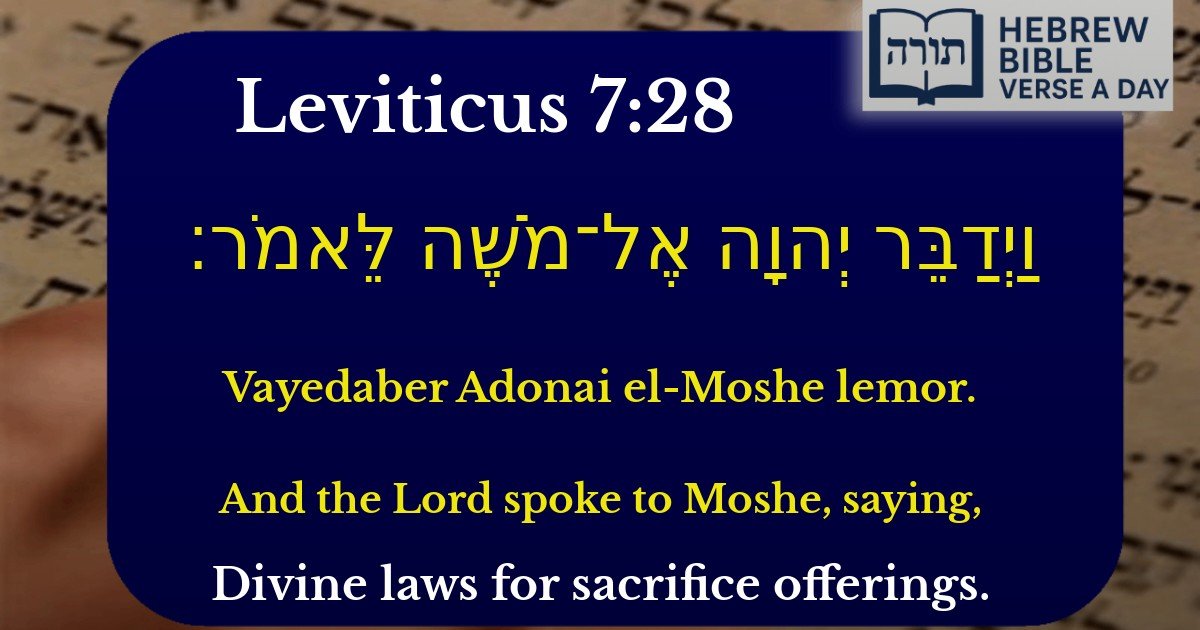

The Divine Communication to Moshe
The phrase "וַיְדַבֵּר יְהוָה אֶל־מֹשֶׁה לֵּאמֹר" ("And the Lord spoke to Moshe, saying") appears frequently in the Torah, marking the transmission of divine commandments and teachings. Rashi (on Shemot 6:2) explains that this phrasing emphasizes the direct and clear communication between Hashem and Moshe, distinguishing Moshe's prophetic level from that of other prophets. Unlike other nevi'im who received messages through visions or allegories, Moshe heard Hashem's words "פה אל פה" ("mouth to mouth")—with absolute clarity (Bamidbar 12:8).
The Significance of "לֵּאמֹר" ("Saying")
The word "לֵּאמֹר" is interpreted in multiple ways by our sages:
The Unique Relationship Between Hashem and Moshe
The Talmud (Yevamot 49b) elaborates that Moshe's prophecy was unparalleled—while other prophets experienced trembling and confusion, Moshe spoke with Hashem "כאשר ידבר איש אל רעהו" ("as a man speaks to his friend"). The Rambam (Hilchos Yesodei HaTorah 7:6) codifies this distinction, stating that Moshe alone received prophecy while fully awake and cognizant, without the need for parables or symbolic visions.
Implications for Torah Transmission
This verse serves as a foundational model for how Torah was given: with absolute clarity and authority. The Sforno (Shemot 19:3) explains that the repetition of this phrasing throughout the Torah reinforces the idea that every mitzvah originates from divine speech, not human interpretation. Thus, the authenticity of halacha is rooted in this unbroken chain of transmission from Hashem to Moshe to Klal Yisrael.