

Join Our Newsletter To Be Informed When New Videos Are Posted
Hebrew Text
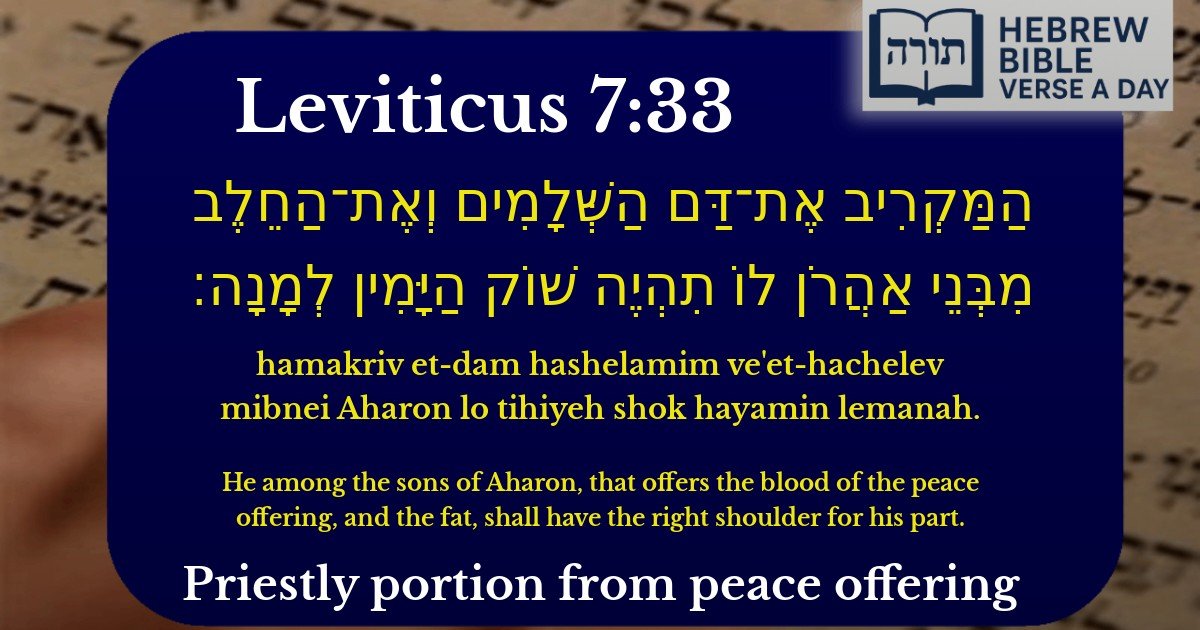
הַמַּקְרִיב אֶת־דַּם הַשְּׁלָמִים וְאֶת־הַחֵלֶב מִבְּנֵי אַהֲרֹן לוֹ תִהְיֶה שׁוֹק הַיָּמִין לְמָנָה׃
English Translation
He among the sons of Aharon, that offers the blood of the peace offering, and the fat, shall have the right shoulder for his part.
Transliteration
Hamakriv et-dam hashelamim ve'et-hachelev mibnei Aharon lo tihiyeh shok hayamin lemanah.
Hebrew Leining Text
הַמַּקְרִ֞יב אֶת־דַּ֧ם הַשְּׁלָמִ֛ים וְאֶת־הַחֵ֖לֶב מִבְּנֵ֣י אַהֲרֹ֑ן ל֧וֹ תִהְיֶ֛ה שׁ֥וֹק הַיָּמִ֖ין לְמָנָֽה׃
🎵 Listen to leining
Parasha Commentary
📚 Talmud Citations
This verse is quoted in the Talmud.
📖 Zevachim 96b
The verse is discussed in the context of the distribution of sacrificial portions to the priests, specifically regarding the right shoulder as a portion for the officiating priest.
📖 Chullin 132b
The verse is referenced in a discussion about the laws pertaining to the priestly portions of sacrifices, emphasizing the right shoulder's allocation to the sons of Aharon.
Verse Context (Vayikra 7:33)
This verse appears in Parshat Tzav (Vayikra 7:33) and discusses the distribution of portions from the zevach shelamim (peace offering). The Torah specifies that the shok hayamin (right thigh) is given as a terumah (portion) to the kohen (priest) who performs the sacrificial service.
Rashi's Explanation
Rashi (Vayikra 7:33) clarifies that the shok hayamin is designated specifically for the kohen who sprinkles the blood of the shelamim and burns its fat portions on the altar. This is a reward for his service, as the verse states: "lo tihyeh shok hayamin lemanah"—"the right thigh shall be his portion."
Rambam's Halachic Perspective
The Rambam (Hilchot Ma'aseh HaKorbanot 9:13) rules that the shok hayamin is one of the matnot kehunah (priestly gifts) given to the kohanim. Unlike other portions that may be shared among all kohanim, this part is reserved exclusively for the officiating kohen who performed the sacrificial rites.
Midrashic Insight
The Torat Kohanim (Sifra, Tzav 7:33) connects this verse to the broader theme of honoring those who serve in the Mishkan or Beit HaMikdash. The right thigh, a choice portion, symbolizes strength and honor (as the right side is often associated with greater significance in Jewish tradition).
Symbolism of the Right Thigh
Practical Halachic Implications
The Shulchan Aruch (Yoreh De'ah 61:1) codifies that this law applies even today in theoretical discussions of korbanot, though it is not practiced in the absence of the Beit HaMikdash. The kohanim retain their sanctity, and the laws of priestly gifts remain part of Torah study in anticipation of the future restoration of the Temple service.