Frequently Asked Questions
Q: What does Leviticus 7:35 mean?
A: Leviticus 7:35 describes the special portion of the sacrifices (korbanot) that was designated for Aharon (Aaron) and his sons, the Kohanim (priests), on the day they were consecrated to serve in the Mishkan (Tabernacle). This portion was their share from the fire-offerings (ishim) brought to Hashem. Rashi explains that this verse emphasizes the unique status of the Kohanim and their right to certain parts of the sacrifices as part of their service.
Q: Why is the anointing of Aharon and his sons important?
A: The anointing of Aharon and his sons was a crucial step in establishing the Kehuna (priesthood) in Judaism. According to the Rambam (Hilchot Klei HaMikdash 4:12), the anointing oil (shemen hamishcha) symbolized their sanctification for divine service. This moment marked the beginning of their sacred duties, ensuring proper worship in the Mishkan and later in the Beit HaMikdash (Temple).
Q: What can we learn from Leviticus 7:35 today?
A: Although we no longer have the Mishkan or Beit HaMikdash, this verse teaches us about the importance of designated roles in serving Hashem. Just as the Kohanim had specific responsibilities, we each have unique ways to contribute to holiness—whether through prayer, Torah study, or acts of kindness. The Midrash (Vayikra Rabbah 7:3) also highlights the value of humility, as Aharon accepted his role without seeking personal honor.
Q: What were the 'offerings of the Lord made by fire' mentioned in this verse?
A: The 'offerings made by fire' (ishim) refer to sacrifices that were entirely or partially burned on the altar, such as the olah (burnt offering) or parts of the shelamim (peace offering). The Kohanim received specific portions from these korbanot, as detailed in Leviticus 6-7. Rashi notes that this verse specifically refers to the milu'im (inauguration) offerings brought during the consecration of the Mishkan.
Q: How does this verse connect to the broader role of the Kohanim?
A: This verse underscores the Kohanim's divinely appointed role as intermediaries between Bnei Yisrael (the Jewish people) and Hashem. The Talmud (Zevachim 17b) explains that their portion from the korbanot was both a physical sustenance and a spiritual reminder of their duty to elevate the nation’s service. Even today, Kohanim retain certain honors, such as the first aliyah to the Torah, reflecting their ancestral sanctity.

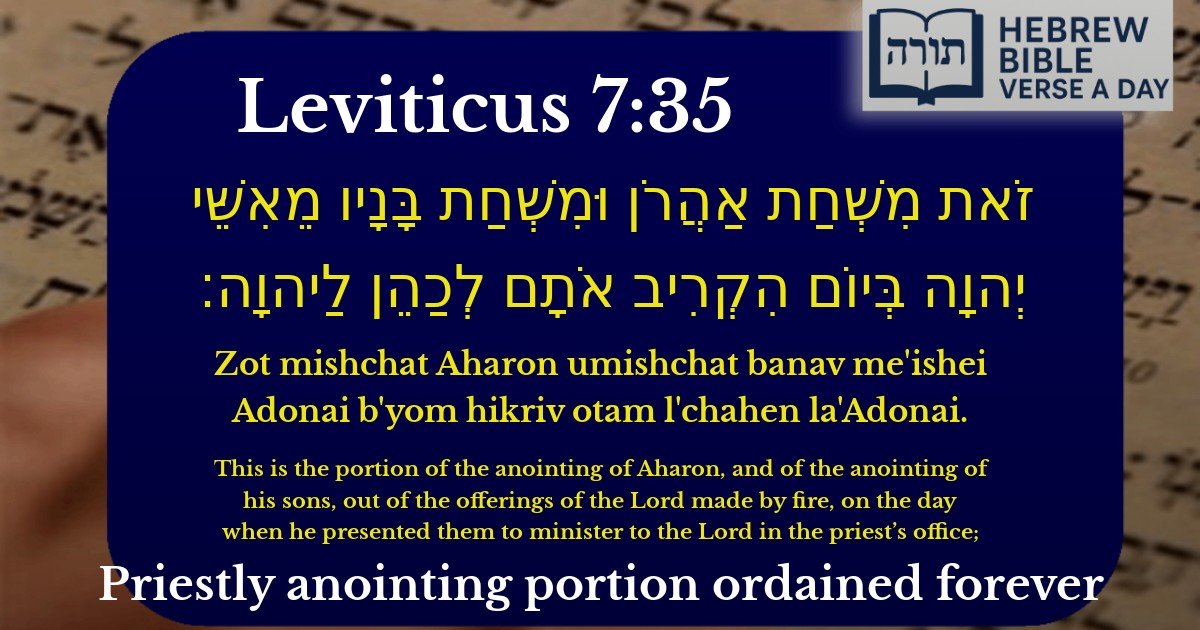

The Anointing of Aharon and His Sons
The verse (Vayikra 7:35) describes the special portion designated for the anointing of Aharon and his sons from the fire-offerings brought to Hashem on the day they were inaugurated as Kohanim. Rashi explains that this refers to the chazeh v'shok (breast and thigh) of the ram of inauguration, which were waved before Hashem and then given to Aharon and his sons as their portion.
The Significance of the Anointing
The Rambam (Hilchos Klei HaMikdash 1:7) teaches that the anointing oil was used to sanctify Aharon and his sons, setting them apart for the priestly service. The Midrash (Toras Kohanim) notes that this anointing established an eternal covenant, as the verse states "an everlasting priesthood throughout their generations" (Shemos 40:15).
The Day of Inauguration
The Talmud (Zevachim 101b) discusses how this inaugural day was unique - the only time when Moshe served as a Kohen before Aharon and his sons took over the priestly duties. The Sforno adds that the phrase "on the day when he presented them" emphasizes that their sanctification was complete only after performing all the inauguration rituals.
Portion from Fire-Offerings
The Kli Yakar explains that taking their portion specifically from the fire-offerings symbolizes how the Kohanim must be completely devoted to Hashem like the fire on the altar - constantly ascending heavenward. This reflects their role as intermediaries between Bnei Yisrael and Hashem.