

Join Our Newsletter To Be Informed When New Videos Are Posted
Hebrew Text
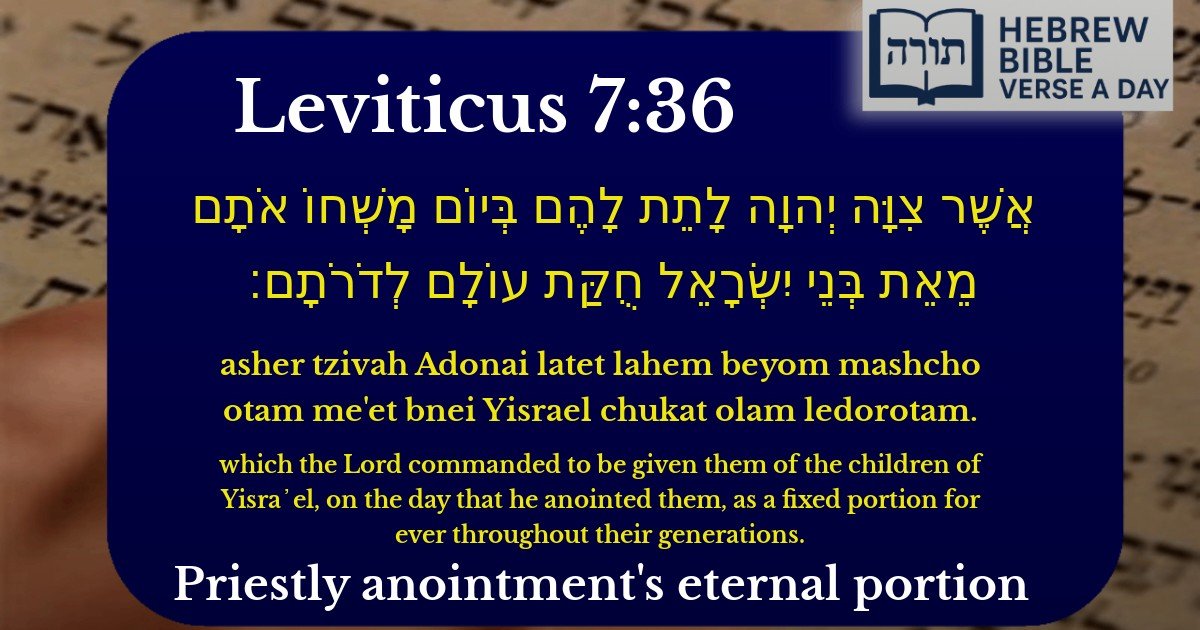
אֲשֶׁר צִוָּה יְהוָה לָתֵת לָהֶם בְּיוֹם מָשְׁחוֹ אֹתָם מֵאֵת בְּנֵי יִשְׂרָאֵל חֻקַּת עוֹלָם לְדֹרֹתָם׃
English Translation
which the Lord commanded to be given them of the children of Yisra᾽el, on the day that he anointed them, as a fixed portion for ever throughout their generations.
Transliteration
Asher tzivah Adonai latet lahem beyom mashcho otam me'et bnei Yisrael chukat olam ledorotam.
Hebrew Leining Text
אֲשֶׁר֩ צִוָּ֨ה יְהֹוָ֜ה לָתֵ֣ת לָהֶ֗ם בְּיוֹם֙ מׇשְׁח֣וֹ אֹתָ֔ם מֵאֵ֖ת בְּנֵ֣י יִשְׂרָאֵ֑ל חֻקַּ֥ת עוֹלָ֖ם לְדֹרֹתָֽם׃
🎵 Listen to leining
Parasha Commentary
📚 Talmud Citations
This verse is not quoted in the Talmud.
Context of the Verse
This verse (Vayikra 7:36) discusses the portions given to the Kohanim (priests) from the offerings brought by Bnei Yisrael. It emphasizes that these gifts are a chukat olam (eternal statute) commanded by Hashem on the day the Kohanim were anointed for service in the Mishkan.
Rashi's Explanation
Rashi explains that the phrase "ביום משחו אותם" ("on the day He anointed them") refers to the eighth day of the inauguration of the Mishkan (as described in Vayikra 9). This was when Aharon and his sons were formally consecrated as Kohanim. The portions given to them—such as the breast and thigh of certain offerings—were established as a permanent right for all future generations of Kohanim.
Rambam's Perspective
In Hilchot Bikkurim (1:2), the Rambam underscores that these gifts to the Kohanim are not optional but a binding obligation (chovah). He links this to the broader principle that supporting those who serve in the Beit HaMikdash ensures the continuity of Divine service, as the verse states: "חוקת עולם לדרתם" ("an eternal statute for their generations").
Midrashic Insight
The Midrash (Sifra) connects this verse to the broader theme of terumah (sacred contributions). It teaches that just as the Kohanim were given portions in the desert, so too must they receive their due in every generation. This reinforces the idea that their role as spiritual leaders is inseparable from their material sustenance, as derived from the people’s offerings.
Halachic Implications
Symbolic Meaning
The Kli Yakar suggests that the phrase "ביום משחו אותם" hints at the idea that the Kohanim’s sanctity is perpetual, not limited to their anointment day. Their role as intermediaries between Bnei Yisrael and Hashem requires continuous support, symbolized by the chukat olam.