
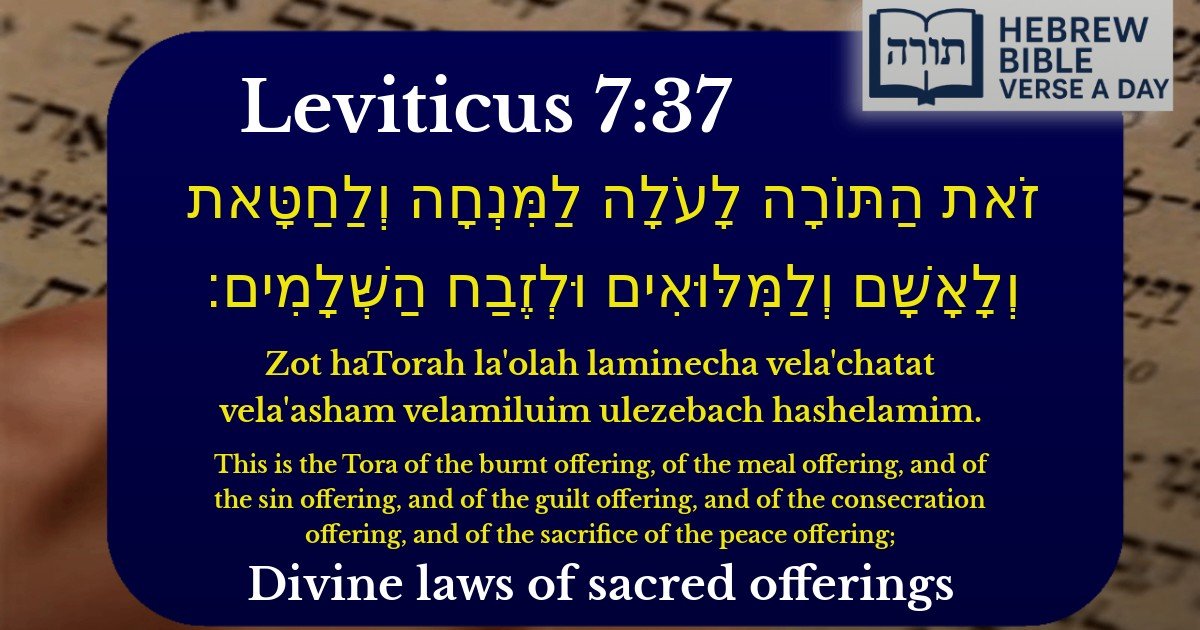

Leviticus 7:37 - Divine laws of sacred offerings

Leviticus 7:37 - ויקרא 7:37

Hebrew Text

זֹאת הַתּוֹרָה לָעֹלָה לַמִּנְחָה וְלַחַטָּאת וְלָאָשָׁם וְלַמִּלּוּאִים וּלְזֶבַח הַשְּׁלָמִים׃

English Translation

This is the Tora of the burnt offering, of the meal offering, and of the sin offering, and of the guilt offering, and of the consecration offering, and of the sacrifice of the peace offering;

Transliteration

Zot haTorah la'olah laminecha vela'chatat vela'asham velamiluim ulezebach hashelamim.

Hebrew Leining Text

זֹ֣את הַתּוֹרָ֗ה לָֽעֹלָה֙ לַמִּנְחָ֔ה וְלַֽחַטָּ֖את וְלָאָשָׁ֑ם וְלַ֨מִּלּוּאִ֔ים וּלְזֶ֖בַח הַשְּׁלָמִֽים׃

🎵 Listen to leining

Parasha Commentary

Overview of the Verse

The verse (Vayikra 7:37) summarizes the various categories of korbanot (sacrifices) detailed in the preceding chapters of Sefer Vayikra. It serves as a concluding statement to the laws of sacrifices, emphasizing that each type has its own unique halachic requirements and spiritual significance.

Explanation of the Korbanot Listed

  • Olah (Burnt Offering): Rashi explains that the Olah is entirely consumed on the altar, symbolizing complete devotion to Hashem. The Rambam (Moreh Nevuchim 3:46) adds that it represents the negation of idolatrous practices and the elevation of one's thoughts to divine service.
  • Mincha (Meal Offering): The Mincha, made from flour and oil, is often brought by those who cannot afford animal sacrifices. The Talmud (Menachot 104b) teaches that it demonstrates humility, as it is the simplest offering. Rashi notes that it is called "Mincha" (a gift) because it reflects a voluntary act of giving.
  • Chatat (Sin Offering): This korban atones for unintentional sins. The Rambam (Hilchot Shegagot 1:1) explains that it serves as a means of repentance and spiritual purification, particularly for violations of negative commandments.
  • Asham (Guilt Offering): Brought for specific transgressions, such as misuse of sanctified property (Me'ilah) or doubtful sins (Asham Talui). The Talmud (Keritot 25a) discusses its unique role in atoning for deliberate but later regretted sins.
  • Miluim (Consecration Offering): Associated with the inauguration of the Mishkan and the Kohanim. Rashi (on Shemot 29:22) explains that it symbolizes the dedication of Aharon and his sons to their priestly service.
  • Zevach Shelamim (Peace Offering): Represents harmony between the individual, Hashem, and the community, as parts are offered on the altar, given to the Kohanim, and eaten by the owner. The Midrash (Vayikra Rabbah 9:7) teaches that it brings "shalom" (peace) to the world.

Spiritual Significance

The Sforno emphasizes that each korban reflects a different aspect of avodat Hashem (divine service). The Olah and Mincha represent devotion, the Chatat and Asham signify repentance, and the Shelamim embodies gratitude and joy in serving Hashem. Together, they encompass the full spectrum of a Jew's relationship with the Divine.

Halachic Context

The Rambam (Hilchot Maaseh HaKorbanot) organizes these laws systematically, noting that each korban has precise requirements for its offering, slaughter, and consumption. The verse serves as a reminder that Torah law governs every detail of sacrificial worship, ensuring it is performed with kedusha (holiness) and tahara (purity).

📚 Talmud Citations

This verse is quoted in the Talmud.

📖 Menachot 73b
The verse is cited in the discussion about the laws of meal offerings and their preparation, emphasizing the importance of following the Torah's instructions for sacrifices.
📖 Zevachim 5a
The verse is referenced in the context of discussing the various types of sacrifices and their respective laws, highlighting the comprehensive nature of the Torah's sacrificial system.

Frequently Asked Questions

Q: What does Leviticus 7:37 mean?
A: Leviticus 7:37 summarizes the laws of various korbanot (sacrifices) in the Torah, including the burnt offering (olah), meal offering (mincha), sin offering (chatat), guilt offering (asham), consecration offering (miluim), and peace offering (shelamim). It serves as a concluding statement for the previous sections detailing these sacrifices.
Q: Why is this verse important in Judaism?
A: This verse is important because it encapsulates the different types of korbanot (sacrifices) that were central to the service in the Mishkan (Tabernacle) and later the Beit HaMikdash (Temple). Even today, we study these laws to understand the depth of our relationship with Hashem and to prepare for the eventual rebuilding of the Temple.
Q: What can we learn from Leviticus 7:37 today?
A: Although we currently do not bring sacrifices, the Rambam (Hilchot Ma'aseh HaKorbanot) teaches that studying the laws of korbanot has spiritual value. This verse reminds us of the importance of atonement, gratitude (seen in peace offerings), and dedication to Hashem—principles we can apply through prayer, tzedakah, and mitzvot today.
Q: What is the 'sacrifice of the peace offering' mentioned in this verse?
A: The peace offering (zevach shelamim) was a voluntary sacrifice expressing gratitude or fulfillment of a vow (Vayikra 7:11-16). Unlike other korbanot, parts were eaten by the offerer and the kohanim (priests), symbolizing peace and fellowship with Hashem. Rashi notes it was called 'shelamim' because it brings shalom (peace) to the world.
Q: How does this verse connect to the broader context of Leviticus?
A: This verse concludes a major section (Vayikra 6-7) detailing the laws of sacrifices. The Talmud (Menachot 110a) explains that these korbanot represent different aspects of serving Hashem—atonement, gratitude, and commitment. The verse serves as a summary before transitioning to other topics, emphasizing the Torah's structured approach to divine service.