
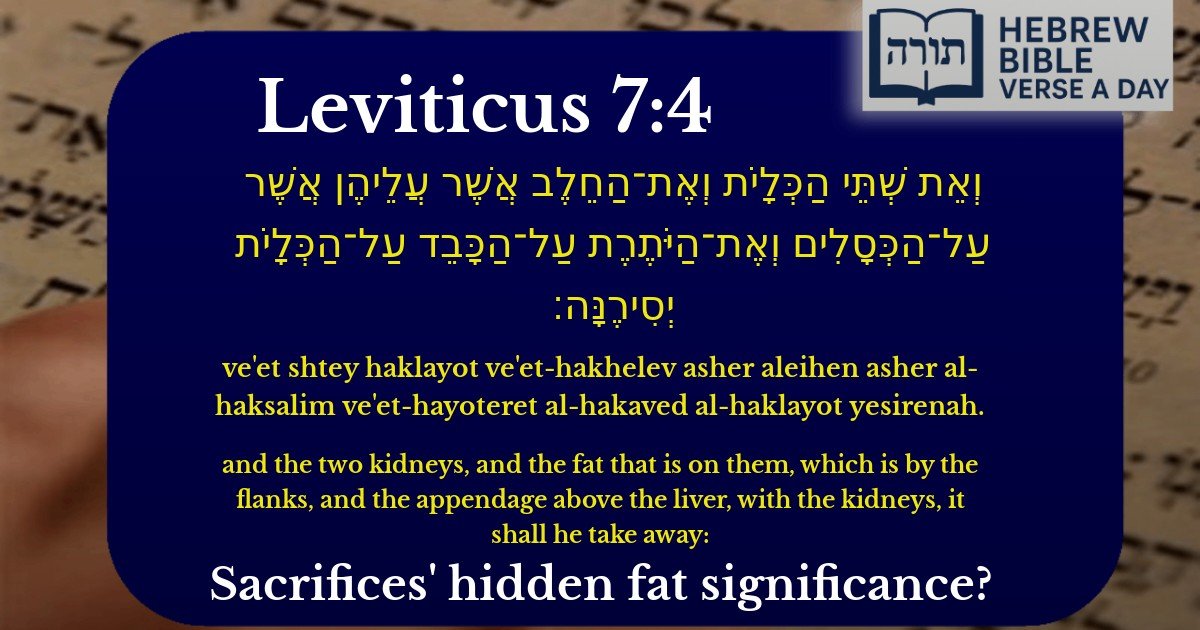

Leviticus 7:4 - Sacrifices' hidden fat significance?

Leviticus 7:4 - ויקרא 7:4

Hebrew Text

וְאֵת שְׁתֵּי הַכְּלָיֹת וְאֶת־הַחֵלֶב אֲשֶׁר עֲלֵיהֶן אֲשֶׁר עַל־הַכְּסָלִים וְאֶת־הַיֹּתֶרֶת עַל־הַכָּבֵד עַל־הַכְּלָיֹת יְסִירֶנָּה׃

English Translation

and the two kidneys, and the fat that is on them, which is by the flanks, and the appendage above the liver, with the kidneys, it shall he take away:

Transliteration

Ve'et shtey haklayot ve'et-hakhelev asher aleihen asher al-haksalim ve'et-hayoteret al-hakaved al-haklayot yesirenah.

Hebrew Leining Text

וְאֵת֙ שְׁתֵּ֣י הַכְּלָיֹ֔ת וְאֶת־הַחֵ֙לֶב֙ אֲשֶׁ֣ר עֲלֵיהֶ֔ן אֲשֶׁ֖ר עַל־הַכְּסָלִ֑ים וְאֶת־הַיֹּתֶ֙רֶת֙ עַל־הַכָּבֵ֔ד עַל־הַכְּלָיֹ֖ת יְסִירֶֽנָּה׃

🎵 Listen to leining

Parasha Commentary

Explanation of the Verse

The verse (Vayikra 7:4) describes the parts of an animal sacrifice that are to be removed and offered on the altar. These include the kidneys, the fat surrounding them, the fat near the flanks, and the yoteret (appendage) of the liver. This process is part of the avodah (service) performed by the kohanim (priests) in the Beit HaMikdash (Holy Temple).

Traditional Jewish Sources

  • Rashi explains that the kidneys symbolize human thought and decision-making, as the kidneys are metaphorically referred to in Tanach as advisors (e.g., Tehillim 16:7). By offering them, we dedicate our intellect to Hashem.
  • Rambam (Hilchot Ma'aseh HaKorbanot 5:13) details the halachic procedure for removing these parts, emphasizing the precision required in sacrificial service.
  • Talmud (Chullin 49a) discusses the exact location of the yoteret on the liver, showing the importance of meticulousness in fulfilling mitzvot.
  • Midrash Vayikra Rabbah (3:4) connects the removal of fat to the idea of removing arrogance (shuman, related to helev, fat), teaching that one must rid themselves of pride in divine service.

Symbolic Meaning

The removal of these specific organs carries deeper spiritual lessons:

  • The kidneys represent our inner thoughts and moral choices - we must refine our intentions in serving Hashem.
  • The fat symbolizes indulgence and physicality - we elevate our material existence by dedicating even our physical pleasures to holiness.
  • The liver's appendage (traditionally associated with anger in Jewish thought) teaches us to remove negative emotions from our worship.

Practical Halachic Implications

This verse forms the basis for several halachot:

  • The prohibition against eating certain fats (chelev) even from kosher animals (Chullin 93a)
  • The requirement for proper inspection of these organs to determine an animal's kosher status (Rambam, Hilchot Shechitah 8:12)
  • The precise method of offering these parts during Temple times (Zevachim 6:4)

📚 Talmud Citations

This verse is quoted in the Talmud.

📖 Chullin 49b
The verse is discussed in the context of the laws regarding the sacrificial offerings, specifically the parts of the animal that are to be removed and offered on the altar.
📖 Zevachim 35b
This verse is referenced in a discussion about the proper procedures for handling the sacrificial parts of an offering, emphasizing the removal of the kidneys and the fat surrounding them.

Frequently Asked Questions

Q: What does Leviticus 7:4 mean?
A: Leviticus 7:4 describes the parts of an animal sacrifice that were to be removed and offered on the altar—specifically the kidneys, the fat surrounding them and the flanks, and the lobe of the liver. According to Rashi, these parts were considered choice portions and were designated for Hashem as part of the sacrificial service in the Mishkan (Tabernacle) and later the Beit HaMikdash (Temple).
Q: Why is the fat of the kidneys and liver mentioned specifically in sacrifices?
A: The Torah specifies these fats because they were considered the choicest parts of the animal, symbolizing the best being given to Hashem. The Rambam (Hilchot Ma'aseh HaKorbanot) explains that these fats were not to be eaten but were entirely burned on the altar, emphasizing the sanctity of the offering and the idea of giving the finest to divine service.
Q: What can we learn from Leviticus 7:4 today?
A: Although we no longer bring sacrifices, the principle of giving our best to Hashem remains relevant. The verse teaches us the importance of dedicating our finest efforts—whether in prayer, charity, or mitzvot—with sincerity and excellence, just as the choicest fats were offered in the Temple.
Q: Why were the kidneys and liver significant in sacrifices?
A: The kidneys and liver were seen as vital organs in ancient times, representing thought (kidneys) and emotion (liver), as referenced in Talmudic and Midrashic literature (e.g., Berachot 61a). By offering them, the worshipper symbolically dedicated their inner faculties—intellect and passion—to divine service.
Q: Does this verse have any practical application today?
A: While the sacrificial system is not practiced today, the underlying lesson is about mindfulness in serving Hashem. Just as the priests carefully separated these parts, we too should approach mitzvot with attention to detail and reverence, ensuring that our actions align with halachah (Jewish law) and spiritual intentionality.