

Join Our Newsletter To Be Informed When New Videos Are Posted
Hebrew Text
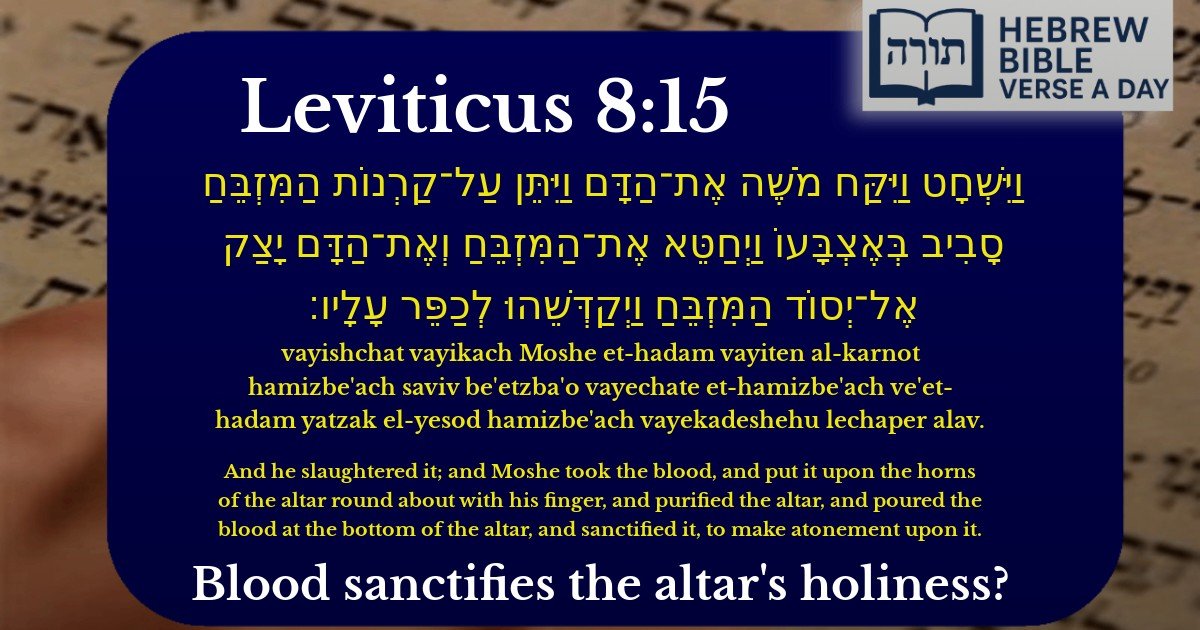
וַיִּשְׁחָט וַיִּקַּח מֹשֶׁה אֶת־הַדָּם וַיִּתֵּן עַל־קַרְנוֹת הַמִּזְבֵּחַ סָבִיב בְּאֶצְבָּעוֹ וַיְחַטֵּא אֶת־הַמִּזְבֵּחַ וְאֶת־הַדָּם יָצַק אֶל־יְסוֹד הַמִּזְבֵּחַ וַיְקַדְּשֵׁהוּ לְכַפֵּר עָלָיו׃
English Translation
And he slaughtered it; and Moshe took the blood, and put it upon the horns of the altar round about with his finger, and purified the altar, and poured the blood at the bottom of the altar, and sanctified it, to make atonement upon it.
Transliteration
Vayishchat vayikach Moshe et-hadam vayiten al-karnot hamizbe'ach saviv be'etzba'o vayechate et-hamizbe'ach ve'et-hadam yatzak el-yesod hamizbe'ach vayekadeshehu lechaper alav.
Hebrew Leining Text
וַיִּשְׁחָ֗ט וַיִּקַּ֨ח מֹשֶׁ֤ה אֶת־הַדָּם֙ וַ֠יִּתֵּ֠ן עַל־קַרְנ֨וֹת הַמִּזְבֵּ֤חַ סָבִיב֙ בְּאֶצְבָּע֔וֹ וַיְחַטֵּ֖א אֶת־הַמִּזְבֵּ֑חַ וְאֶת־הַדָּ֗ם יָצַק֙ אֶל־יְס֣וֹד הַמִּזְבֵּ֔חַ וַֽיְקַדְּשֵׁ֖הוּ לְכַפֵּ֥ר עָלָֽיו׃
🎵 Listen to leining
Parasha Commentary
📚 Talmud Citations
This verse is quoted in the Talmud.
📖 Zevachim 24b
The verse is referenced in a discussion about the proper procedures for sacrificial offerings, particularly the application of blood on the altar.
📖 Menachot 93b
The verse is cited in a discussion about the sanctification of the altar and the role of blood in the sacrificial process.
Explanation of the Verse
The verse describes Moshe's actions during the consecration of the Mizbeach (altar) as part of the inauguration of the Mishkan (Tabernacle). This process involved slaughtering a sacrifice, applying its blood to the altar's horns, and pouring the remaining blood at its base, all of which served to sanctify the altar and effect atonement.
Rashi's Commentary
Rashi (Shemot 29:12) explains that the placement of the blood on the horns of the altar symbolizes purification and atonement, as the horns represent strength and elevation. The act of applying blood with the finger (אֶצְבָּעוֹ) emphasizes precision and sanctity, as the Kohen must perform this mitzvah with deliberate care.
Rambam's Perspective
In Hilchot Maaseh HaKorbanot (5:12), the Rambam details the halachic requirements for applying blood to the altar, noting that this act is an essential part of the sacrificial service. The blood must be placed on the four horns of the Mizbeach, as derived from the phrase "סָבִיב" (round about), indicating a complete encircling of the altar.
Midrashic Insights
The Midrash Tanchuma (Tzav 14) teaches that the sanctification of the altar through blood parallels the idea of purification from sin, as blood represents life (Devarim 12:23). By placing the blood on the altar, the Kohen symbolically transfers the penitent’s sins to the Mizbeach, allowing for Divine forgiveness.
Symbolism of the Blood
Halachic Implications
The Gemara (Zevachim 37a) derives from this verse that the blood application must be performed by a Kohen, not a non-Kohen, emphasizing the unique role of the Kohanim in facilitating atonement. Additionally, the phrase "לְכַפֵּר עָלָיו" teaches that the altar itself requires atonement, as even sacred objects must be purified for their holy function (Rashi, Vayikra 16:18).