
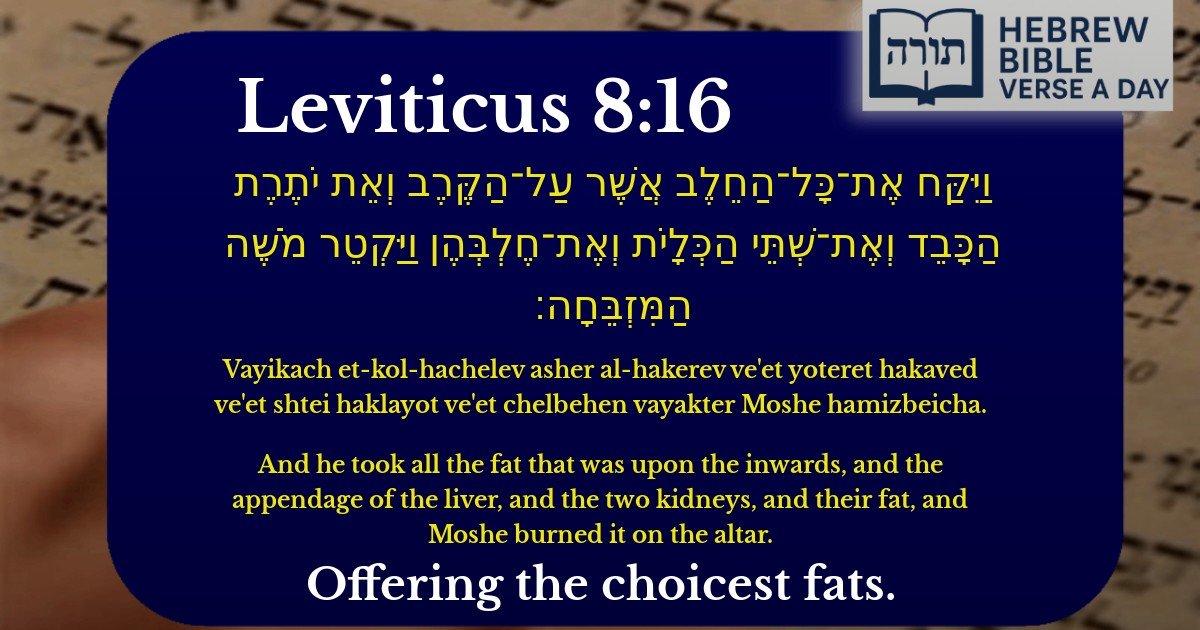

Leviticus 8:16 - Offering the choicest fats.

Leviticus 8:16 - ויקרא 8:16

Hebrew Text

וַיִּקַּח אֶת־כָּל־הַחֵלֶב אֲשֶׁר עַל־הַקֶּרֶב וְאֵת יֹתֶרֶת הַכָּבֵד וְאֶת־שְׁתֵּי הַכְּלָיֹת וְאֶת־חֶלְבְּהֶן וַיַּקְטֵר מֹשֶׁה הַמִּזְבֵּחָה׃

English Translation

And he took all the fat that was upon the inwards, and the appendage of the liver, and the two kidneys, and their fat, and Moshe burned it on the altar.

Transliteration

Vayikach et-kol-hachelev asher al-hakerev ve'et yoteret hakaved ve'et shtei haklayot ve'et chelbehen vayakter Moshe hamizbeicha.

Hebrew Leining Text

וַיִּקַּ֗ח אֶֽת־כׇּל־הַחֵ֘לֶב֮ אֲשֶׁ֣ר עַל־הַקֶּ֒רֶב֒ וְאֵת֙ יֹתֶ֣רֶת הַכָּבֵ֔ד וְאֶת־שְׁתֵּ֥י הַכְּלָיֹ֖ת וְאֶֽת־חֶלְבְּהֶ֑ן וַיַּקְטֵ֥ר מֹשֶׁ֖ה הַמִּזְבֵּֽחָה׃

🎵 Listen to leining

Parasha Commentary

Explanation of the Verse

The verse describes the process of offering certain parts of an animal sacrifice on the altar, specifically the fats and select organs. This procedure is part of the avodah (Temple service) detailed in the Torah, particularly in the context of the korbanot (sacrificial offerings).

Key Components of the Offering

  • All the fat upon the inwards (חלב אשר על הקרב): Rashi (Vayikra 3:4) explains that this refers to the layer of fat covering the stomach and intestines. The Torah prohibits consuming certain fats (חֵלֶב), as they are designated exclusively for the altar.
  • The appendage of the liver (יותרת הכבד): The yoteret hakaveret is a lobe attached to the liver. The Talmud (Chullin 49a) discusses its precise location and emphasizes its sanctity in the sacrificial process.
  • The two kidneys and their fat (שתי הכליות ואת חלבהן): The kidneys and their surrounding fat were also burned on the altar. Rambam (Hilchot Ma'aseh HaKorbanot 5:12) notes that these organs symbolize human thought and desire, as the kidneys were traditionally associated with decision-making (based on Tehillim 16:7).

Significance of Burning These Parts

The burning of these specific parts on the altar serves multiple purposes:

  • Elevation to Hashem: The fats and organs represent the choicest parts of the animal, symbolizing the dedication of one's finest to divine service (Malbim on Vayikra 3:16).
  • Spiritual Symbolism: The kidneys and liver are associated with human emotions and inclinations (Midrash Tanchuma, Vayikra 6). By offering them, the worshiper symbolically submits their inner drives to Hashem.
  • Prohibition of Consumption: The Torah forbids eating these fats (Vayikra 7:23), reinforcing the idea that certain sanctified elements are reserved solely for divine worship (Ramban on Vayikra 3:16).

Moshe's Role in the Offering

The verse specifies that Moshe performed this act, highlighting his role as the intermediary in the inauguration of the Mishkan (Tabernacle). Rashi (Vayikra 9:10) notes that Moshe served as the kohen (priest) during this initial service before Aharon and his sons assumed the priesthood.

📚 Talmud Citations

This verse is quoted in the Talmud.

📖 Zevachim 35b
The verse is discussed in the context of the laws of sacrifices, specifically regarding the parts of the animal that are to be burned on the altar.
📖 Menachot 49b
The verse is referenced in a discussion about the proper procedures for offering sacrifices, emphasizing the specific parts of the animal mentioned in the verse.

Frequently Asked Questions

Q: What does Leviticus 8:16 mean?
A: Leviticus 8:16 describes part of the consecration ceremony for the Kohanim (priests) in the Mishkan (Tabernacle). Moshe (Moses) took specific fats and organs from a ram and burned them on the altar as an offering to Hashem. According to Rashi, these parts were chosen because they symbolize human desires (fat) and thoughts (kidneys), teaching us to dedicate our physical and spiritual aspects to divine service.
Q: Why did Moshe burn the fat and kidneys on the altar?
A: The fat and kidneys were burned on the altar because the Torah designates them as parts of sacrifices reserved for Hashem (Vayikra 3:16-17). The Rambam explains in Moreh Nevuchim that these offerings symbolize subduing physical desires (represented by fat) and moral choices (associated with kidneys, which were seen as the seat of deliberation in ancient wisdom). This act demonstrated complete devotion to Hashem.
Q: What is the significance of the liver's appendage mentioned in Leviticus 8:16?
A: The 'yoteret hakaver' (appendage of the liver) is one of the specific fats that the Torah commands to be offered on the altar. The Talmud (Chullin 49b) discusses its exact location. This detail teaches the precision required in divine service - every aspect of the sacrifice followed exact Torah instructions, showing the importance of adhering to halachic details in serving Hashem.
Q: How does Leviticus 8:16 apply to us today without the Temple?
A: While we cannot bring sacrifices today, the Midrash (Vayikra Rabbah) teaches that prayer has replaced sacrifices. Just as the fats and organs were completely dedicated to Hashem, we should direct our physical and mental energies toward divine service. The Rambam (Hilchot Tefillah) explains that proper prayer requires the same focus and devotion as the Temple service.
Q: Why does the Torah specify which parts of the animal to burn?
A: The Torah specifies these parts to teach several lessons: 1) Rashi notes it shows nothing in creation is superfluous - every detail has purpose. 2) The Talmud (Menachot 110a) explains that different parts represent different aspects of service - the fats represent material abundance, while kidneys represent decision-making. 3) The specificity teaches the importance of following mitzvot precisely, not adding or subtracting from divine commandments.