

Join Our Newsletter To Be Informed When New Videos Are Posted
Hebrew Text
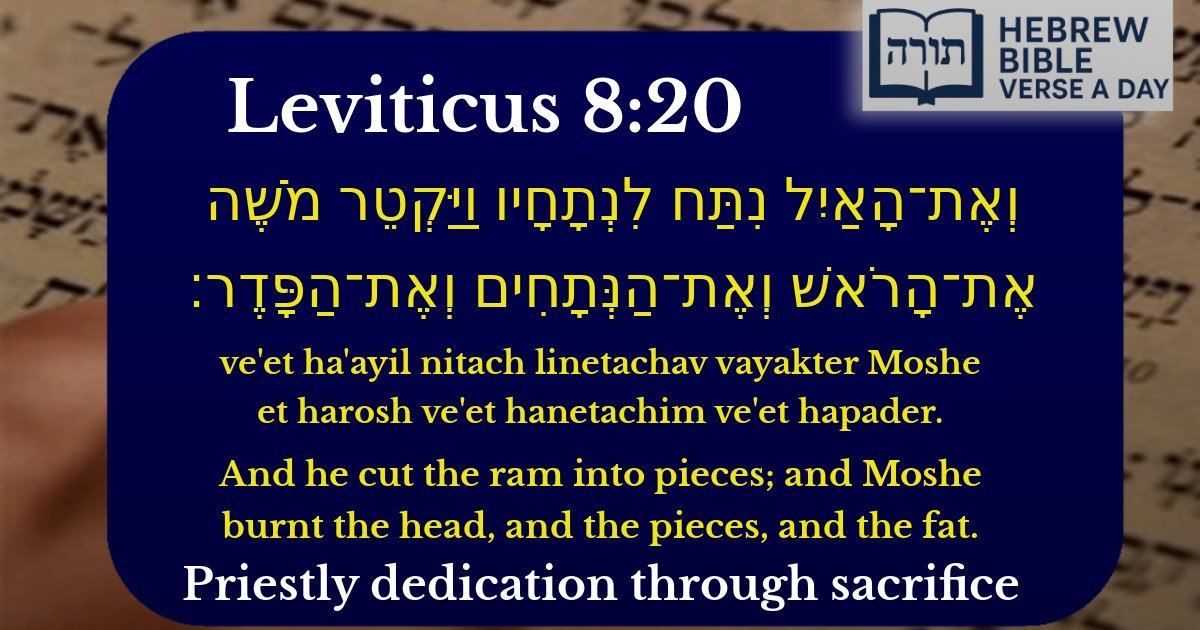
וְאֶת־הָאַיִל נִתַּח לִנְתָחָיו וַיַּקְטֵר מֹשֶׁה אֶת־הָרֹאשׁ וְאֶת־הַנְּתָחִים וְאֶת־הַפָּדֶר׃
English Translation
And he cut the ram into pieces; and Moshe burnt the head, and the pieces, and the fat.
Transliteration
Ve'et ha'ayil nitach linetachav vayakter Moshe et harosh ve'et hanetachim ve'et hapader.
Hebrew Leining Text
וְאֶ֨ת־הָאַ֔יִל נִתַּ֖ח לִנְתָחָ֑יו וַיַּקְטֵ֤ר מֹשֶׁה֙ אֶת־הָרֹ֔אשׁ וְאֶת־הַנְּתָחִ֖ים וְאֶת־הַפָּֽדֶר׃
🎵 Listen to leining
Parasha Commentary
📚 Talmud Citations
This verse is not quoted in the Talmud.
Context of the Verse
This verse (Shemot 29:17) describes part of the consecration process of the Kohanim (priests) during the inauguration of the Mishkan (Tabernacle). The ram mentioned here is the "איל המילואים" (ram of inauguration), one of the sacrifices offered as part of the seven-day initiation ceremony for Aharon and his sons.
Rashi's Explanation
Rashi explains that the phrase "וְאֶת־הָאַיִל נִתַּח לִנְתָחָיו" ("he cut the ram into pieces") refers to the standard procedure for sacrificial animals, where they were divided into their natural sections (head, limbs, etc.). Moshe then burned these parts on the altar.
Symbolism of the Parts
Talmudic Insights
The Talmud (Zevachim 37a) discusses how this procedure established the proper method for offering sacrifices, with Moshe serving as the model for future Kohanim. The meticulous division teaches that divine service requires attention to detail and proper order.
Midrashic Interpretation
The Midrash Tanchuma (Tzav 14) connects this act to the concept of "כליל לאישים" (complete burning), representing the Kohanim's total commitment to their sacred role. Just as the entire ram was consumed by fire, the Kohanim were to be completely devoted to their service.
Halachic Significance
Rambam (Hilchot Maaseh Hakorbanot 5:1) derives from this verse that the proper method of offering an olah (burnt offering) includes cutting it into pieces before burning. This became the standard procedure for all future olah offerings in the Beit Hamikdash.