

Join Our Newsletter To Be Informed When New Videos Are Posted
Hebrew Text
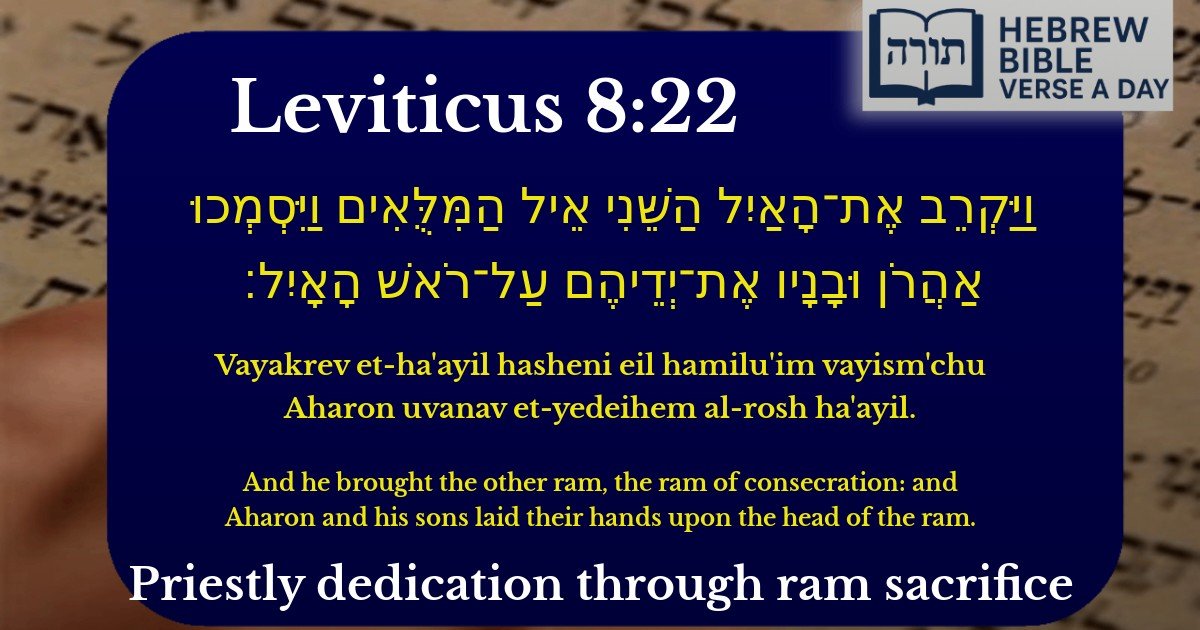
וַיַּקְרֵב אֶת־הָאַיִל הַשֵּׁנִי אֵיל הַמִּלֻּאִים וַיִּסְמְכוּ אַהֲרֹן וּבָנָיו אֶת־יְדֵיהֶם עַל־רֹאשׁ הָאָיִל׃
English Translation
And he brought the other ram, the ram of consecration: and Aharon and his sons laid their hands upon the head of the ram.
Transliteration
Vayakrev et-ha'ayil hasheni eil hamilu'im vayism'chu Aharon uvanav et-yedeihem al-rosh ha'ayil.
Hebrew Leining Text
וַיַּקְרֵב֙ אֶת־הָאַ֣יִל הַשֵּׁנִ֔י אֵ֖יל הַמִּלֻּאִ֑ים וַֽיִּסְמְכ֞וּ אַהֲרֹ֧ן וּבָנָ֛יו אֶת־יְדֵיהֶ֖ם עַל־רֹ֥אשׁ הָאָֽיִל׃
🎵 Listen to leining
Parasha Commentary
📚 Talmud Citations
This verse is quoted in the Talmud.
📖 Zevachim 19b
The verse is referenced in the discussion about the laws of semichah (laying of hands) on sacrificial animals, particularly in the context of the consecration of Aaron and his sons.
📖 Menachot 93b
The verse is cited in a discussion about the procedures for the ram of consecration and the significance of the laying of hands in the sacrificial process.
The Significance of the Second Ram (אֵיל הַמִּלֻּאִים)
The verse describes the offering of the "ram of consecration" (אֵיל הַמִּלֻּאִים) as part of the inauguration ceremony for Aharon and his sons as Kohanim. Rashi (Shemot 29:22) explains that this ram was called "מִּלֻּאִים" (consecration) because it completed (מָלֵא) the process of their sanctification for the priesthood. The Rambam (Hilchot Klei HaMikdash 4:12) further elaborates that this offering was unique to the inauguration process and symbolized the transfer of holiness to the Kohanim.
The Act of Semicha (Laying of Hands)
The verse states that Aharon and his sons "laid their hands upon the head of the ram" (וַיִּסְמְכוּ אֶת־יְדֵיהֶם). The Talmud (Menachot 93a) teaches that semicha involved leaning with full force, not merely touching. Rashi (Vayikra 1:4) explains this as a symbolic transfer - the offerer's sins or dedication are transferred to the animal. In this case, it represented the complete dedication of Aharon and his sons to the priestly service.
Symbolism in the Inauguration Process
The Role of Aharon and His Sons Together
The inclusion of both Aharon and his sons in this act, as emphasized by the phrase "Aharon and his sons," teaches an important lesson about priestly succession. The Kli Yakar (Shemot 29:19) notes this shows the importance of training the next generation while still actively serving, ensuring continuity of the priestly tradition.