

Join Our Newsletter To Be Informed When New Videos Are Posted
Hebrew Text
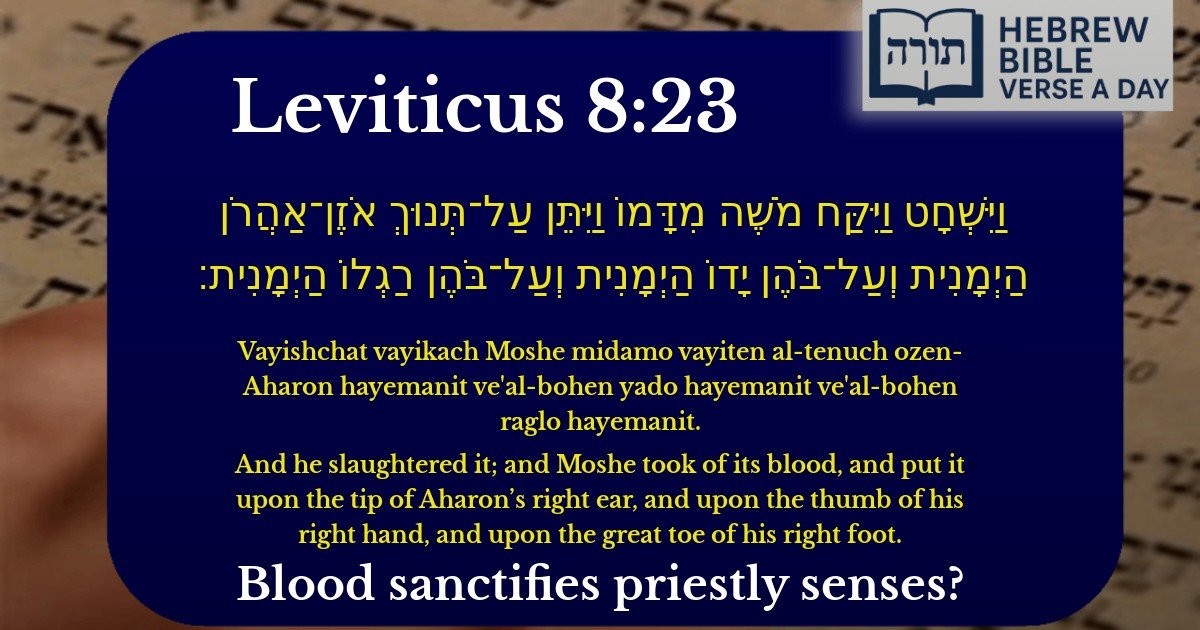
וַיִּשְׁחָט וַיִּקַּח מֹשֶׁה מִדָּמוֹ וַיִּתֵּן עַל־תְּנוּךְ אֹזֶן־אַהֲרֹן הַיְמָנִית וְעַל־בֹּהֶן יָדוֹ הַיְמָנִית וְעַל־בֹּהֶן רַגְלוֹ הַיְמָנִית׃
English Translation
And he slaughtered it; and Moshe took of its blood, and put it upon the tip of Aharon’s right ear, and upon the thumb of his right hand, and upon the great toe of his right foot.
Transliteration
Vayishchat vayikach Moshe midamo vayiten al-tenuch ozen-Aharon hayemanit ve'al-bohen yado hayemanit ve'al-bohen raglo hayemanit.
Hebrew Leining Text
וַיִּשְׁחָ֓ט ׀ וַיִּקַּ֤ח מֹשֶׁה֙ מִדָּמ֔וֹ וַיִּתֵּ֛ן עַל־תְּנ֥וּךְ אֹֽזֶן־אַהֲרֹ֖ן הַיְמָנִ֑ית וְעַל־בֹּ֤הֶן יָדוֹ֙ הַיְמָנִ֔ית וְעַל־בֹּ֥הֶן רַגְל֖וֹ הַיְמָנִֽית׃
🎵 Listen to leining
Parasha Commentary
📚 Talmud Citations
This verse is quoted in the Talmud.
📖 Zevachim 19b
The verse is discussed in the context of the sacrificial rites performed by Moses during the consecration of Aaron and his sons as priests. The Talmud explores the details and implications of the blood application on Aaron's ear, thumb, and toe.
📖 Keritot 5b
This verse is referenced in a discussion about the rituals of consecration and the specific actions required for the sanctification of priests, highlighting the symbolic meanings behind the placement of the blood.
Verse Context
The verse (Vayikra 8:23) describes part of the consecration ceremony for Aharon and his sons as Kohanim (priests) in the Mishkan (Tabernacle). Moshe performs the ritual of applying the blood of the ram of consecration to Aharon's right ear, right thumb, and right big toe.
Symbolism of the Blood Application
Rashi explains that this act symbolizes the purification and dedication of the Kohen's entire being to divine service:
Right Side Significance
The Rambam (Hilchot Klei HaMikdash 4:4) notes that the right side is emphasized because it represents strength and importance in Jewish tradition. The right side symbolizes the Kohen's complete dedication of his faculties to divine service.
Midrashic Interpretation
The Midrash Tanchuma (Tzav 14) connects this ritual to the concept of atonement, suggesting these body parts correspond to different types of sins:
Halachic Implications
The Talmud (Zevachim 19b) derives from this verse that the application of blood must be done specifically on these body parts during the consecration of Kohanim. This establishes an important precedent for priestly initiation rituals.
Spiritual Message
Rabbi Samson Raphael Hirsch explains that this ritual teaches that complete divine service requires dedication of all human faculties - what one hears, what one does, and where one goes. The Kohen must be entirely consecrated to his holy mission.