

Join Our Newsletter To Be Informed When New Videos Are Posted
Hebrew Text
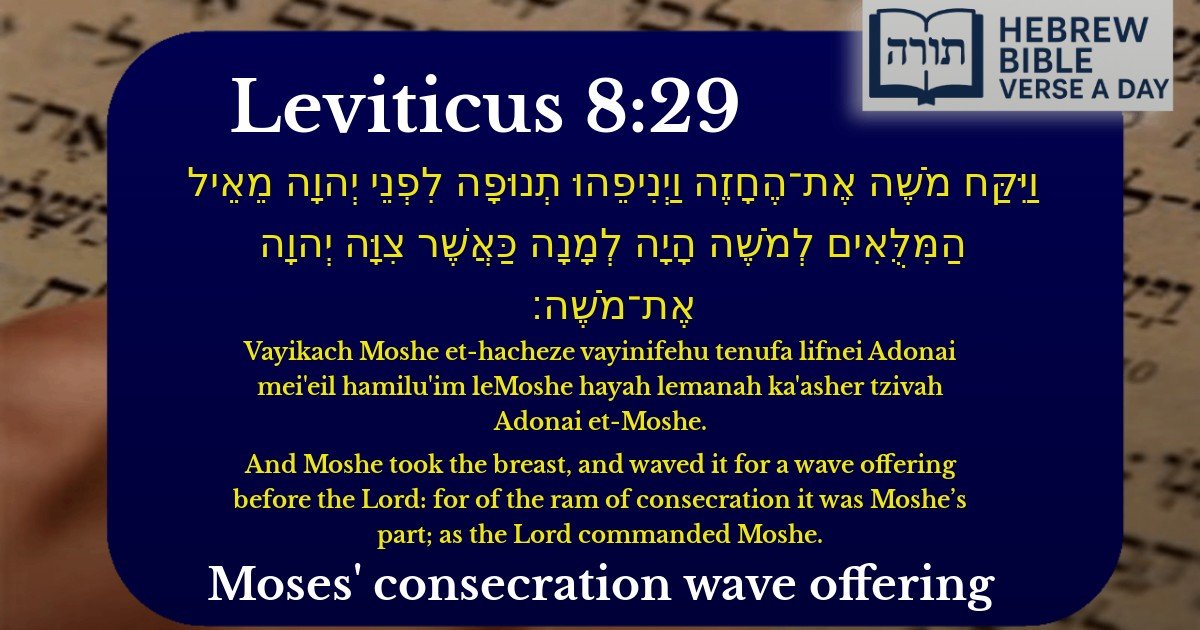
וַיִּקַּח מֹשֶׁה אֶת־הֶחָזֶה וַיְנִיפֵהוּ תְנוּפָה לִפְנֵי יְהוָה מֵאֵיל הַמִּלֻּאִים לְמֹשֶׁה הָיָה לְמָנָה כַּאֲשֶׁר צִוָּה יְהוָה אֶת־מֹשֶׁה׃
English Translation
And Moshe took the breast, and waved it for a wave offering before the Lord: for of the ram of consecration it was Moshe’s part; as the Lord commanded Moshe.
Transliteration
Vayikach Moshe et-hacheze vayinifehu tenufa lifnei Adonai mei'eil hamilu'im leMoshe hayah lemanah ka'asher tzivah Adonai et-Moshe.
Hebrew Leining Text
וַיִּקַּ֤ח מֹשֶׁה֙ אֶת־הֶ֣חָזֶ֔ה וַיְנִיפֵ֥הוּ תְנוּפָ֖ה לִפְנֵ֣י יְהֹוָ֑ה מֵאֵ֣יל הַמִּלֻּאִ֗ים לְמֹשֶׁ֤ה הָיָה֙ לְמָנָ֔ה כַּאֲשֶׁ֛ר צִוָּ֥ה יְהֹוָ֖ה אֶת־מֹשֶֽׁה׃
🎵 Listen to leining
Parasha Commentary
📚 Talmud Citations
This verse is quoted in the Talmud.
📖 Zevachim 97a
The verse is referenced in a discussion about the wave offering (tenufah) and its significance in the consecration of the priests.
📖 Menachot 61b
The verse is cited in the context of discussing the various offerings and the specific portions assigned to Moshe as part of the consecration process.
The Wave Offering (Tenufah) of the Breast
The verse (Shemot 29:26) describes Moshe performing the tenufah (wave offering) of the breast from the ram of consecration (eil hamillu'im). Rashi explains that the tenufah involved moving the offering forward and backward, as well as upward and downward, symbolizing acknowledgment of Hashem's dominion over all directions. This act was part of the consecration ceremony for Aharon and his sons as Kohanim.
Moshe's Portion from the Ram of Consecration
The verse states that the breast was Moshe's portion "as the Lord commanded Moshe." Ramban notes that although Moshe was not a Kohen, he temporarily served in a priestly role during the seven days of consecration. The breast (chazeh) was specifically designated for Moshe, as explained in Vayikra 7:31, where the Torah assigns the breast and thigh to the Kohanim in future offerings.
Symbolism of the Breast Offering
Halachic Significance
The Talmud (Chullin 134b) derives from this verse that the wave offering must be performed specifically by the Kohen. Rambam (Hilchot Ma'aseh HaKorbanot 9:6) codifies this law, stating that the tenufah is an essential part of certain offerings. The fact that Moshe performed it here was a temporary exception during the inauguration process.