

Join Our Newsletter To Be Informed When New Videos Are Posted
Hebrew Text
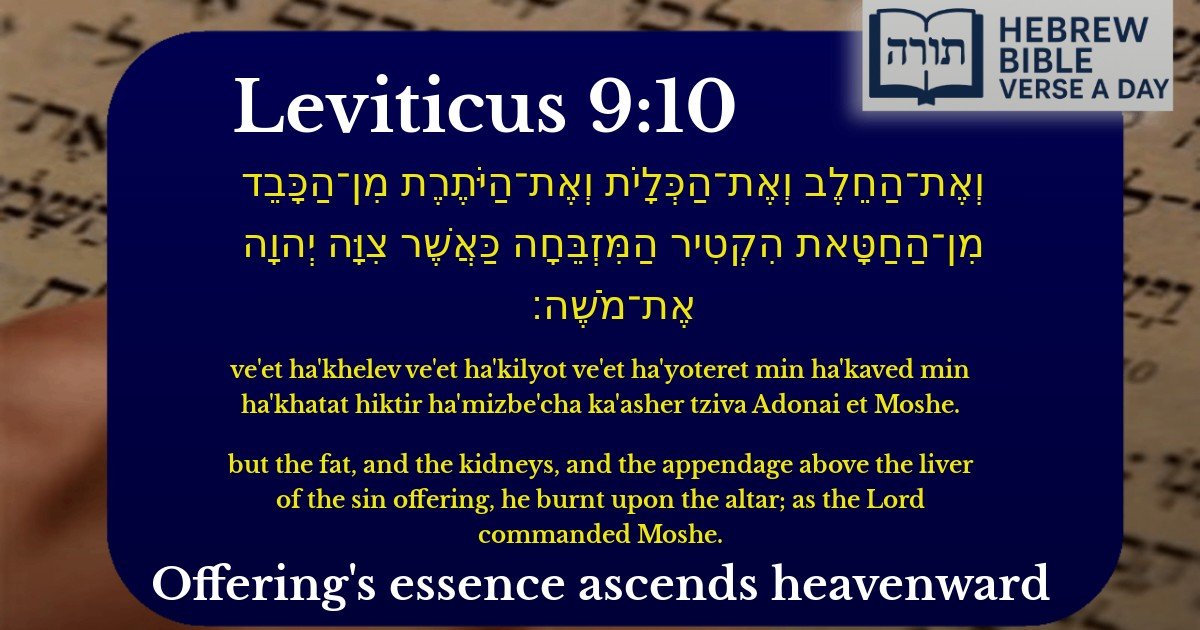
וְאֶת־הַחֵלֶב וְאֶת־הַכְּלָיֹת וְאֶת־הַיֹּתֶרֶת מִן־הַכָּבֵד מִן־הַחַטָּאת הִקְטִיר הַמִּזְבֵּחָה כַּאֲשֶׁר צִוָּה יְהוָה אֶת־מֹשֶׁה׃
English Translation
but the fat, and the kidneys, and the appendage above the liver of the sin offering, he burnt upon the altar; as the Lord commanded Moshe.
Transliteration
Ve'et ha'khelev ve'et ha'kilyot ve'et ha'yoteret min ha'kaved min ha'khatat hiktir ha'mizbe'cha ka'asher tziva Adonai et Moshe.
Hebrew Leining Text
וְאֶת־הַחֵ֨לֶב וְאֶת־הַכְּלָיֹ֜ת וְאֶת־הַיֹּתֶ֤רֶת מִן־הַכָּבֵד֙ מִן־הַ֣חַטָּ֔את הִקְטִ֖יר הַמִּזְבֵּ֑חָה כַּאֲשֶׁ֛ר צִוָּ֥ה יְהֹוָ֖ה אֶת־מֹשֶֽׁה׃
🎵 Listen to leining
Parasha Commentary
📚 Talmud Citations
This verse is quoted in the Talmud.
📖 Zevachim 35b
The verse is discussed in the context of the laws regarding the burning of sacrificial fats and organs on the altar, emphasizing the importance of following God's commandments as given to Moses.
📖 Menachot 49b
The verse is referenced in a discussion about the proper procedures for offering sacrifices, particularly the sin offering, and the specific parts that must be burned on the altar.
The Parts of the Sin Offering
The verse describes the burning of specific parts of the sin offering (chatat) on the altar: the fat (chelev), the kidneys (kelayot), and the lobe of the liver (yoteret hakaveret). According to Rashi (Vayikra 4:10), these parts were designated for burning because they are considered the choicest and most delicate parts of the animal, symbolizing the inner essence of the sacrifice. The chelev (fat) is particularly significant because it represents indulgence and pleasure, and offering it to Hashem demonstrates the renunciation of physical desires in favor of spiritual devotion.
The Significance of Burning on the Altar
The Rambam (Moreh Nevuchim 3:46) explains that the burning of these parts on the altar serves as a symbolic act of atonement. The kidneys are associated with thought and counsel (as in Tehillim 16:7, "My kidneys instruct me"), while the liver is linked to emotions and desires. By offering these organs, the sinner acknowledges that their wrongful actions stemmed from misguided thoughts or uncontrolled passions and seeks purification through divine service.
Fulfillment of Divine Command
The verse concludes by emphasizing that this was done "as the Lord commanded Moshe," highlighting the importance of precise adherence to halachic details in sacrificial rites. The Sforno (Vayikra 4:10) notes that this phrase underscores the principle that mitzvot must be performed exactly as instructed, without deviation, reflecting obedience to Hashem's will.
Midrashic Insights