

Join Our Newsletter To Be Informed When New Videos Are Posted
Hebrew Text
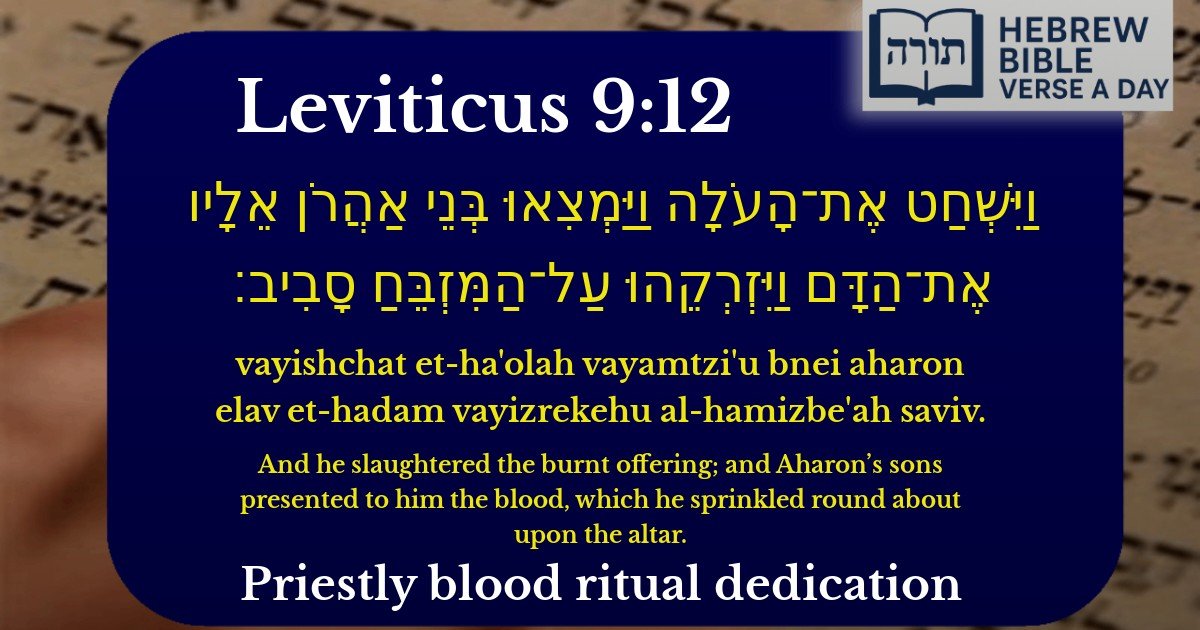
וַיִּשְׁחַט אֶת־הָעֹלָה וַיַּמְצִאוּ בְּנֵי אַהֲרֹן אֵלָיו אֶת־הַדָּם וַיִּזְרְקֵהוּ עַל־הַמִּזְבֵּחַ סָבִיב׃
English Translation
And he slaughtered the burnt offering; and Aharon’s sons presented to him the blood, which he sprinkled round about upon the altar.
Transliteration
Vayishchat et-ha'olah vayamtzi'u bnei aharon elav et-hadam vayizrekehu al-hamizbe'ah saviv.
Hebrew Leining Text
וַיִּשְׁחַ֖ט אֶת־הָעֹלָ֑ה וַ֠יַּמְצִ֠אוּ בְּנֵ֨י אַהֲרֹ֤ן אֵלָיו֙ אֶת־הַדָּ֔ם וַיִּזְרְקֵ֥הוּ עַל־הַמִּזְבֵּ֖חַ סָבִֽיב׃
🎵 Listen to leining
Parasha Commentary
📚 Talmud Citations
This verse is quoted in the Talmud.
📖 Zevachim 32a
The verse is discussed in the context of the laws of sacrifices, particularly regarding the proper procedure for slaughtering and sprinkling the blood of the burnt offering.
📖 Menachot 5a
The verse is referenced in a discussion about the roles of the priests (sons of Aaron) in the sacrificial service and the proper handling of the blood of offerings.
Context in Vayikra (Leviticus)
The verse (Vayikra 1:11) describes part of the sacrificial process for the olah (burnt offering), specifically detailing the roles of Aharon and his sons in the avodah (Temple service). This follows the broader framework of parshas ha'korbanos (the laws of sacrifices) in Sefer Vayikra.
Rashi's Explanation
Rashi (Vayikra 1:11) clarifies that the phrase "וַיִּשְׁחַט אֶת־הָעֹלָה" ("he slaughtered the burnt offering") refers to Moshe performing the slaughter before the Mishkan's inauguration, as Aharon and his sons were not yet fully consecrated. The blood was then handed to Aharon's sons, who passed it to Moshe for sprinkling. Rashi emphasizes that this procedure was unique to the inaugural sacrifices and later followed by the Kohanim themselves.
Role of Aharon's Sons
The Gemara (Zevachim 32a) discusses why Aharon's sons presented the blood rather than Aharon himself. According to the Mechilta, this teaches the principle of kehunah (priestly service) being shared among descendants—training the next generation in proper avodah. The Rambam (Hilchos Maaseh HaKorbanos 5:15) later codifies this as a halachic model for priestly duties.
Symbolism of Blood Sprinkling
Halachic Implications
The Rambam (Hilchos Korban Olah 5:1-2) derives from this verse that proper zerikas hadam (blood sprinkling) requires intentionality (kavanah) and must be performed by a Kohen. The Sefer HaChinuch (Mitzvah 95) further links this act to the broader theme of avodah as a conduit for spiritual elevation.