

Join Our Newsletter To Be Informed When New Videos Are Posted
Hebrew Text
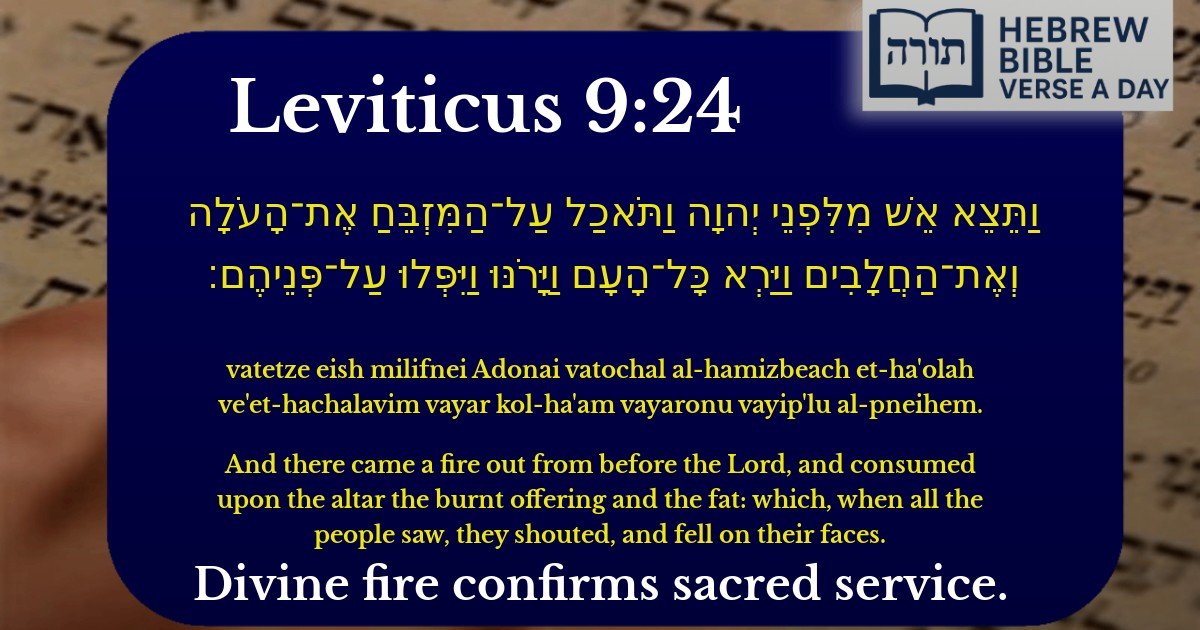
וַתֵּצֵא אֵשׁ מִלִּפְנֵי יְהוָה וַתֹּאכַל עַל־הַמִּזְבֵּחַ אֶת־הָעֹלָה וְאֶת־הַחֲלָבִים וַיַּרְא כָּל־הָעָם וַיָּרֹנּוּ וַיִּפְּלוּ עַל־פְּנֵיהֶם׃
English Translation
And there came a fire out from before the Lord, and consumed upon the altar the burnt offering and the fat: which, when all the people saw, they shouted, and fell on their faces.
Transliteration
Vatetze eish milifnei Adonai vatochal al-hamizbeach et-ha'olah ve'et-hachalavim vayar kol-ha'am vayaronu vayip'lu al-pneihem.
Hebrew Leining Text
וַתֵּ֤צֵא אֵשׁ֙ מִלִּפְנֵ֣י יְהֹוָ֔ה וַתֹּ֙אכַל֙ עַל־הַמִּזְבֵּ֔חַ אֶת־הָעֹלָ֖ה וְאֶת־הַחֲלָבִ֑ים וַיַּ֤רְא כׇּל־הָעָם֙ וַיָּרֹ֔נּוּ וַֽיִּפְּל֖וּ עַל־פְּנֵיהֶֽם׃
🎵 Listen to leining
Parasha Commentary
📚 Talmud Citations
This verse is quoted in the Talmud.
📖 Yoma 21b
The verse is referenced in a discussion about the fire from heaven that consumed offerings on the altar, highlighting its significance in the Temple service.
📖 Sotah 38a
The verse is cited in the context of discussing the divine acceptance of sacrifices and the reaction of the people to such miraculous events.
The Divine Fire from Before Hashem
The verse describes a miraculous fire descending from before Hashem to consume the offerings on the altar. Rashi (Vayikra 9:24) explains that this fire was not an ordinary flame but a heavenly fire that demonstrated Hashem's acceptance of the korbanot (offerings). The Midrash (Vayikra Rabbah 7:6) teaches that this fire had unique properties—it consumed the offerings without harming the altar itself, a sign of divine precision and favor.
The People's Reaction: Shouting and Prostration
When the people witnessed this miracle, they responded with two actions: shouting (vayaronu) and falling on their faces (vayiplu al pneihem). The Rambam (Hilchot Teshuvah 3:4) interprets their shouting as an expression of awe and joy at experiencing a clear revelation of the Shechinah. Falling on their faces, as noted in the Talmud (Berachot 34b), was a standard response to divine revelation, demonstrating humility and submission before Hashem's presence.
Significance of the Offering's Consumption
Lessons for Divine Service
The Or HaChaim (Vayikra 9:24) highlights that this event set a precedent for the Mishkan's sanctity—true divine service requires both human effort (bringing the korbanot) and heavenly response (the fire). The Talmud (Yoma 21b) later laments that this fire was absent in the Second Temple, teaching that the presence of open miracles reflects the spiritual state of the generation.