Frequently Asked Questions
Q: What does it mean when the Torah says 'And the Lord spoke to Moshe, saying'?
A: This phrase appears frequently in the Torah to indicate that Hashem is giving a direct commandment or instruction to Moshe (Moses) to transmit to the Jewish people. According to Rashi, this emphasizes that Moshe was a faithful messenger who accurately conveyed G-d's words without adding or omitting anything.
Q: Why does the Torah repeat 'saying' after 'And the Lord spoke to Moshe'?
A: The double language of 'spoke... saying' teaches that Moshe was commanded not only to hear G-d's words, but to actively repeat and teach them to the Jewish people (based on Talmud Sanhedrin 56b). The word 'saying' implies an instruction to transmit the message further.
Q: How is this introduction to commandments relevant today?
A: This teaches us that all Torah commandments come directly from Hashem through Moshe, establishing the divine authority of halacha (Jewish law). As Rambam explains in his introduction to Mishneh Torah, this forms the basis for our belief in Torah min hashamayim (Torah from Heaven).
Q: Why does the Torah specify that G-d spoke to Moshe rather than just stating the commandment?
A: The Torah emphasizes Moshe's role to show that he was the exclusive prophet through whom Hashem communicated the Torah (based on Deuteronomy 34:10). This establishes the authenticity of the entire Torah transmission, as explained in Rambam's 13 Principles of Faith.
Q: What can we learn from how G-d spoke to Moshe?
A: We learn about the respectful and clear communication between Hashem and Moshe. The Midrash notes that G-d always spoke to Moshe 'face to face' (Exodus 33:11), showing the unique level of Moshe's prophecy and teaching us the importance of clear, direct communication when transmitting Torah values.

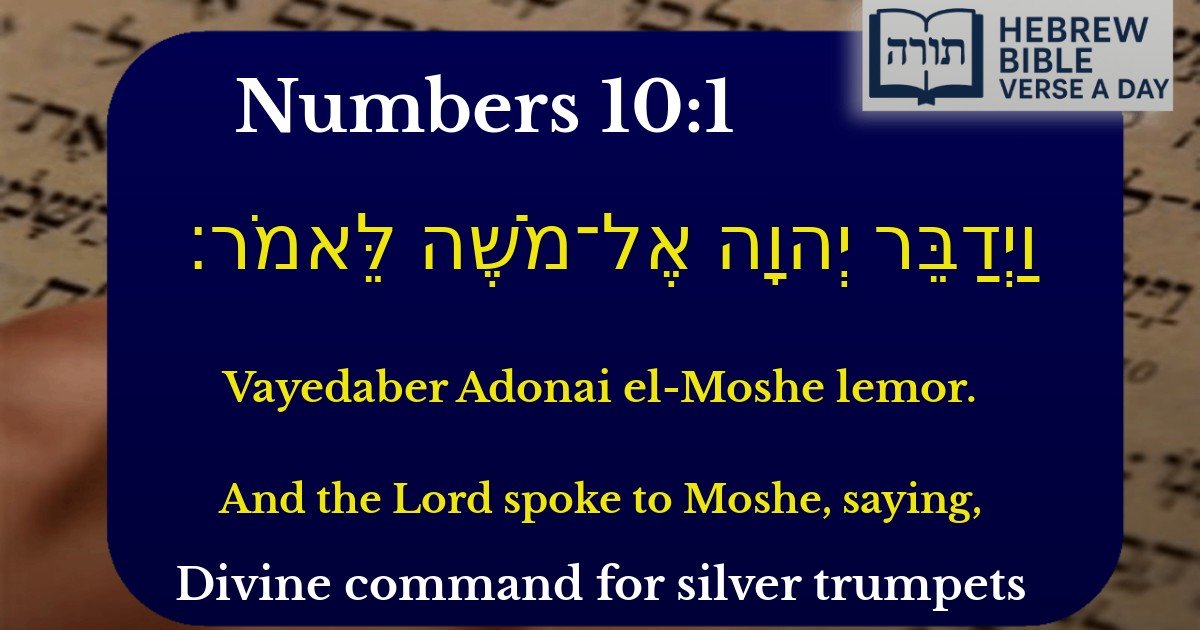

The Divine Communication to Moshe
The phrase "וַיְדַבֵּר יְהוָה אֶל־מֹשֶׁה לֵּאמֹר" ("And the Lord spoke to Moshe, saying") appears frequently in the Torah, marking the transmission of divine commandments and teachings. Rashi (on Shemot 6:2) explains that this expression signifies a clear and direct communication from Hashem to Moshe, emphasizing the unique prophetic level of Moshe Rabbeinu, who received the Torah with unparalleled clarity (aspaklaria ha-me'ira).
The Significance of "לֵּאמֹר" ("Saying")
The word "לֵּאמֹר" is often interpreted by commentators as an instruction for Moshe to relay the message to Bnei Yisrael. The Ramban (on Bereishit 1:3) notes that this term implies a chain of transmission, ensuring the divine word is preserved accurately. The Sforno adds that Moshe was not merely a passive recipient but an active teacher, entrusted with conveying Torah to the nation.
Moshe's Unique Prophetic Role
Theological Implications
The Mechilta (Bo 1) derives from this phrasing that Moshe's prophecy was not his own but entirely from Hashem, countering any claim of human origin for the Torah. This establishes the principle of Torah min HaShamayim—the divine authorship of the Torah.