

Join Our Newsletter To Be Informed When New Videos Are Posted
Hebrew Text
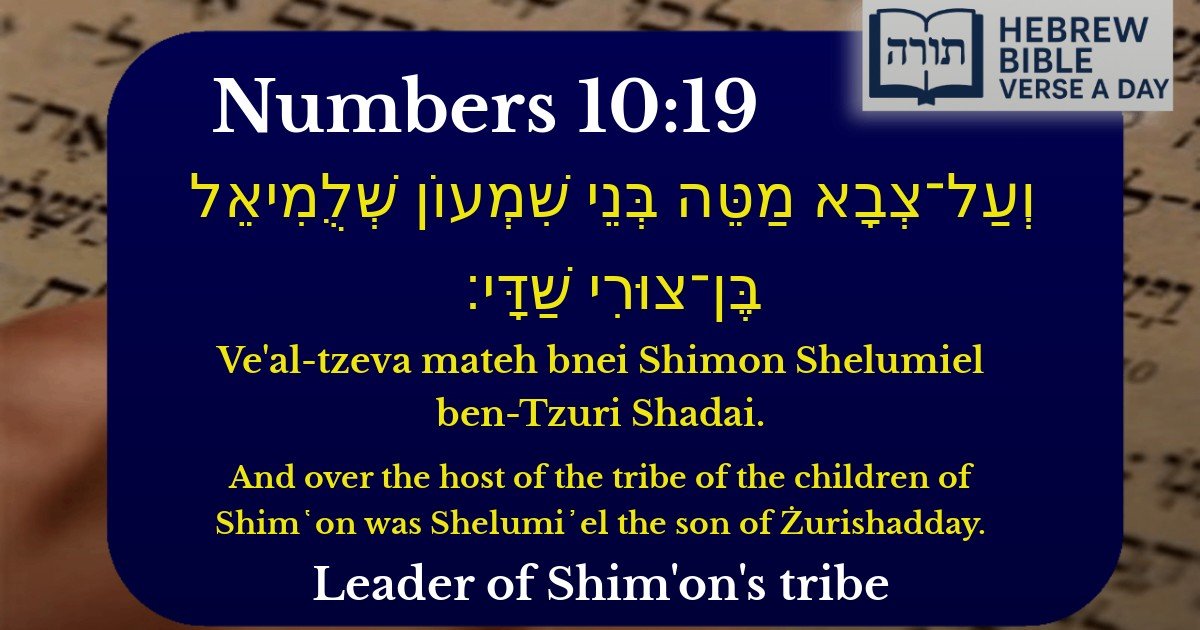
וְעַל־צְבָא מַטֵּה בְּנֵי שִׁמְעוֹן שְׁלֻמִיאֵל בֶּן־צוּרִי שַׁדָּי׃
English Translation
And over the host of the tribe of the children of Shim῾on was Shelumi᾽el the son of Żurishadday.
Transliteration
Ve'al-tzeva mateh bnei Shimon Shelumiel ben-Tzuri Shadai.
Hebrew Leining Text
וְעַ֨ל־צְבָ֔א מַטֵּ֖ה בְּנֵ֣י שִׁמְע֑וֹן שְׁלֻֽמִיאֵ֖ל בֶּן־צוּרִֽישַׁדָּֽי׃
🎵 Listen to leining
Parasha Commentary
📚 Talmud Citations
This verse is not quoted in the Talmud.
Shelumiel ben Zurishaddai as Nasi of Shevet Shimon
The verse (Bamidbar 10:19) identifies Shelumiel ben Zurishaddai as the leader (nasi) of the tribe of Shimon during the Israelites' travels in the wilderness. Rashi notes that Shelumiel's name reflects his character and divine mission: "Shelumiel" (שְׁלֻמִיאֵל) means "my peace is from God," indicating his role in maintaining harmony within the tribe, while "Zurishaddai" (צוּרִי שַׁדָּי) signifies "my Rock is the Almighty," emphasizing his reliance on Hashem's strength.
Zurishaddai's Lineage and Significance
The Midrash (Bamidbar Rabbah 2:7) highlights that Zurishaddai was among the righteous ancestors of Shevet Shimon. The name "Zurishaddai" appears only in connection with Shelumiel, suggesting a unique spiritual legacy. Ramban explains that the combination of "Tzuri" (my Rock) and "Shaddai" (Almighty) underscores the tribe's need for divine protection, particularly given Shimon's earlier involvement in the sin of Ba'al Peor (Bamidbar 25:14).
Shelumiel's Role in the Tribal Camp
Symbolism of Leadership in the Wilderness
The Sforno teaches that each tribal leader's name encapsulated their mission. Shelumiel's role was to guide Shevet Shimon toward shleimus (wholeness) through devotion to Torah and communal responsibility. His father's name, Zurishaddai, served as a constant reminder that true leadership stems from divine authority, not personal ambition.