
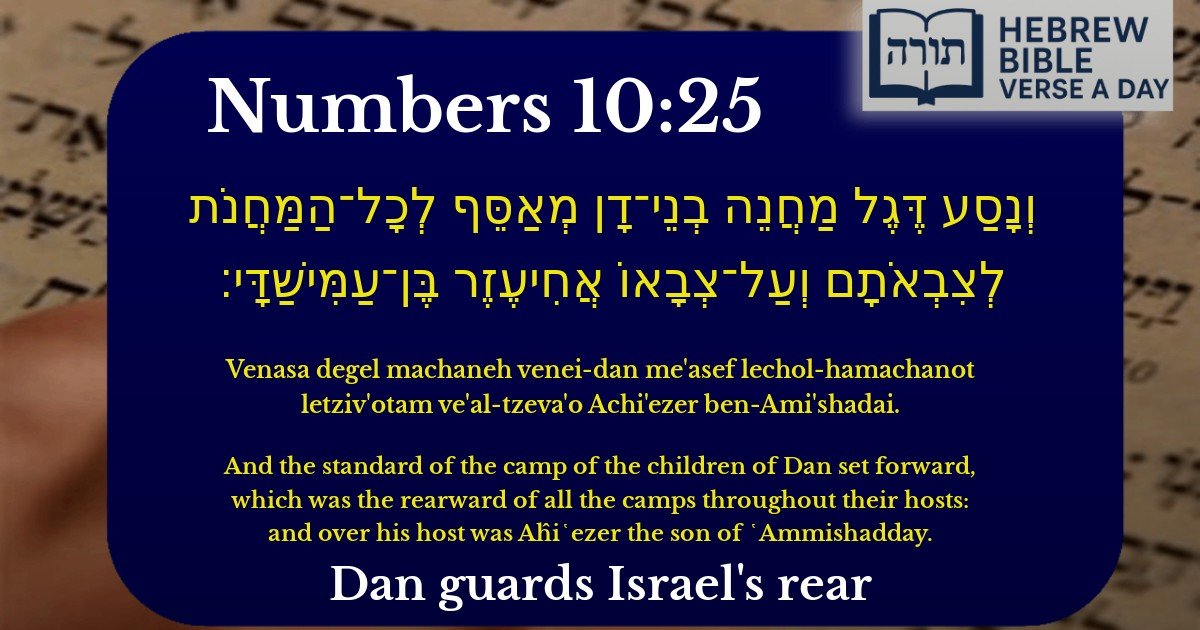

Numbers 10:25 - Dan guards Israel's rear

Numbers 10:25 - במדבר 10:25

Hebrew Text

וְנָסַע דֶּגֶל מַחֲנֵה בְנֵי־דָן מְאַסֵּף לְכָל־הַמַּחֲנֹת לְצִבְאֹתָם וְעַל־צְבָאוֹ אֲחִיעֶזֶר בֶּן־עַמִּישַׁדָּי׃

English Translation

And the standard of the camp of the children of Dan set forward, which was the rearward of all the camps throughout their hosts: and over his host was Aĥi῾ezer the son of ῾Ammishadday.

Transliteration

Venasa degel machaneh venei-dan me'asef lechol-hamachanot letziv'otam ve'al-tzeva'o Achi'ezer ben-Ami'shadai.

Hebrew Leining Text

וְנָסַ֗ע דֶּ֚גֶל מַחֲנֵ֣ה בְנֵי־דָ֔ן מְאַסֵּ֥ף לְכׇל־הַֽמַּחֲנֹ֖ת לְצִבְאֹתָ֑ם וְעַ֨ל־צְבָא֔וֹ אֲחִיעֶ֖זֶר בֶּן־עַמִּישַׁדָּֽי׃

🎵 Listen to leining

Parasha Commentary

Position and Role of the Tribe of Dan

The verse describes the tribe of Dan traveling at the rear of the Israelite camp during their journeys in the wilderness. Rashi (Bamidbar 2:25) explains that Dan was designated as the "me'asef" (gatherer) because it was their responsibility to collect any lost items from the other tribes and return them. This role highlights their importance in maintaining unity and ensuring no tribe suffered loss during travel.

Leadership of Achi'ezer ben Amishadai

The verse mentions Achi'ezer ben Amishadai as the leader of the tribe of Dan. The Midrash (Bamidbar Rabbah 2:10) emphasizes that each tribal leader was chosen for their unique qualities. Achi'ezer's name ("My brother is help") reflects his supportive nature, aligning with Dan's role as protectors of the camp's rear. Rambam (Hilchot Melachim 1:7) notes that leadership in Israel is always based on merit and divine appointment.

Symbolism of the Rear Position

  • Protection: The Talmud (Sotah 33b) suggests that Dan's position at the rear served as a defensive measure, guarding against attacks from behind.
  • Spiritual Significance: The Kli Yakar (Bamidbar 2:25) teaches that Dan's role symbolizes the importance of every individual in Klal Yisrael—even those who may seem "last" are essential to the nation's completeness.
  • Historical Context: Ibn Ezra notes that this formation mirrored the divine cloud's guidance, with each tribe's position reflecting their spiritual and practical roles.

📚 Talmud Citations

This verse is not quoted in the Talmud.

Frequently Asked Questions

Q: Why was the tribe of Dan at the rear of the camp when traveling?
A: According to Rashi (Numbers 10:25), the tribe of Dan traveled last because they served as the 'gatherers' (me'asef) for the entire camp. If anyone lost an item during the journey, the tribe of Dan would collect and return it. This teaches us about their role in protecting and assisting the rest of the nation.
Q: Who was Aĥi'ezer ben Ammishadai mentioned in this verse?
A: Aĥi'ezer ben Ammishadai was the prince (nasi) of the tribe of Dan, as mentioned in Numbers 1:12 and 7:66. The Midrash (Bamidbar Rabbah 2:7) explains that leaders like Aĥi'ezer were chosen for their wisdom and ability to guide their tribes.
Q: What is the significance of the 'standard' (degel) mentioned in this verse?
A: The 'degel' (standard or flag) represented the identity and unity of each tribe. The Talmud (Bamidbar Rabbah 2:7) teaches that each tribe had its own unique flag with colors and symbols corresponding to the stones on the Kohen Gadol's breastplate. This emphasized both individuality and collective purpose in serving Hashem.
Q: What lesson can we learn from the tribe of Dan's position in the camp?
A: The positioning of Dan at the rear teaches the importance of every role in a community. Even though they were last, their duty—protecting stragglers and returning lost items—was vital. As Rambam teaches (Hilchot De'ot 5:13), no mitzvah is insignificant, and every Jew contributes uniquely to Klal Yisrael.