

Join Our Newsletter To Be Informed When New Videos Are Posted
Hebrew Text
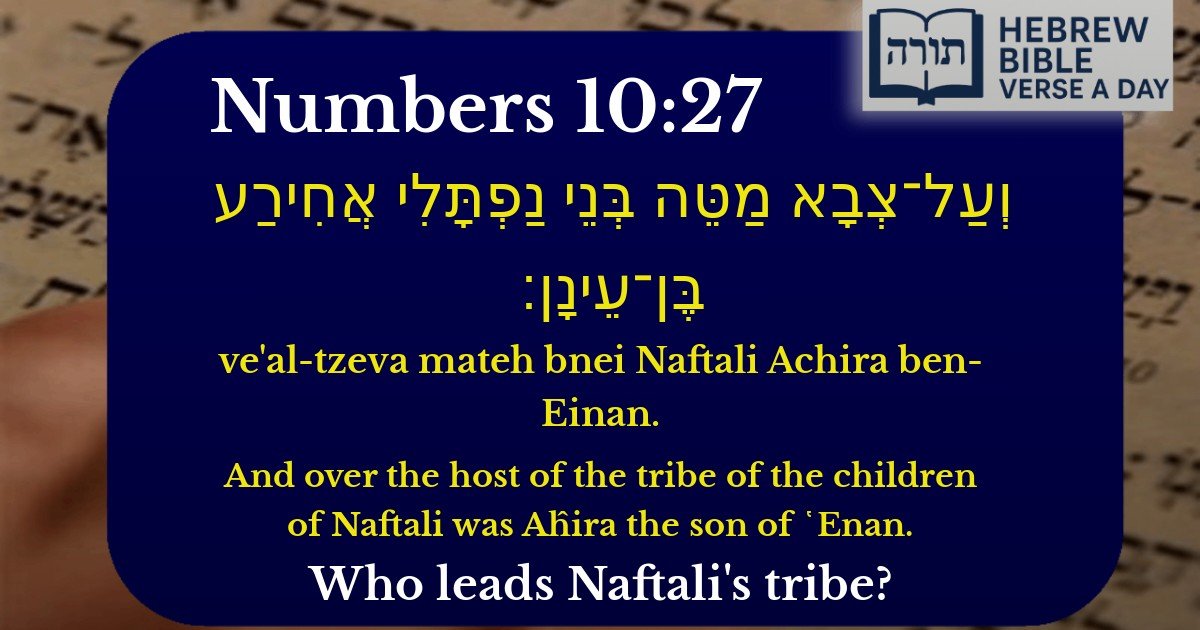
וְעַל־צְבָא מַטֵּה בְּנֵי נַפְתָּלִי אֲחִירַע בֶּן־עֵינָן׃
English Translation
And over the host of the tribe of the children of Naftali was Aĥira the son of ῾Enan.
Transliteration
Ve'al-tzeva mateh bnei Naftali Achira ben-Einan.
Hebrew Leining Text
וְעַ֨ל־צְבָ֔א מַטֵּ֖ה בְּנֵ֣י נַפְתָּלִ֑י אֲחִירַ֖ע בֶּן־עֵינָֽן׃
🎵 Listen to leining
Parasha Commentary
📚 Talmud Citations
This verse is not quoted in the Talmud.
Context in the Torah
This verse appears in Bamidbar (Numbers) 2:29, as part of the detailed account of the arrangement of the Israelite camp during their travels in the wilderness. Each tribe had a designated leader (nasi) responsible for its military host, and here, Aĥira ben ῾Enan is named as the leader of the tribe of Naftali.
Rashi's Commentary
Rashi (Rabbi Shlomo Yitzchaki) notes that the name Aĥira ("my brother is evil" or "brother of evil") may seem unusual, but he explains that names in the Torah often reflect circumstances or Divine messages. Rashi suggests that this name could hint at the challenges or spiritual struggles that the tribe of Naftali might face, though he does not elaborate further. Alternatively, he points out that names in the Torah are not always to be taken literally but may carry deeper meanings related to the individual's role.
Midrashic Insights
The Midrash (Bamidbar Rabbah 2:8) connects Aĥira ben ῾Enan to the broader theme of tribal leadership. It emphasizes that each leader was chosen based on merit and Divine wisdom, not mere lineage. The Midrash also highlights that the name ῾Enan (עֵינָן) relates to the word ayin (עַיִן, "eye"), suggesting that Aĥira possessed keen insight or vision in guiding his tribe.
Symbolism of Naftali's Position
Naftali was positioned in the camp to the north, alongside the tribes of Dan and Asher. The Ramban (Nachmanides) explains that the northern direction often symbolizes hidden or concealed matters in Kabbalistic thought. Thus, Aĥira's leadership may have involved navigating spiritual or strategic challenges unique to this positioning.
Leadership Qualities