

Join Our Newsletter To Be Informed When New Videos Are Posted
Hebrew Text
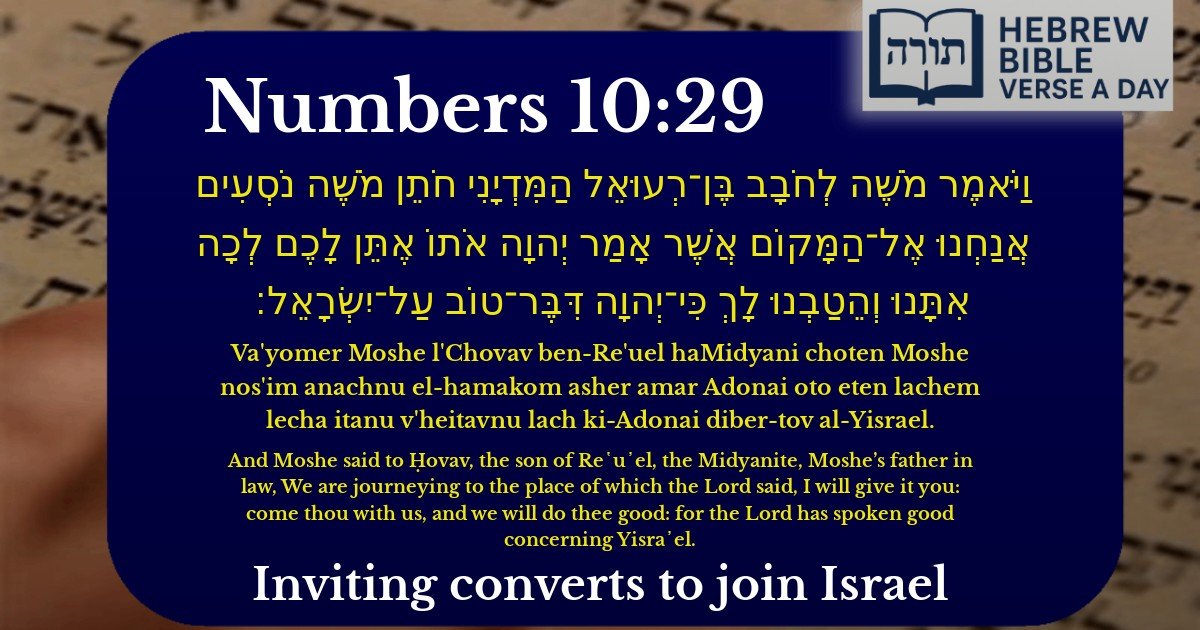
וַיֹּאמֶר מֹשֶׁה לְחֹבָב בֶּן־רְעוּאֵל הַמִּדְיָנִי חֹתֵן מֹשֶׁה נֹסְעִים אֲנַחְנוּ אֶל־הַמָּקוֹם אֲשֶׁר אָמַר יְהוָה אֹתוֹ אֶתֵּן לָכֶם לְכָה אִתָּנוּ וְהֵטַבְנוּ לָךְ כִּי־יְהוָה דִּבֶּר־טוֹב עַל־יִשְׂרָאֵל׃
English Translation
And Moshe said to Ḥovav, the son of Re῾u᾽el, the Midyanite, Moshe’s father in law, We are journeying to the place of which the Lord said, I will give it you: come thou with us, and we will do thee good: for the Lord has spoken good concerning Yisra᾽el.
Transliteration
Va'yomer Moshe l'Chovav ben-Re'uel haMidyani choten Moshe nos'im anachnu el-hamakom asher amar Adonai oto eten lachem lecha itanu v'heitavnu lach ki-Adonai diber-tov al-Yisrael.
Hebrew Leining Text
וַיֹּ֣אמֶר מֹשֶׁ֗ה לְ֠חֹבָ֠ב בֶּן־רְעוּאֵ֣ל הַמִּדְיָנִי֮ חֹתֵ֣ן מֹשֶׁה֒ נֹסְעִ֣ים ׀ אֲנַ֗חְנוּ אֶל־הַמָּקוֹם֙ אֲשֶׁ֣ר אָמַ֣ר יְהֹוָ֔ה אֹת֖וֹ אֶתֵּ֣ן לָכֶ֑ם לְכָ֤ה אִתָּ֙נוּ֙ וְהֵטַ֣בְנוּ לָ֔ךְ כִּֽי־יְהֹוָ֥ה דִּבֶּר־ט֖וֹב עַל־יִשְׂרָאֵֽל׃
🎵 Listen to leining
Parasha Commentary
📚 Talmud Citations
This verse is not quoted in the Talmud.
Context of the Verse
The verse (Bamidbar 10:29) describes Moshe's invitation to his father-in-law, Chovav (also identified as Yitro in Shemot 18), to join Bnei Yisrael on their journey to Eretz Yisrael. This occurs after the departure from Har Sinai and before the travels through the wilderness.
Chovav's Identity
Rashi (on Shemot 18:1) identifies Chovav as Yitro, Moshe's father-in-law, based on the Midrash (Sifrei Bamidbar 10:29). The name "Chovav" (meaning "beloved") reflects his closeness to Moshe and his acceptance of Hashem. The Talmud (Zevachim 116a) discusses Yitro's conversion and his righteous status among the nations.
Moshe's Invitation
Moshe's words, "We are journeying to the place of which the Lord said, I will give it you", emphasize the divine promise of Eretz Yisrael. Ramban (on Bamidbar 10:29) explains that Moshe sought Chovav's guidance due to his familiarity with the wilderness, as Yitro was a Midyanite shepherd (Shemot 3:1).
The Promise of Good
When Moshe says, "we will do thee good", Rashi explains that this refers to a share in the land. The Midrash (Bamidbar Rabbah 10:29) elaborates that Moshe offered Chovav a portion in the future division of Eretz Yisrael, though Chovav ultimately declined (see Sifrei). The phrase "for the Lord has spoken good concerning Yisrael" alludes to the blessings and prosperity awaiting Bnei Yisrael.
Chovav's Role and Legacy
The Talmud (Sanhedrin 94a) notes that Chovav's descendants (the Kenites) later settled among Bnei Yisrael (see Shoftim 1:16). The Midrash (Tanchuma, Beha'alotcha 12) highlights that Chovav's presence would bring merit to the nation, as he was a righteous convert who recognized Hashem's greatness.
Lessons from the Verse