Frequently Asked Questions
Q: What is the purpose of the trumpets mentioned in Numbers 10:3?
A: According to Rashi and the Talmud (Rosh Hashanah 27a), the silver trumpets (חֲצוֹצְרוֹת) served several purposes: to gather the people, signal journeys, and announce special occasions like festivals. In this verse, they were used to call the entire assembly to the entrance of the Tent of Meeting.
Q: Why did the assembly gather at the Tent of Meeting when the trumpets blew?
A: The Tent of Meeting (אֹהֶל מוֹעֵד) was the central place of Divine communication and communal worship. Rambam explains in Hilchot Kli HaMikdash that the trumpet blasts were a sacred summons, reminding Israel to unite for spiritual purposes and to hear words of Torah or prophecy.
Q: What lesson can we learn from the trumpet blasts calling the people together?
A: The Midrash (Bamidbar Rabbah 15:4) teaches that the trumpets symbolize unity and collective responsibility. Just as the sound reached everyone equally, we learn that all Jews must come together for sacred purposes. Today, this reminds us of the importance of community prayer and shared Torah study.
Q: Were these trumpets used for anything else besides gathering the people?
A: Yes! The Talmud (Arachin 11b) explains that the same trumpets were blown during times of war (Numbers 10:9) and on joyous occasions like festivals (Psalms 98:6). Rambam (Hilchot Ta’anit 1:1) notes they were also sounded during times of communal distress to inspire repentance.
Q: Do we still use trumpets in Jewish practice today?
A: While we no longer have the original silver trumpets from the Mishkan, the shofar (ram’s horn) carries a similar function today—especially on Rosh Hashanah (Rambam Hilchot Shofar 1:1). The shofar also calls us to repentance and unity, echoing the message of the biblical trumpets.

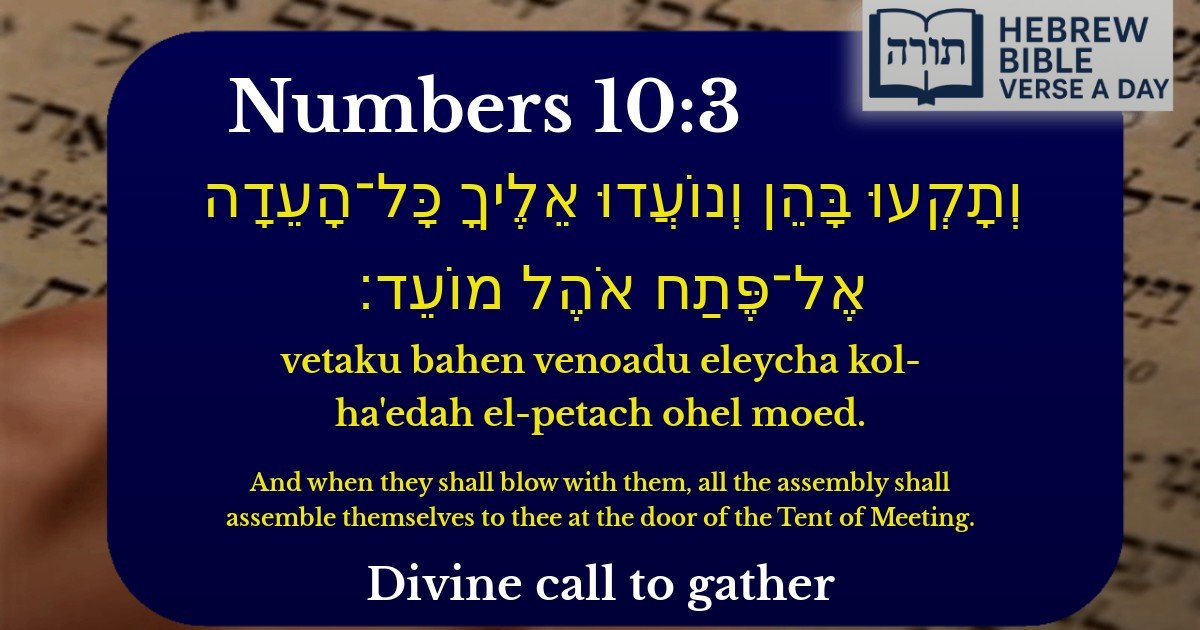

Context and Meaning of the Verse
The verse (Bamidbar 10:3) discusses the commandment to sound the chatzotzrot (trumpets) to gather the entire assembly of Israel at the entrance of the Ohel Moed (Tent of Meeting). This instruction is part of the broader mitzvah regarding the use of silver trumpets for various communal purposes, including assembling the people, signaling journeys, and sounding alarms during war.
Rashi's Commentary
Rashi explains that the phrase "וְנוֹעֲדוּ אֵלֶיךָ" ("shall assemble themselves to thee") refers to Moshe Rabbeinu, indicating that the people would gather specifically to hear his teachings or receive divine instructions. The trumpets served as a unifying call, ensuring that all of Klal Yisrael would come together in unity for sacred purposes.
Rambam's Perspective
In Hilchot Klei HaMikdash (3:4-5), the Rambam elaborates on the function of the trumpets, emphasizing their role in both peacetime and wartime. He notes that the sounding of the trumpets was a means of divine service, symbolizing the call to repentance and communal responsibility. The gathering at the Ohel Moed was not merely physical but also spiritual—a moment of connection with the Shechinah.
Midrashic Insights
The Midrash (Bamidbar Rabbah 15:4) compares the sound of the trumpets to the shofar of Har Sinai, suggesting that just as the shofar at Matan Torah united Bnei Yisrael in accepting the Torah, the trumpets served to unify them in their ongoing service to Hashem. The Ohel Moed represents the continuity of divine revelation, and the gathering there echoes the experience at Sinai.
Halachic Implications
Symbolism and Lessons
The verse teaches the importance of unity and collective responsibility in avodas Hashem. The trumpets symbolize the call to awaken from spiritual slumber and gather for sacred purposes. Just as the entire nation assembled at the Ohel Moed, we learn that Torah and mitzvos require communal participation and shared commitment.