Frequently Asked Questions
Q: What does the 'cloud of the Lord' represent in Numbers 10:34?
A: The 'cloud of the Lord' (ענן ה') refers to the Divine Presence (Shechinah) that accompanied the Israelites in the wilderness. According to Rashi, this cloud guided and protected them during their travels, showing them when to journey and when to camp (based on Exodus 40:36-38).
Q: Why was the cloud of the Lord important for the Israelites?
A: The cloud was a visible sign of Hashem's constant protection and guidance. The Rambam (Moreh Nevuchim 3:50) explains that it provided shade from the desert sun, while the Midrash (Bamidbar Rabbah 1:2) adds that it also flattened mountains and cleared paths for them, making their journey easier.
Q: How does the concept of Divine guidance apply to us today?
A: While we no longer have a physical cloud, Orthodox Judaism teaches that Hashem guides us through Torah and mitzvot. The Talmud (Berachos 33b) explains that just as the cloud directed the Israelites, our study of Torah and adherence to halacha (Jewish law) directs our lives today with Divine wisdom.
Q: What does it mean that the cloud was 'upon them when they went out of the camp'?
A: Rashi explains that the cloud would lift when it was time to travel, signaling the Israelites to break camp. The phrase emphasizes that Divine protection was specifically present during their transitions - teaching that Hashem's guidance is especially important when we embark on new journeys or face changes in life.
Q: Was the cloud present at night too?
A: Yes, according to the Torah (Exodus 13:21-22), there were actually two manifestations: a cloud by day and a pillar of fire by night. The Talmud (Shabbos 23b) explains that the fire provided light and warmth at night, showing that Hashem's protection was constant, day and night.

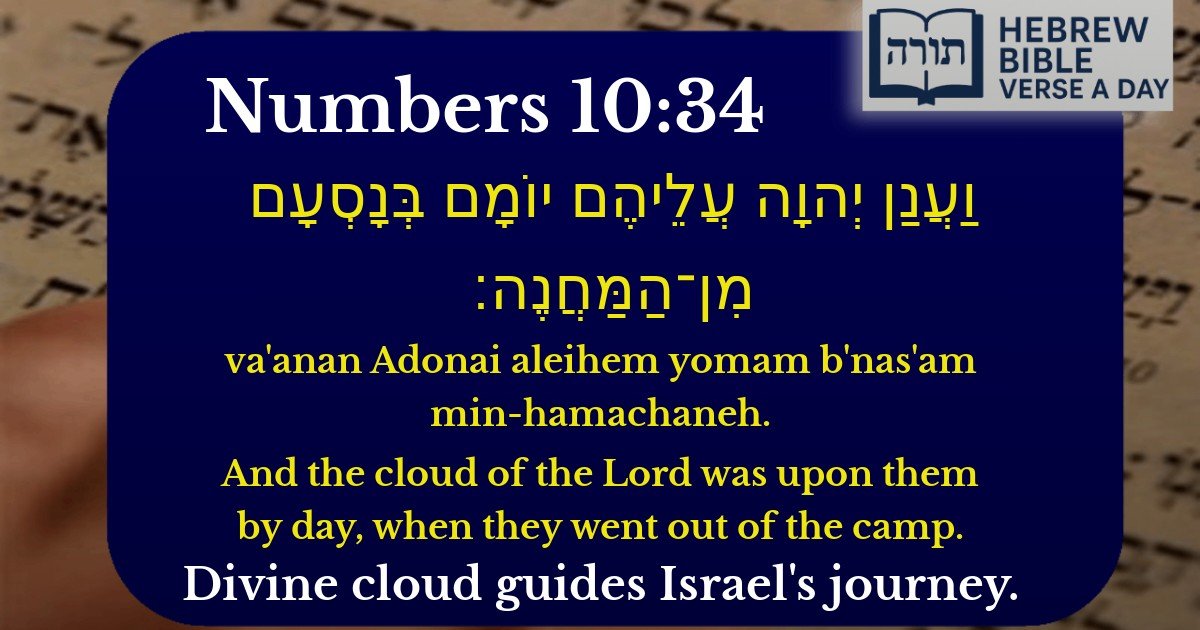

The Divine Cloud in the Wilderness
The verse (Numbers 10:34) describes the presence of the ענן ה׳ (Cloud of the Lord) that accompanied Bnei Yisrael during their travels in the wilderness. According to Rashi, this cloud was one of the manifestations of the Divine Presence that guided and protected the Israelites. The cloud served multiple purposes:
The Cloud's Role in Their Journeys
The phrase "בְּנָסְעָם מִן־הַמַּחֲנֶה" ("when they went out of the camp") emphasizes that the cloud was not stationary—it moved with them. The Sforno explains that this demonstrated Hashem's continuous providence, ensuring that they were never without Divine supervision, even in transit. The Talmud (Shabbat 23b) further teaches that the cloud was a sign of Israel's merit, as it remained with them due to their faithfulness in following Hashem's commandments.
Symbolism of the Cloud
The Midrash (Bamidbar Rabbah 1:2) compares the cloud to a chuppah (wedding canopy), symbolizing the intimate relationship between Hashem and Klal Yisrael. Just as a chuppah unites a bride and groom, the cloud signified the covenant between Hashem and His people. Additionally, the Ramban (Nachmanides) notes that the cloud was a visible reminder of Moshe Rabbeinu's prophecy, as it affirmed that his leadership was Divinely ordained.