Frequently Asked Questions
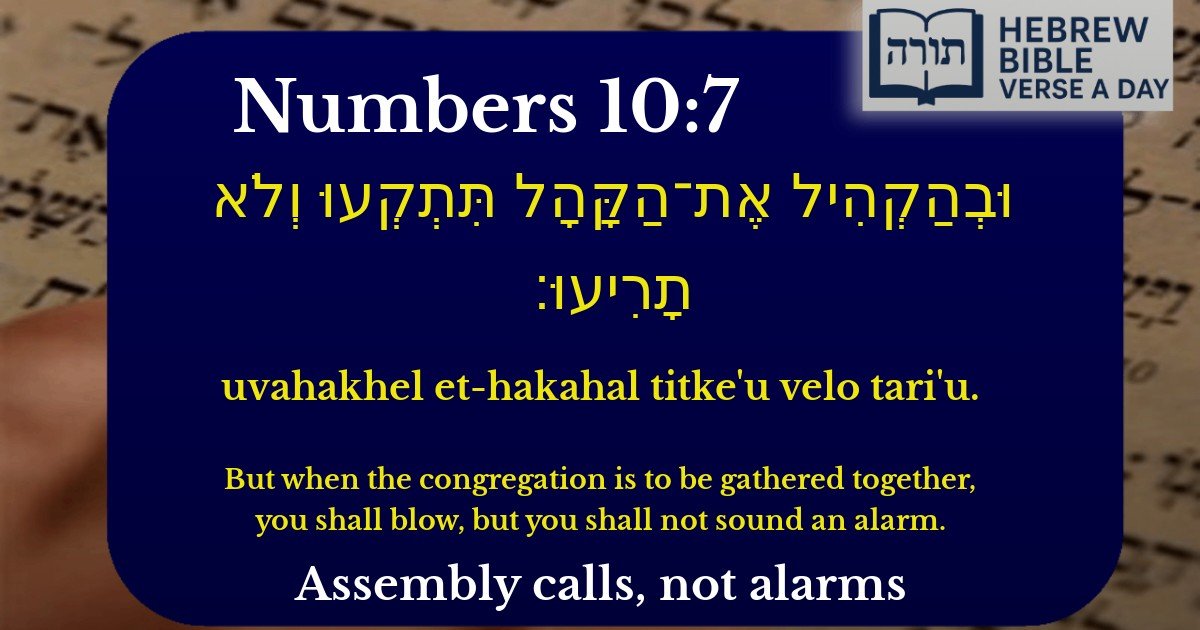
Q: What does Numbers 10:7 mean when it says 'you shall blow, but you shall not sound an alarm'?
A: This verse refers to the two types of sounds made with the silver trumpets (chatzotzrot) in the desert. 'Blowing' (tekiah) was a straight, clear sound used to gather the people, while 'sounding an alarm' (teruah) was a broken sound used for other purposes like war or travel. Here, Hashem instructs that only the tekiah should be used when assembling the congregation.
Q: Why were different trumpet sounds used in the Torah?
A: According to Rashi and the Talmud (Rosh Hashanah 34a), different trumpet sounds served as divine signals - tekiah for gathering, teruah for urgency or movement, and varying combinations for different occasions. This teaches us that communication with Hashem and the community can take different forms for different purposes.
Q: How does this verse about trumpets apply to Jewish life today?
A: While we no longer have the Temple's silver trumpets, we see their legacy in our shofar blasts on Rosh Hashanah, which use the same tekiah and teruah sounds. The Rambam teaches that these sounds are meant to awaken our souls, just as the trumpets gathered and directed our ancestors in the desert.
Q: What's the significance of gathering the congregation in this verse?
A: The Midrash explains that the trumpet blasts for gathering (tekiah) represent unity and peace, as opposed to the fragmented teruah sounds. This teaches that when assembling for holy purposes - whether for prayer, Torah study, or community needs - we should come together in harmony and single-minded purpose.
Q: Were these trumpet sounds only used in the desert?
A: No, the Talmud (Arachin 10b) explains that these trumpet sounds were used throughout Jewish history - in the desert, when entering Israel, and in the Temple service. The verse establishes an eternal principle about sacred communication that applied whenever the Jewish people needed divine guidance or communal assembly.


Context in the Torah
The verse (Bamidbar 10:7) discusses the mitzvah of sounding the chatzotzrot (trumpets) for different purposes. Here, the Torah specifies that when gathering the congregation (kahal), the trumpets should be blown with a tekiah (a straight blast) rather than a teruah (a broken, alarm-like sound). This is one of the four primary uses of the trumpets listed in the surrounding verses.
Rashi's Explanation
Rashi (Bamidbar 10:7) explains that the tekiah is a long, unbroken sound, while the teruah consists of short, staccato blasts. He notes that the tekiah is used for assembling the people because it is a sound of unity and order, whereas the teruah (used in times of war or distress) would evoke panic or confusion when gathering for peaceful purposes.
Rambam's Halachic Perspective
In Hilchot Taaniyot (1:4), Rambam codifies that the chatzotzrot were sounded to assemble the people for mitzvot, communal needs, or emergencies. The distinction between tekiah and teruah reflects the nature of the gathering: a calm, unified call for assembly versus an urgent alarm for war or repentance.
Symbolism in Midrashic Literature
Practical Implications
The Talmud (Arachin 10b) derives from this verse that the chatzotzrot were blown by the Kohanim, not ordinary Israelites, emphasizing the sacred role of leadership in unifying the nation. The Mishneh LaMelech (Hilchot Klei HaMikdash 3:5) further notes that this mitzvah applied primarily in the desert and the Beit HaMikdash, linking it to divine service and communal structure.