

Join Our Newsletter To Be Informed When New Videos Are Posted
Hebrew Text
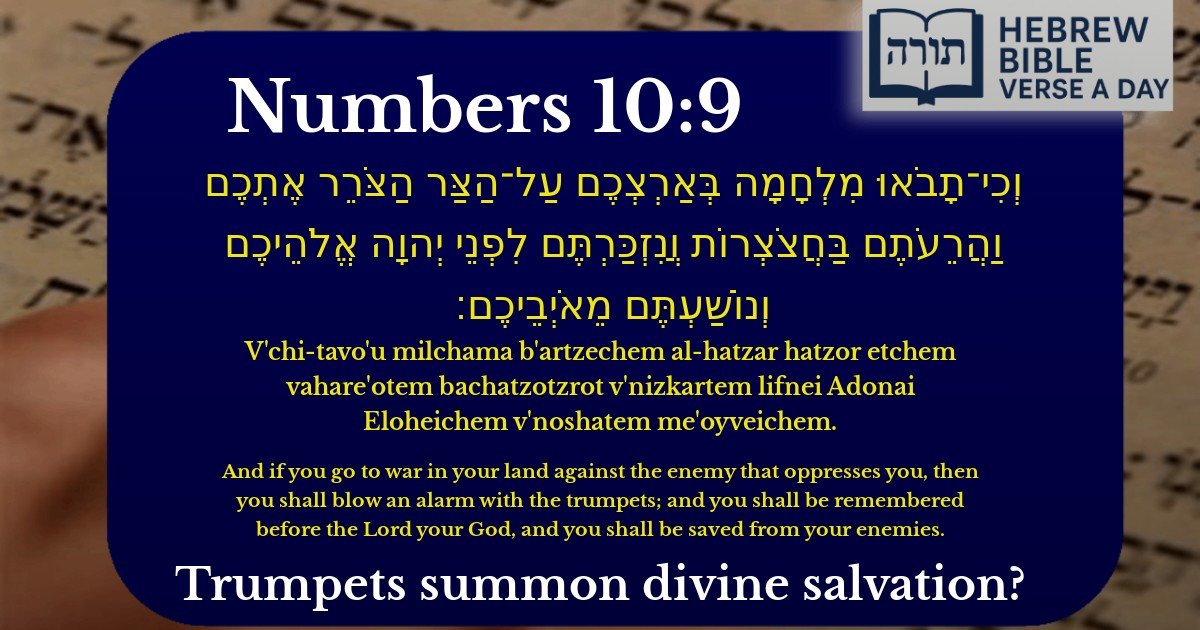
וְכִי־תָבֹאוּ מִלְחָמָה בְּאַרְצְכֶם עַל־הַצַּר הַצֹּרֵר אֶתְכֶם וַהֲרֵעֹתֶם בַּחֲצֹצְרוֹת וֲנִזְכַּרְתֶּם לִפְנֵי יְהוָה אֱלֹהֵיכֶם וְנוֹשַׁעְתֶּם מֵאֹיְבֵיכֶם׃
English Translation
And if you go to war in your land against the enemy that oppresses you, then you shall blow an alarm with the trumpets; and you shall be remembered before the Lord your God, and you shall be saved from your enemies.
Transliteration
V'chi-tavo'u milchama b'artzechem al-hatzar hatzor etchem vahare'otem bachatzotzrot v'nizkartem lifnei Adonai Eloheichem v'noshatem me'oyveichem.
Hebrew Leining Text
וְכִֽי־תָבֹ֨אוּ מִלְחָמָ֜ה בְּאַרְצְכֶ֗ם עַל־הַצַּר֙ הַצֹּרֵ֣ר אֶתְכֶ֔ם וַהֲרֵעֹתֶ֖ם בַּחֲצֹצְרֹ֑ת וְנִזְכַּרְתֶּ֗ם לִפְנֵי֙ יְהֹוָ֣ה אֱלֹֽהֵיכֶ֔ם וְנוֹשַׁעְתֶּ֖ם מֵאֹיְבֵיכֶֽם׃
🎵 Listen to leining
Parasha Commentary
📚 Talmud Citations
This verse is quoted in the Talmud.
📖 Rosh Hashanah 26b
The verse is discussed in the context of the mitzvah of blowing trumpets during times of war and distress, highlighting its significance in Jewish practice.
📖 Sotah 42b
The verse is referenced in a discussion about the importance of remembering God in times of war and the role of trumpets in invoking divine assistance.
Context and General Meaning
The verse (Bamidbar 10:9) discusses the mitzvah of sounding the chatzotzrot (trumpets) during times of war. According to Rashi, this commandment applies specifically to wars fought in Eretz Yisrael against enemies who oppress the Jewish people. The sounding of the trumpets serves as a spiritual call to action, invoking divine assistance.
The Purpose of the Trumpets
Rambam (Hilchot Ta'anit 1:1-4) explains that the sounding of the trumpets is part of the broader concept of ze'akah (crying out) to Hashem in times of distress. The trumpets serve as a physical manifestation of the people's collective prayer, demonstrating their reliance on divine intervention rather than military strength alone.
Spiritual Dimensions of the Mitzvah
Halachic Applications
The Ramban notes that this mitzvah is unique in that it applies specifically to wars fought in Eretz Yisrael, emphasizing the sanctity of the land and the special relationship between Hashem and His people when they dwell there. The Minchat Chinuch (Mitzvah 384) further elaborates that this commandment underscores the idea that military success ultimately depends on divine will, not human strategy alone.
Midrashic Insights
The Midrash Tanchuma (Bamidbar 12) teaches that the trumpets serve as a reminder of the Akeidah (Binding of Yitzchak), where a ram's horn was ultimately sounded. Just as Avraham's faith brought salvation, so too does the faith of Bnei Yisrael in blowing the trumpets bring deliverance from their enemies.