Frequently Asked Questions
Q: Who are Elishama and Gamliel in Numbers 1:10?
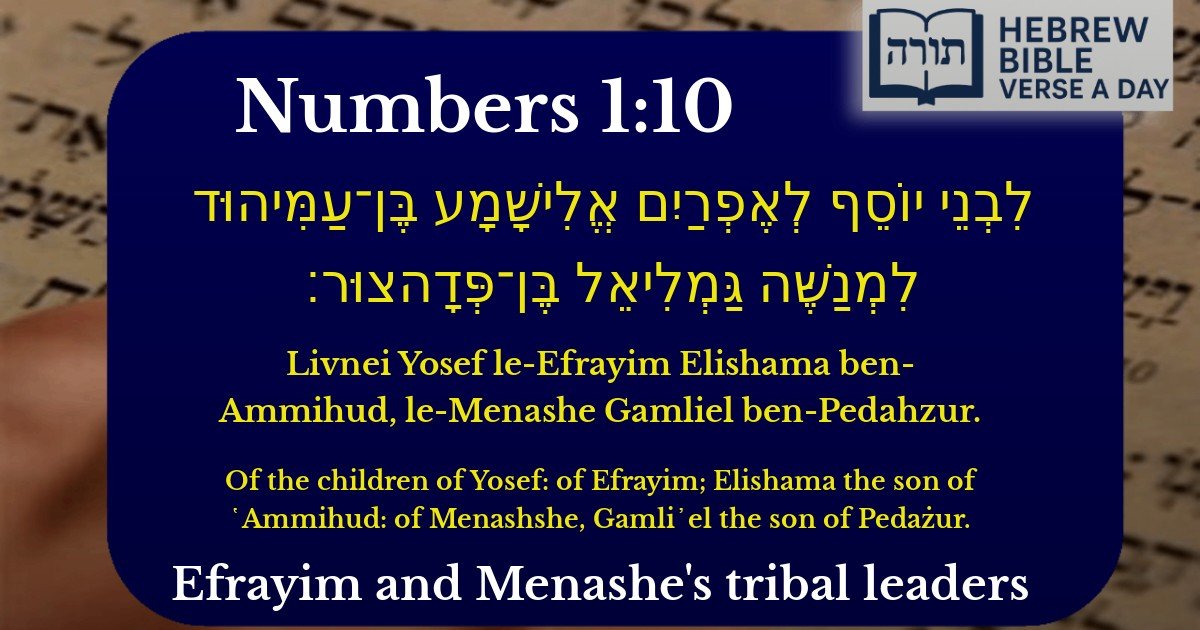
A: Elishama and Gamliel were the leaders (נשיאים) appointed to represent the tribes of Ephraim and Menashe, respectively, during the census in the wilderness. Elishama was the son of Ammihud, and Gamliel was the son of Pedahzur. According to Rashi, these leaders were chosen for their wisdom and righteousness to oversee their tribes.
Q: Why are Ephraim and Menashe listed separately in Numbers 1:10?
A: Although Ephraim and Menashe were both sons of Yosef (Joseph), they were counted as separate tribes in Israel. This fulfilled Yaakov’s (Jacob’s) blessing in Bereishit (Genesis) 48:5, where he elevated them to the status of full tribes, each receiving its own portion in the Land of Israel.
Q: What is the significance of listing tribal leaders in Numbers 1:10?
A: The Torah lists the leaders of each tribe to emphasize the importance of organized leadership in Klal Yisrael (the Jewish people). The Rambam teaches that proper leadership ensures unity and justice. These leaders helped conduct the census and represented their tribes in matters of law and communal responsibility.
Q: How does the naming of tribal leaders apply to Jewish life today?
A: Just as each tribe had respected leaders, Jewish communities today rely on rabbis and communal leaders for guidance. The Talmud (Sanhedrin 17a) teaches that a community must appoint wise and G-d-fearing leaders to uphold Torah values and ensure the spiritual and physical well-being of the people.
Q: Why does the Torah mention the fathers of Elishama and Gamliel?
A: The Torah often mentions a person’s lineage to highlight their noble heritage and the merit of their ancestors. Rashi explains that mentioning their fathers (Ammihud and Pedahzur) shows that leadership was based on both personal righteousness and distinguished family background, reinforcing the importance of mesorah (tradition) in Jewish leadership.


Context in Sefer Bamidbar
This verse appears in Bamidbar (Numbers) 1:10, listing the leaders appointed to assist Moshe and Aharon in the census of Bnei Yisrael. The verse specifies the representatives from the tribes of Efrayim and Menasheh, the sons of Yosef, highlighting their distinct roles despite their shared lineage.
Division of Yosef's Tribes
Rashi (on Bamidbar 1:10) notes that Yosef's descendants were split into two tribes—Efrayim and Menasheh—as per Yaakov Avinu's blessing (Bereishit 48:5). This division elevated Yosef's status, granting his sons equal standing among the other tribes. The Torah here emphasizes their individuality by listing separate leaders.
Elishama ben Ammihud (Efrayim)
Gamli’el ben Pedahtzur (Menasheh)
Unity Amid Distinction
The Or HaChaim observes that while Efrayim and Menasheh had separate leaders, they were united under Yosef’s legacy. This duality—individuality within unity—mirrors the balance between tribal uniqueness and collective responsibility in Klal Yisrael.