

Join Our Newsletter To Be Informed When New Videos Are Posted
Hebrew Text
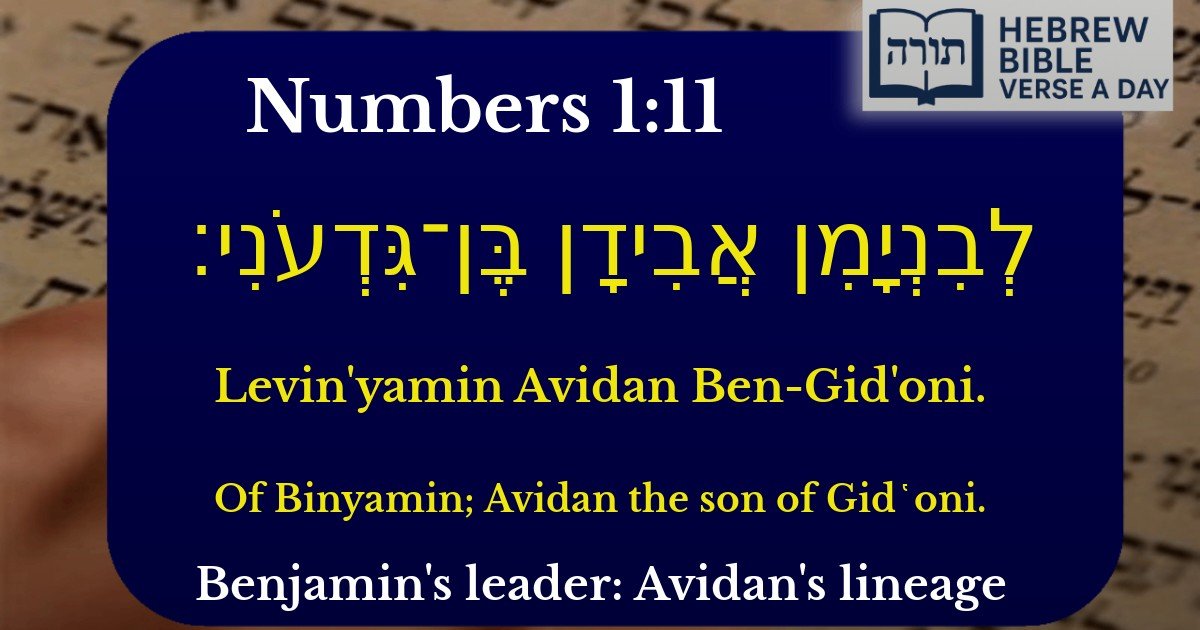
לְבִנְיָמִן אֲבִידָן בֶּן־גִּדְעֹנִי׃
English Translation
Of Binyamin; Avidan the son of Gid῾oni.
Transliteration
Levin'yamin Avidan Ben-Gid'oni.
Hebrew Leining Text
לְבִ֨נְיָמִ֔ן אֲבִידָ֖ן בֶּן־גִּדְעֹנִֽי׃
🎵 Listen to leining
Parasha Commentary
📚 Talmud Citations
This verse is not quoted in the Talmud.
Context in the Torah
The verse "לְבִנְיָמִן אֲבִידָן בֶּן־גִּדְעֹנִי" (Of Binyamin; Avidan the son of Gid῾oni) appears in Bamidbar 1:11 as part of the census of the tribes of Israel in the wilderness. Avidan ben Gidoni was the appointed leader of the tribe of Binyamin during this count.
Rashi's Commentary
Rashi (Bamidbar 1:11) explains that Avidan's role as a leader of Binyamin signifies his prominence and righteousness. The name "Avidan" (אֲבִידָן) can be interpreted as "My Father is Judge", reflecting his commitment to justice and divine service. The patronymic "ben Gidoni" (בֶּן־גִּדְעֹנִי) may allude to his lineage or personal traits, as names in Torah often carry deeper meanings.
Midrashic Insights
Midrashic sources (e.g., Bamidbar Rabbah) highlight that tribal leaders like Avidan were chosen for their wisdom and ability to guide their people. The tribe of Binyamin was known for its fierce loyalty to Hashem and the unity of the Jewish people, as seen later in the narrative of the Pilegesh b'Givah (Shoftim 19-21). Avidan's leadership thus reflects the tribe's unique spiritual qualities.
Rambam on Leadership
Rambam (Hilchot Melachim 1:7) discusses the qualities of Jewish leaders, emphasizing wisdom, humility, and fear of Heaven. Avidan, as a representative of Binyamin, likely embodied these traits, ensuring his tribe's adherence to Torah values during the wilderness journey.
Symbolism of Names
Legacy in Jewish Tradition
Avidan's role is memorialized in the Torah as part of the sacred census, underscoring the importance of every tribe's contribution to Klal Yisrael. His leadership during the formative years in the wilderness set a precedent for future leaders of Binyamin, including Shaul HaMelech, the first king of Israel.