

Join Our Newsletter To Be Informed When New Videos Are Posted
Hebrew Text
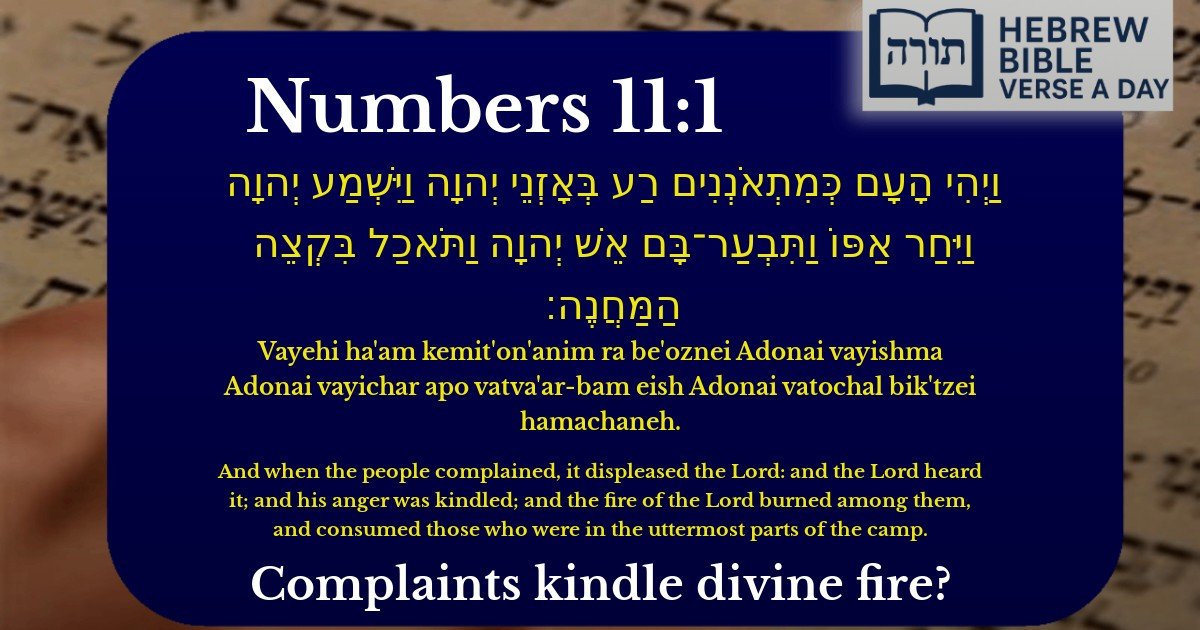
וַיְהִי הָעָם כְּמִתְאֹנְנִים רַע בְּאָזְנֵי יְהוָה וַיִּשְׁמַע יְהוָה וַיִּחַר אַפּוֹ וַתִּבְעַר־בָּם אֵשׁ יְהוָה וַתֹּאכַל בִּקְצֵה הַמַּחֲנֶה׃
English Translation
And when the people complained, it displeased the Lord: and the Lord heard it; and his anger was kindled; and the fire of the Lord burned among them, and consumed those who were in the uttermost parts of the camp.
Transliteration
Vayehi ha'am kemit'on'anim ra be'oznei Adonai vayishma Adonai vayichar apo vatva'ar-bam eish Adonai vatochal bik'tzei hamachaneh.
Hebrew Leining Text
וַיְהִ֤י הָעָם֙ כְּמִתְאֹ֣נְנִ֔ים רַ֖ע בְּאׇזְנֵ֣י יְהֹוָ֑ה וַיִּשְׁמַ֤ע יְהֹוָה֙ וַיִּ֣חַר אַפּ֔וֹ וַתִּבְעַר־בָּם֙ אֵ֣שׁ יְהֹוָ֔ה וַתֹּ֖אכַל בִּקְצֵ֥ה הַֽמַּחֲנֶֽה׃
🎵 Listen to leining
Parasha Commentary
📚 Talmud Citations
This verse is quoted in the Talmud.
📖 Ta'anit 11a
The verse is referenced in a discussion about the consequences of complaining and murmuring against God, illustrating how such behavior can provoke divine anger.
📖 Sanhedrin 110a
The verse is cited in the context of discussing the severity of speaking against God and the punishments that can result from such actions.
Context and Meaning of the Verse
The verse (Bamidbar 11:1) describes a moment when Bnei Yisrael complained ("כְּמִתְאֹנְנִים") in the wilderness, provoking Hashem's anger, which resulted in a divine fire consuming the outskirts of the camp. Rashi explains that the term "כְּמִתְאֹנְנִים" implies they were seeking a pretext to rebel, not merely expressing legitimate grievances. The Midrash Tanchuma (Bamidbar 16) elaborates that their complaints were unjustified, as they were well-provided for by Hashem's miracles.
Nature of the Complaint
While the verse does not specify the complaint, Chazal (Sifrei Bamidbar 85) connect it to the preceding context—dissatisfaction with the manna (as detailed later in the chapter). Ramban suggests their murmuring reflected ingratitude, despite Hashem's constant protection and sustenance. The Or HaChaim adds that their complaints were "רַע בְּאָזְנֵי יְהוָה" (evil in Hashem's ears) because they rejected His direct providence.
Divine Response: The Fire
The "אֵשׁ יְהוָה" (fire of Hashem) symbolizes immediate divine retribution. The Talmud (Yoma 75a) teaches that this fire targeted the "קְצֵה הַמַּחֲנֶה" (edges of the camp) because the instigators were the "עֵרֶב רַב" (mixed multitude) who dwelled there, as per Ibn Ezra's commentary. The Kli Yakar emphasizes that the fire consumed only the outskirts to demonstrate Hashem's mercy—He limited punishment to the primary offenders.
Lessons from the Incident