
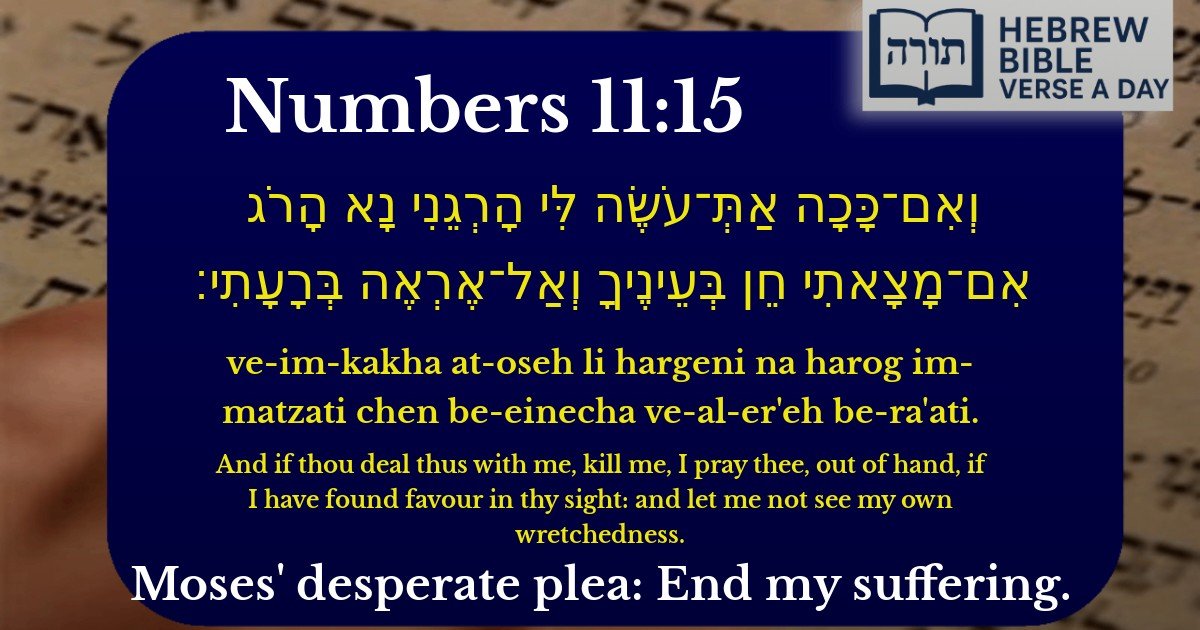

Numbers 11:15 - Moses' desperate plea: End my suffering.

Numbers 11:15 - במדבר 11:15

Hebrew Text

וְאִם־כָּכָה אַתְּ־עֹשֶׂה לִּי הָרְגֵנִי נָא הָרֹג אִם־מָצָאתִי חֵן בְּעֵינֶיךָ וְאַל־אֶרְאֶה בְּרָעָתִי׃

English Translation

And if thou deal thus with me, kill me, I pray thee, out of hand, if I have found favour in thy sight: and let me not see my own wretchedness.

Transliteration

Ve-im-kakha at-oseh li hargeni na harog im-matzati chen be-einecha ve-al-er'eh be-ra'ati.

Hebrew Leining Text

וְאִם־כָּ֣כָה ׀ אַתְּ־עֹ֣שֶׂה לִּ֗י הׇרְגֵ֤נִי נָא֙ הָרֹ֔ג אִם־מָצָ֥אתִי חֵ֖ן בְּעֵינֶ֑יךָ וְאַל־אֶרְאֶ֖ה בְּרָעָתִֽי׃ {פ}

🎵 Listen to leining

Parasha Commentary

Context of the Verse

This verse (Numbers 11:15) is part of Moshe Rabbeinu's plea to Hashem during the incident of the mit'onenim (the complainers) in the wilderness. The people were dissatisfied with the manna and demanded meat, leading Moshe to express his distress over the burden of leading the nation.

Moshe's Emotional State

Rashi explains that Moshe reached a point of utter despair, feeling overwhelmed by the constant complaints of Bnei Yisrael. His plea, "kill me, I pray thee," reflects his deep anguish and sense of inability to continue bearing the responsibility alone. The phrase "אַל־אֶרְאֶה בְּרָעָתִי" ("let me not see my own wretchedness") indicates his fear of failing in his sacred mission.

Theological Implications

  • Rambam (Moreh Nevuchim 1:54): Moshe's request demonstrates the human limitations even of the greatest prophet. His plea was not a true wish for death but an expression of his overwhelming distress, showing that even Moshe needed divine assistance to fulfill his role.
  • Sforno: Moshe's words highlight his selflessness—he was more concerned about the potential failure of his mission ("my wretchedness") than his personal suffering.

Midrashic Interpretation

The Midrash Tanchuma (Bamidbar 16) connects this plea to Moshe's earlier experiences, noting that his despair stemmed from seeing the people revert to ingratitude after witnessing miracles. The phrase "if I have found favour in thy sight" echoes Moshe's previous dialogues with Hashem (e.g., Exodus 33:13), emphasizing his intimate relationship with the Divine.

Halachic Perspective

The Talmud (Berachos 32b) derives from this verse that even in moments of despair, one should frame requests respectfully ("if I have found favour"). This teaches the importance of maintaining proper decorum in prayer, even during distress.

📚 Talmud Citations

This verse is not quoted in the Talmud.

Frequently Asked Questions

Q: What does Numbers 11:15 mean when Moshe says 'kill me'?
A: In Numbers 11:15, Moshe expresses deep frustration and despair while leading the Jewish people in the wilderness. After they complain about the manna and demand meat, Moshe feels overwhelmed by the burden of leadership. Rashi explains that Moshe is not literally asking to die, but is pleading with Hashem to either help him bear the responsibility or relieve him of it entirely, as he feels unable to continue under such pressure.
Q: Why is Moshe so distressed in this verse?
A: Moshe is distressed because the Jewish people are constantly complaining, despite all the miracles Hashem has performed for them. The Midrash (Bamidbar Rabbah 15:16) explains that Moshe felt the weight of leadership was too great when the people lacked faith and gratitude. His plea reflects his deep concern for both the people and his own inability to satisfy their demands.
Q: What can we learn from Moshe's reaction in Numbers 11:15?
A: We learn that even great leaders like Moshe can feel overwhelmed and turn to Hashem in moments of distress. The Rambam (Hilchos De'os 2:3) teaches that it is natural to feel burdened, but we must channel those feelings into prayer and trust in Hashem, just as Moshe did. This verse also teaches the importance of empathy for leaders who carry heavy responsibilities.
Q: How does Hashem respond to Moshe's plea in this verse?
A: Hashem responds with compassion by instructing Moshe to gather 70 elders to share the burden of leadership (Numbers 11:16-17). The Talmud (Sanhedrin 17a) explains that this shows Hashem’s kindness—He lightens Moshe’s load rather than punishing him for his words. This teaches that Hashem supports those who sincerely seek help in serving Him and His people.
Q: Is it appropriate to ask Hashem to 'take one's life' when suffering?
A: While Moshe’s words in this verse express deep anguish, Jewish tradition (as seen in Ramban’s commentary) emphasizes that we should never actually seek death. Instead, we should follow Moshe’s example of turning to Hashem in prayer during hardship. The Talmud (Berachos 10a) praises those who bless Hashem even in suffering, teaching us to seek strength rather than escape.