

Join Our Newsletter To Be Informed When New Videos Are Posted
Hebrew Text
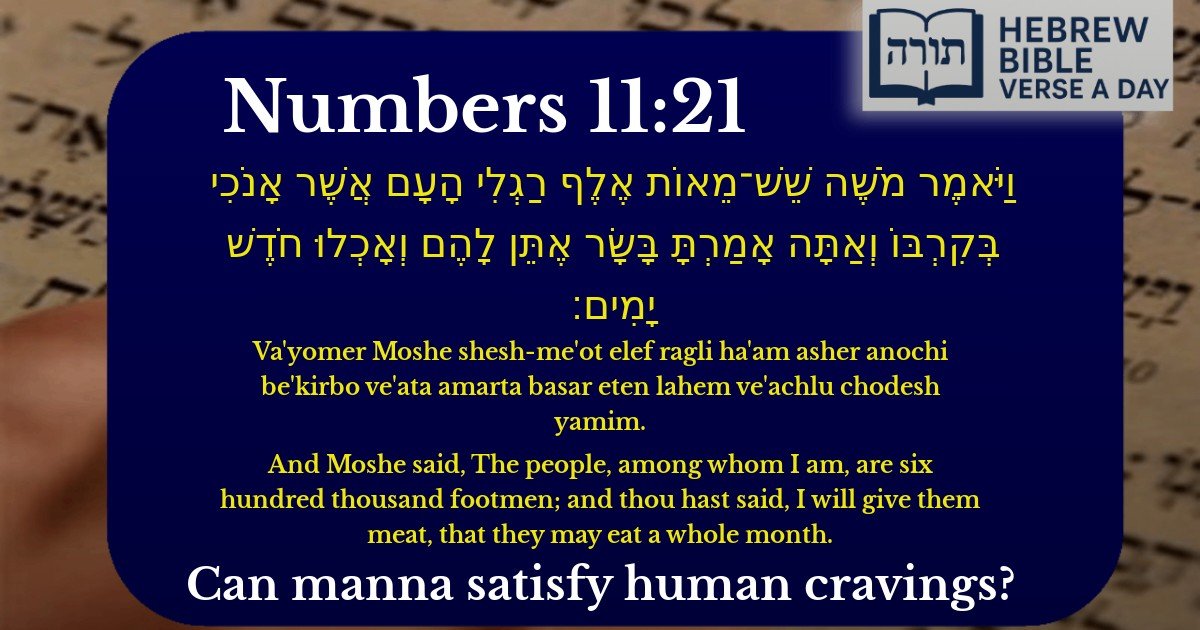
וַיֹּאמֶר מֹשֶׁה שֵׁשׁ־מֵאוֹת אֶלֶף רַגְלִי הָעָם אֲשֶׁר אָנֹכִי בְּקִרְבּוֹ וְאַתָּה אָמַרְתָּ בָּשָׂר אֶתֵּן לָהֶם וְאָכְלוּ חֹדֶשׁ יָמִים׃
English Translation
And Moshe said, The people, among whom I am, are six hundred thousand footmen; and thou hast said, I will give them meat, that they may eat a whole month.
Transliteration
Va'yomer Moshe shesh-me'ot elef ragli ha'am asher anochi be'kirbo ve'ata amarta basar eten lahem ve'achlu chodesh yamim.
Hebrew Leining Text
וַיֹּ֘אמֶר֮ מֹשֶׁה֒ שֵׁשׁ־מֵא֥וֹת אֶ֙לֶף֙ רַגְלִ֔י הָעָ֕ם אֲשֶׁ֥ר אָנֹכִ֖י בְּקִרְבּ֑וֹ וְאַתָּ֣ה אָמַ֗רְתָּ בָּשָׂר֙ אֶתֵּ֣ן לָהֶ֔ם וְאָכְל֖וּ חֹ֥דֶשׁ יָמִֽים׃
🎵 Listen to leining
Parasha Commentary
📚 Talmud Citations
This verse is not quoted in the Talmud.
Context of the Verse
This verse (Bamidbar 11:21) appears in the narrative where Bnei Yisrael complain about the lack of meat in the desert, expressing nostalgia for the foods they ate in Egypt. Moshe responds to Hashem's promise to provide meat for a month by expressing doubt about how such a large population could be sustained.
Moshe's Statement: "Six Hundred Thousand Footmen"
Rashi explains that Moshe emphasizes the number "six hundred thousand" to highlight the enormity of the request. The term "רַגְלִי" (footmen) refers to adult males eligible for military service, as counted in the census (Bamidbar 1:46). Ramban adds that Moshe's mention of the population size underscores the logistical impossibility of gathering enough meat naturally in the desert.
Moshe's Questioning of Hashem's Promise
The Midrash (Bamidbar Rabbah 15:19) discusses Moshe's hesitation, noting that he could not fathom how Hashem would fulfill this promise. The Talmud (Chullin 139b) connects this to Moshe's earlier statement (Bamidbar 11:13), where he questions where meat could be found for such a multitude. This reflects human limitation in comprehending divine capability.
Theological Implications
Lessons from the Verse
The Or HaChaim explains that this episode teaches emunah (faith)—even when circumstances seem impossible, Hashem can provide in unexpected ways. The meat ultimately came through a miraculous wind (Bamidbar 11:31), demonstrating that divine promises are fulfilled beyond natural constraints.