

Join Our Newsletter To Be Informed When New Videos Are Posted
Hebrew Text
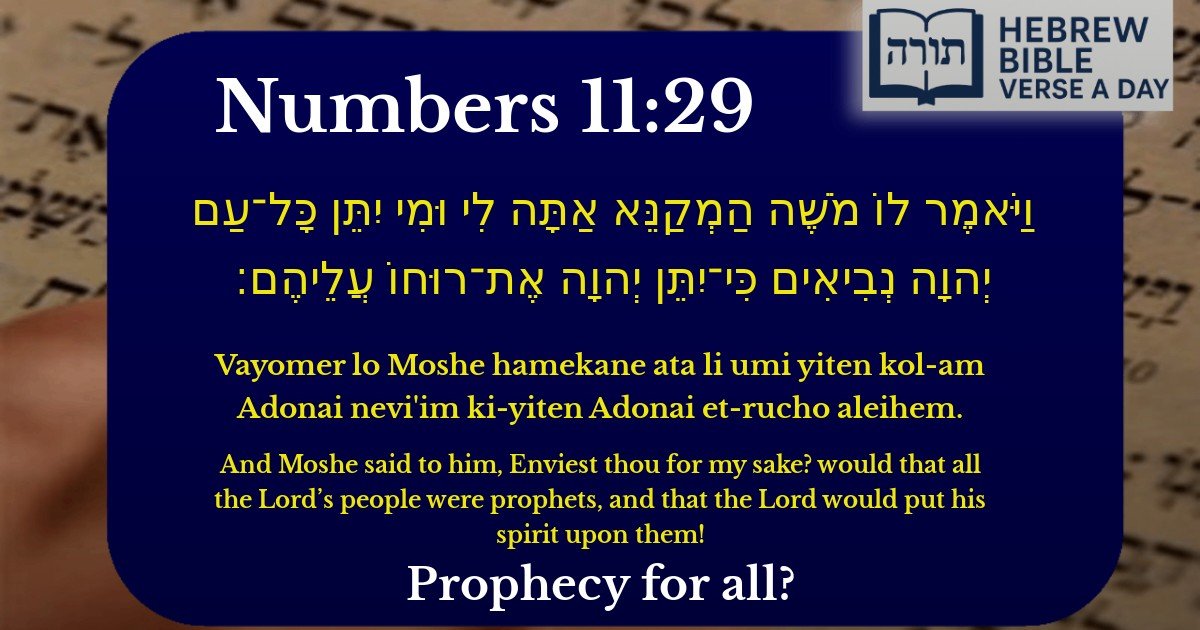
וַיֹּאמֶר לוֹ מֹשֶׁה הַמְקַנֵּא אַתָּה לִי וּמִי יִתֵּן כָּל־עַם יְהוָה נְבִיאִים כִּי־יִתֵּן יְהוָה אֶת־רוּחוֹ עֲלֵיהֶם׃
English Translation
And Moshe said to him, Enviest thou for my sake? would that all the Lord’s people were prophets, and that the Lord would put his spirit upon them!
Transliteration
Vayomer lo Moshe hamekane ata li umi yiten kol-am Adonai nevi'im ki-yiten Adonai et-rucho aleihem.
Hebrew Leining Text
וַיֹּ֤אמֶר לוֹ֙ מֹשֶׁ֔ה הַֽמְקַנֵּ֥א אַתָּ֖ה לִ֑י וּמִ֨י יִתֵּ֜ן כׇּל־עַ֤ם יְהֹוָה֙ נְבִיאִ֔ים כִּי־יִתֵּ֧ן יְהֹוָ֛ה אֶת־רוּח֖וֹ עֲלֵיהֶֽם׃
🎵 Listen to leining
Parasha Commentary
📚 Talmud Citations
This verse is quoted in the Talmud.
📖 Sanhedrin 17a
The verse is referenced in a discussion about the qualifications and appointment of judges, illustrating the ideal of widespread prophetic inspiration among the people.
📖 Sotah 48b
The verse is cited in a discussion about the cessation of prophecy in Israel, contrasting the time of Moses when prophetic spirit was more widespread.
Context of the Verse
The verse (Bamidbar 11:29) occurs after Eldad and Meidad prophesied in the camp, prompting Yehoshua to urge Moshe to restrain them. Moshe responds with humility, expressing a wish that all of Hashem's people could be prophets.
Rashi's Explanation
Rashi explains that Moshe was not jealous of Eldad and Meidad's prophecy. Instead, he rebuked Yehoshua for his zealousness, saying, "Are you jealous on my behalf?" Moshe's statement, "Would that all the Lord’s people were prophets," reflects his selfless desire for Klal Yisrael to attain spiritual heights, even if it diminished his own unique status.
Rambam's Perspective
Rambam (Hilchos Yesodei HaTorah 7:7) discusses prophecy as a divine gift attainable only through intense preparation and purity. Moshe’s wish underscores that prophecy is not limited by human hierarchy but depends on divine will and individual merit. His humility contrasts with Yehoshua's concern for Moshe's honor.
Talmudic Insight (Sanhedrin 17a)
The Talmud notes that Eldad and Meidad prophesied about Moshe's death and Yehoshua's leadership, which may have prompted Yehoshua's reaction. Moshe, however, prioritized the spiritual elevation of the nation over personal concerns, embodying the ideal of "bittul" (self-nullification) before Hashem's will.
Midrashic Interpretation (Bamidbar Rabbah 15:19)
The Midrash elaborates that Moshe’s response demonstrated his unparalleled humility. Unlike other leaders who might guard their authority, Moshe rejoiced in the prospect of others sharing in divine inspiration. This aligns with his title as "the most humble of all men" (Bamidbar 12:3).
Key Lessons