
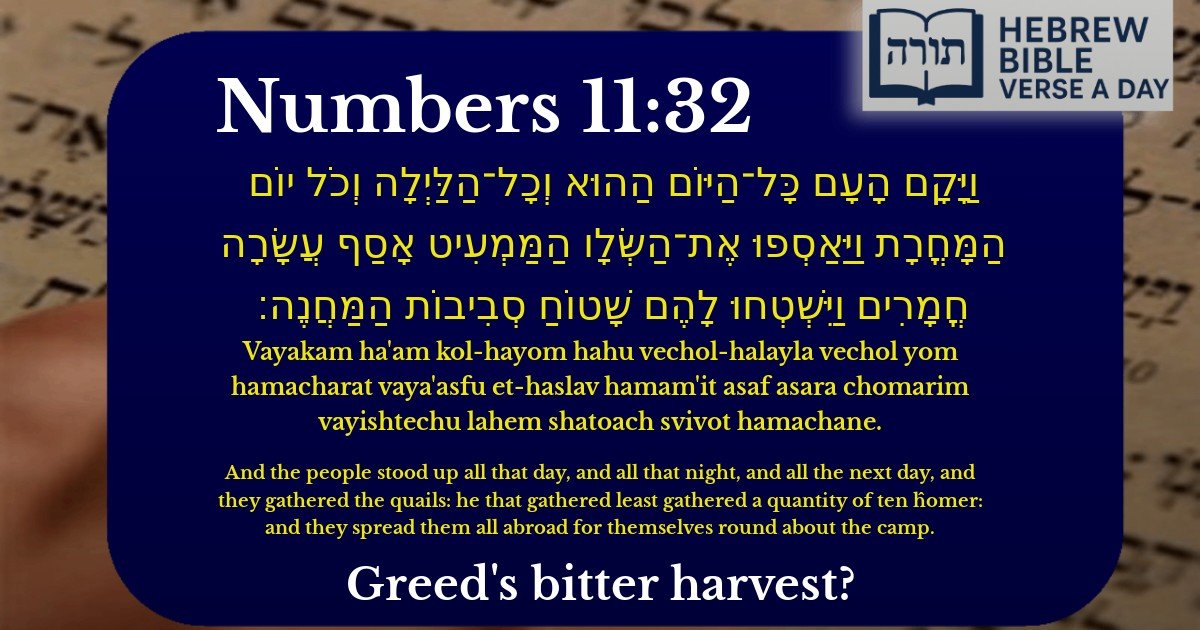

Numbers 11:32 - Greed's bitter harvest?

Numbers 11:32 - במדבר 11:32

Hebrew Text

וַיָּקָם הָעָם כָּל־הַיּוֹם הַהוּא וְכָל־הַלַּיְלָה וְכֹל יוֹם הַמָּחֳרָת וַיַּאַסְפוּ אֶת־הַשְּׂלָו הַמַּמְעִיט אָסַף עֲשָׂרָה חֳמָרִים וַיִּשְׁטְחוּ לָהֶם שָׁטוֹחַ סְבִיבוֹת הַמַּחֲנֶה׃

English Translation

And the people stood up all that day, and all that night, and all the next day, and they gathered the quails: he that gathered least gathered a quantity of ten ĥomer: and they spread them all abroad for themselves round about the camp.

Transliteration

Vayakam ha'am kol-hayom hahu vechol-halayla vechol yom hamacharat vaya'asfu et-haslav hamam'it asaf asara chomarim vayishtechu lahem shatoach svivot hamachane.

Hebrew Leining Text

וַיָּ֣קׇם הָעָ֡ם כׇּל־הַיּוֹם֩ הַה֨וּא וְכׇל־הַלַּ֜יְלָה וְכֹ֣ל ׀ י֣וֹם הַֽמׇּחֳרָ֗ת וַיַּֽאַסְפוּ֙ אֶת־הַשְּׂלָ֔ו הַמַּמְעִ֕יט אָסַ֖ף עֲשָׂרָ֣ה חֳמָרִ֑ים וַיִּשְׁטְח֤וּ לָהֶם֙ שָׁט֔וֹחַ סְבִיב֖וֹת הַֽמַּחֲנֶֽה׃

🎵 Listen to leining

Parasha Commentary

Context in the Torah

This verse (Bamidbar 11:32) describes the aftermath of the Jewish people's complaint about the lack of meat in the desert, leading Hashem to send an abundance of quail (selav). The people gathered excessively, demonstrating their lack of trust in Hashem's ongoing provision.

Rashi's Commentary

Rashi explains that the phrase "וַיָּקָם הָעָם כָּל־הַיּוֹם הַהוּא וְכָל־הַלַּיְלָה" ("the people stood up all that day and all that night") refers to their obsessive gathering of quail, which lasted a full 24-hour cycle. He notes that their greed and lack of restraint were evident in their actions, as they collected far more than necessary.

Quantity Gathered

The verse states that even the person who gathered the least collected עֲשָׂרָה חֳמָרִים (ten chomer). According to the Talmud (Yoma 75a), a chomer is equivalent to 30 se'ah, making ten chomer an enormous quantity—far beyond what was needed for sustenance. This highlights their ingratitude and lack of faith in Hashem's daily miracles.

Midrashic Insights

  • The Midrash Tanchuma (Bamidbar 21) teaches that the quail were delivered in a miraculous manner, flying low and exhausted so they could be easily caught. Despite this kindness, the people hoarded them excessively.
  • Another Midrash (Bamidbar Rabbah 15:22) compares their behavior to that of a spoiled child who demands more than necessary, showing a lack of appreciation for the manna provided daily by Hashem.

Rambam's Perspective

In Moreh Nevuchim (Guide for the Perplexed 3:46), Rambam explains that this episode serves as a warning against uncontrolled physical desires. The people's insatiable craving for meat led them to act irrationally, ignoring the spiritual consequences of their actions.

Spiritual Lesson

The excessive gathering and spreading of the quail around the camp symbolize misplaced priorities—focusing on material abundance rather than spiritual growth. This event foreshadows the punishment that follows (Bamidbar 11:33-34), teaching that greed and ingratitude lead to spiritual downfall.

📚 Talmud Citations

This verse is not quoted in the Talmud.

Frequently Asked Questions

Q: What does Numbers 11:32 mean when it says the people gathered quails?
A: Numbers 11:32 describes how the Israelites, after complaining about the manna, were given an abundance of quail by Hashem. According to Rashi, this was both a response to their request for meat and a test of their gratitude. The verse emphasizes the excessive quantity—even the person who gathered the least collected ten 'ḥomer' (a large measure), showing how Hashem provided beyond their needs.
Q: Why did the Israelites spread the quails around the camp in Numbers 11:32?
A: The Talmud (Yoma 75b) explains that the Israelites spread the quails around the camp to dry and preserve them, as they had gathered an overwhelming amount. However, Ramban notes that their greed and lack of trust in Hashem's daily provision led them to hoard excessively, which later resulted in punishment (as described in the following verses).
Q: What lesson can we learn from Numbers 11:32 about gratitude?
A: This verse teaches the importance of gratitude and trust in Hashem. Despite receiving the miraculous manna daily, the Israelites complained and demanded meat. When they received the quail, they gathered excessively instead of being content. The Midrash (Bamidbar Rabbah) highlights that their lack of appreciation led to consequences, reminding us to recognize and be thankful for Hashem's blessings.
Q: How does the measurement 'ten ḥomer' in Numbers 11:32 help us understand the story?
A: A 'ḥomer' was a large biblical measurement (approximately 220 liters). Rashi explains that even the person who gathered the least collected an enormous amount—ten ḥomer—showing how Hashem gave them more than enough. This excess reflects both His generosity and the people's lack of restraint, as they took far more than necessary due to their cravings.
Q: Why is Numbers 11:32 important in Jewish tradition?
A: This verse is significant because it illustrates the dangers of ingratitude and uncontrolled desire. The Talmud (Ta'anit 11a) connects this episode to the importance of moderation and trusting in Hashem's providence. Orthodox Judaism emphasizes learning from the Israelites' mistakes—appreciating what we have and avoiding excessive materialism.