

Join Our Newsletter To Be Informed When New Videos Are Posted
Hebrew Text
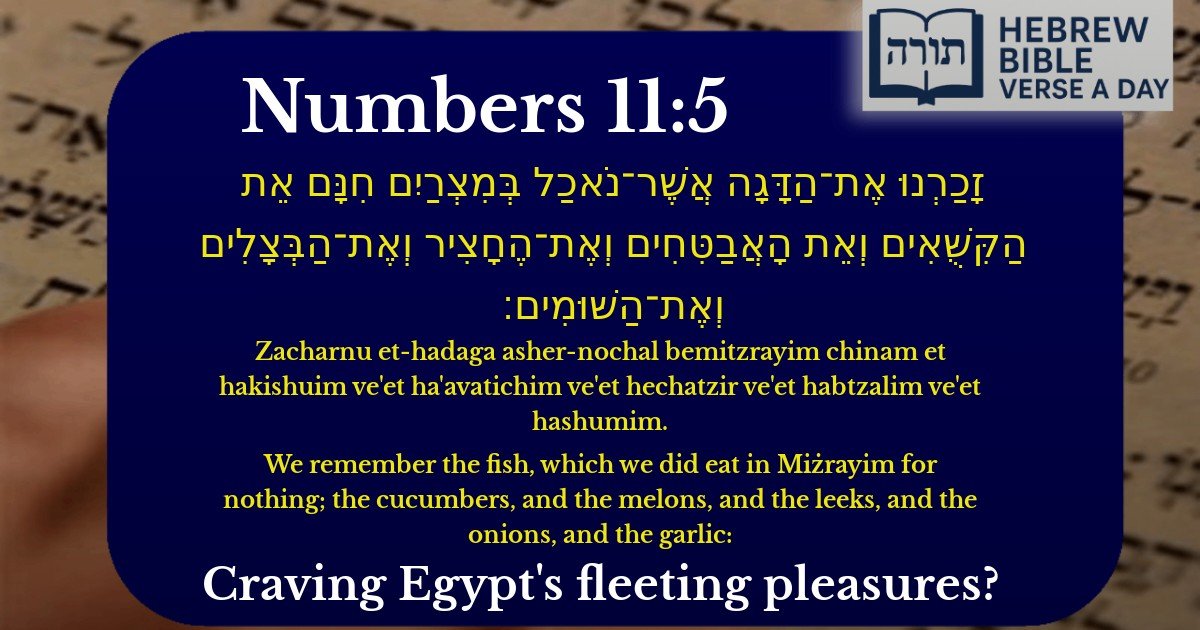
זָכַרְנוּ אֶת־הַדָּגָה אֲשֶׁר־נֹאכַל בְּמִצְרַיִם חִנָּם אֵת הַקִּשֻּׁאִים וְאֵת הָאֲבַטִּחִים וְאֶת־הֶחָצִיר וְאֶת־הַבְּצָלִים וְאֶת־הַשּׁוּמִים׃
English Translation
We remember the fish, which we did eat in Miżrayim for nothing; the cucumbers, and the melons, and the leeks, and the onions, and the garlic:
Transliteration
Zacharnu et-hadaga asher-nochal bemitzrayim chinam et hakishuim ve'et ha'avatichim ve'et hechatzir ve'et habtzalim ve'et hashumim.
Hebrew Leining Text
זָכַ֙רְנוּ֙ אֶת־הַדָּגָ֔ה אֲשֶׁר־נֹאכַ֥ל בְּמִצְרַ֖יִם חִנָּ֑ם אֵ֣ת הַקִּשֻּׁאִ֗ים וְאֵת֙ הָֽאֲבַטִּחִ֔ים וְאֶת־הֶחָצִ֥יר וְאֶת־הַבְּצָלִ֖ים וְאֶת־הַשּׁוּמִֽים׃
🎵 Listen to leining
Parasha Commentary
📚 Talmud Citations
This verse is quoted in the Talmud.
📖 Yoma 75a
The verse is referenced in a discussion about the manna and the complaints of the Israelites in the wilderness, contrasting their current situation with their memories of Egypt.
📖 Bava Batra 73b
Mentioned in a broader discussion about the miracles and experiences of the Israelites during their time in Egypt and the wilderness.
Context of the Verse
This verse (Bamidbar 11:5) appears in the narrative of the Israelites' complaints in the wilderness. After leaving Egypt, the people express longing for the foods they ate there, despite their former enslavement. The verse reflects a distorted nostalgia, where they recall their time in Egypt as a period of abundance, ignoring the harsh realities of slavery.
Rashi's Commentary
Rashi explains that the phrase "חִנָּם" (for nothing) does not mean the food was free, but rather that it was without mitzvot—without the obligations of Torah. In Egypt, they were not bound by the dietary laws and other commandments, which they now found burdensome. This reflects a spiritual regression, valuing physical comfort over divine service.
Rambam's Perspective
Rambam (Hilchot De'ot 4:1) teaches that excessive craving for physical pleasures, as demonstrated here, distracts a person from spiritual growth. The Israelites' focus on food—especially the luxuries of Egypt—shows a lack of appreciation for their newfound freedom and closeness to Hashem.
Midrashic Insights
Spiritual Lesson
The verse serves as a caution against romanticizing the past, especially when it involves a life devoid of Torah. True freedom is not the absence of responsibility but the opportunity to serve Hashem. The Israelites' longing for Egypt's food reveals their struggle to embrace their divine mission.