

Join Our Newsletter To Be Informed When New Videos Are Posted
Hebrew Text
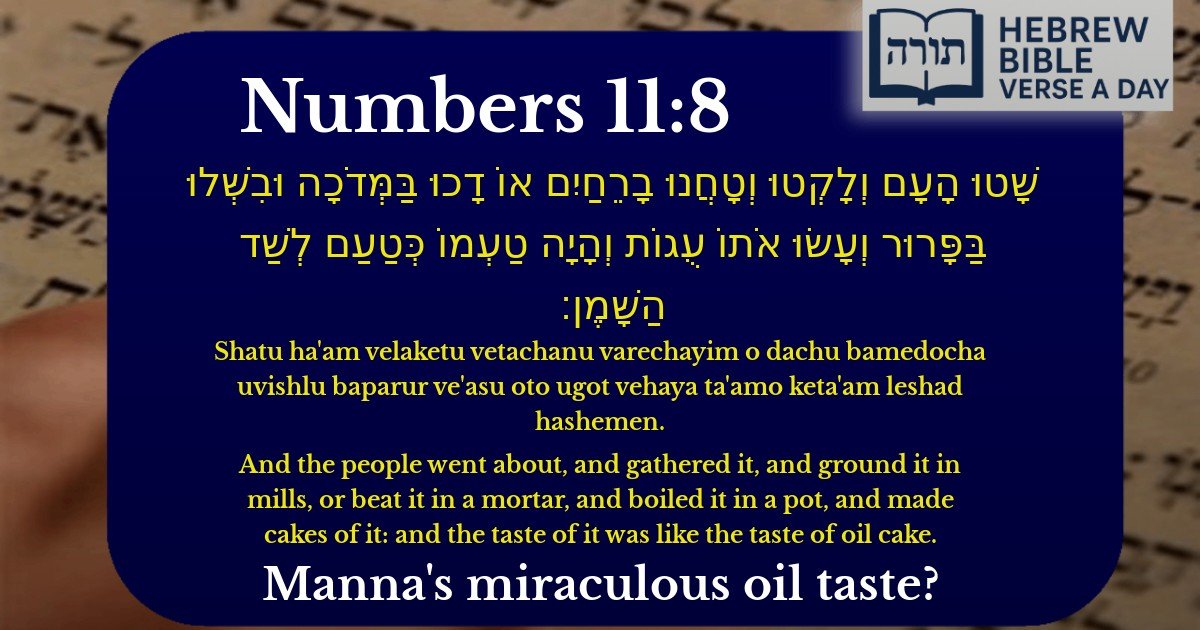
שָׁטוּ הָעָם וְלָקְטוּ וְטָחֲנוּ בָרֵחַיִם אוֹ דָכוּ בַּמְּדֹכָה וּבִשְּׁלוּ בַּפָּרוּר וְעָשׂוּ אֹתוֹ עֻגוֹת וְהָיָה טַעְמוֹ כְּטַעַם לְשַׁד הַשָּׁמֶן׃
English Translation
And the people went about, and gathered it, and ground it in mills, or beat it in a mortar, and boiled it in a pot, and made cakes of it: and the taste of it was like the taste of oil cake.
Transliteration
Shatu ha'am velaketu vetachanu varechayim o dachu bamedocha uvishlu baparur ve'asu oto ugot vehaya ta'amo keta'am leshad hashemen.
Hebrew Leining Text
שָׁ֩טוּ֩ הָעָ֨ם וְלָֽקְט֜וּ וְטָחֲנ֣וּ בָרֵחַ֗יִם א֤וֹ דָכוּ֙ בַּמְּדֹכָ֔ה וּבִשְּׁלוּ֙ בַּפָּר֔וּר וְעָשׂ֥וּ אֹת֖וֹ עֻג֑וֹת וְהָיָ֣ה טַעְמ֔וֹ כְּטַ֖עַם לְשַׁ֥ד הַשָּֽׁמֶן׃
🎵 Listen to leining
Parasha Commentary
📚 Talmud Citations
This verse is quoted in the Talmud.
📖 Yoma 75b
The verse is discussed in the context of the manna that fell for the Israelites in the wilderness, illustrating how it was prepared and its taste.
Explanation of the Verse (Bamidbar 11:8)
The verse describes the process by which Bnei Yisrael prepared the מן (manna) in the wilderness. The Torah details their methods—grinding, pounding, boiling—and concludes that its taste resembled "the taste of oil cake" (טַעַם לְשַׁד הַשָּׁמֶן). Orthodox Jewish commentators offer profound insights into this passage.
Rashi's Commentary
Rashi (Bamidbar 11:8) explains that the phrase "טַעַם לְשַׁד הַשָּׁמֶן" refers to a delicacy made from fine flour and oil, similar to the taste of the מן. He notes that the מן could miraculously adapt to any preparation method while retaining its divine quality. Rashi also cites the Mechilta (Beshalach 16:31), which states that the taste of the מן varied according to each person’s spiritual level—children, adults, and the righteous experienced it differently.
Rambam's Perspective
In Moreh Nevuchim (3:24), Rambam discusses the מן as a supernatural phenomenon, emphasizing that its ability to transform in taste and texture demonstrated Hashem’s direct providence over Bnei Yisrael. Unlike natural food, the מן required no agricultural labor, reinforcing the lesson of total reliance on Divine sustenance.
Midrashic Interpretations
Halachic Insights
The Gemara (Berachos 48b) derives from this verse that one who eats מן is exempt from reciting Birkas Hamazon (Grace after Meals), since the מן was a heavenly food not bound by earthly halachic obligations. However, the Rambam (Hilchos Berachos 1:5) rules that this exemption was unique to the מן and does not apply to ordinary food.
Spiritual Lessons
The Seforno (Bamidbar 11:8) highlights that the מן’s adaptability—whether ground, pounded, or boiled—symbolizes how Torah and mitzvos can be "processed" in different ways (through study, action, or devotion) while always nourishing the soul. The comparison to oil further teaches that just as oil illuminates, Torah enlightens the mind and heart.