

Join Our Newsletter To Be Informed When New Videos Are Posted
Hebrew Text
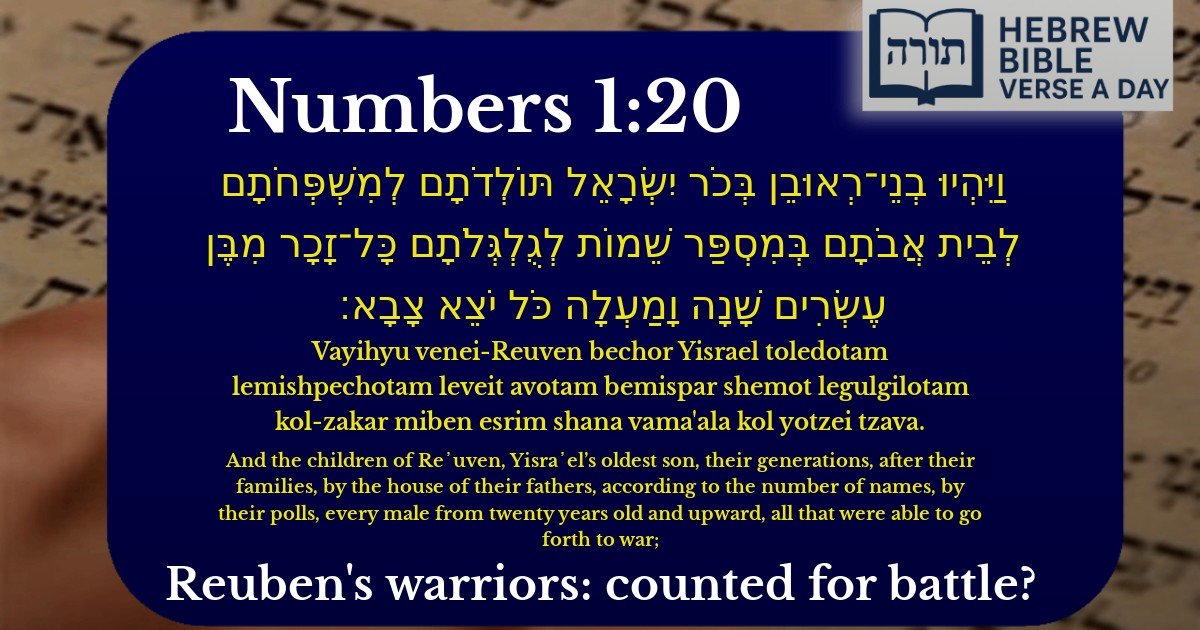
וַיִּהְיוּ בְנֵי־רְאוּבֵן בְּכֹר יִשְׂרָאֵל תּוֹלְדֹתָם לְמִשְׁפְּחֹתָם לְבֵית אֲבֹתָם בְּמִסְפַּר שֵׁמוֹת לְגֻלְגְּלֹתָם כָּל־זָכָר מִבֶּן עֶשְׂרִים שָׁנָה וָמַעְלָה כֹּל יֹצֵא צָבָא׃
English Translation
And the children of Re᾽uven, Yisra᾽el’s oldest son, their generations, after their families, by the house of their fathers, according to the number of names, by their polls, every male from twenty years old and upward, all that were able to go forth to war;
Transliteration
Vayihyu venei-Reuven bechor Yisrael toledotam lemishpechotam leveit avotam bemispar shemot legulgilotam kol-zakar miben esrim shana vama'ala kol yotzei tzava.
Hebrew Leining Text
וַיִּהְי֤וּ בְנֵֽי־רְאוּבֵן֙ בְּכֹ֣ר יִשְׂרָאֵ֔ל תּוֹלְדֹתָ֥ם לְמִשְׁפְּחֹתָ֖ם לְבֵ֣ית אֲבֹתָ֑ם בְּמִסְפַּ֤ר שֵׁמוֹת֙ לְגֻלְגְּלֹתָ֔ם כׇּל־זָכָ֗ר מִבֶּ֨ן עֶשְׂרִ֤ים שָׁנָה֙ וָמַ֔עְלָה כֹּ֖ל יֹצֵ֥א צָבָֽא׃
🎵 Listen to leining
Parasha Commentary
📚 Talmud Citations
This verse is not quoted in the Talmud.
The Status of Reuven as the Firstborn
The verse begins by identifying Reuven as "Yisrael's oldest son" (בְּכֹר יִשְׂרָאֵל). Rashi (Bamidbar 1:20) notes that although Reuven lost his firstborn status due to his earlier transgression (see Bereishit 35:22 and 49:4), the Torah still acknowledges his original position as the firstborn in this context. The Ramban (Bamidbar 1:45) explains that this phrasing emphasizes the tribal structure's continuity from Yaakov's sons, maintaining Reuven's place in the lineage despite his diminished privileges.
Counting by Families and Households
The verse details the census method: "their generations, after their families, by the house of their fathers" (תּוֹלְדֹתָם לְמִשְׁפְּחֹתָם לְבֵית אֲבֹתָם). The Sforno (Bamidbar 1:2) explains that this three-tiered structure—generations, families, and paternal households—ensured an accurate and dignified count, preserving each individual's ancestral identity. The Talmud (Bava Batra 109b) further discusses the importance of lineage in Jewish tradition, linking it to inheritance and tribal affiliation.
The Military Census of Men Over Twenty
The verse specifies that the count included males "from twenty years old and upward, all that were able to go forth to war" (מִבֶּן עֶשְׂרִים שָׁנָה וָמַעְלָה כֹּל יֹצֵא צָבָא). Rashi (Bamidbar 1:3) cites the Midrash (Tanchuma, Bamidbar 4) that twenty is the age of physical maturity for military service. The Rambam (Hilchot Melachim 7:10) later codifies this as the minimum age for a soldier, based on this verse. Additionally, the Ohr HaChaim (Bamidbar 1:3) suggests that twenty marks the transition to full accountability in divine service, making these men spiritually and physically prepared for battle.
Significance of the Headcount
The phrase "by the number of names, by their polls" (בְּמִסְפַּר שֵׁמוֹת לְגֻלְגְּלֹתָם) underscores the individualized nature of the census. The Malbim (Bamidbar 1:2) explains that each person was counted by name, not just as a number, highlighting their unique value to the nation. This aligns with the Talmudic principle (Sanhedrin 37a) that every Jew is an entire world, deserving of personal recognition.