
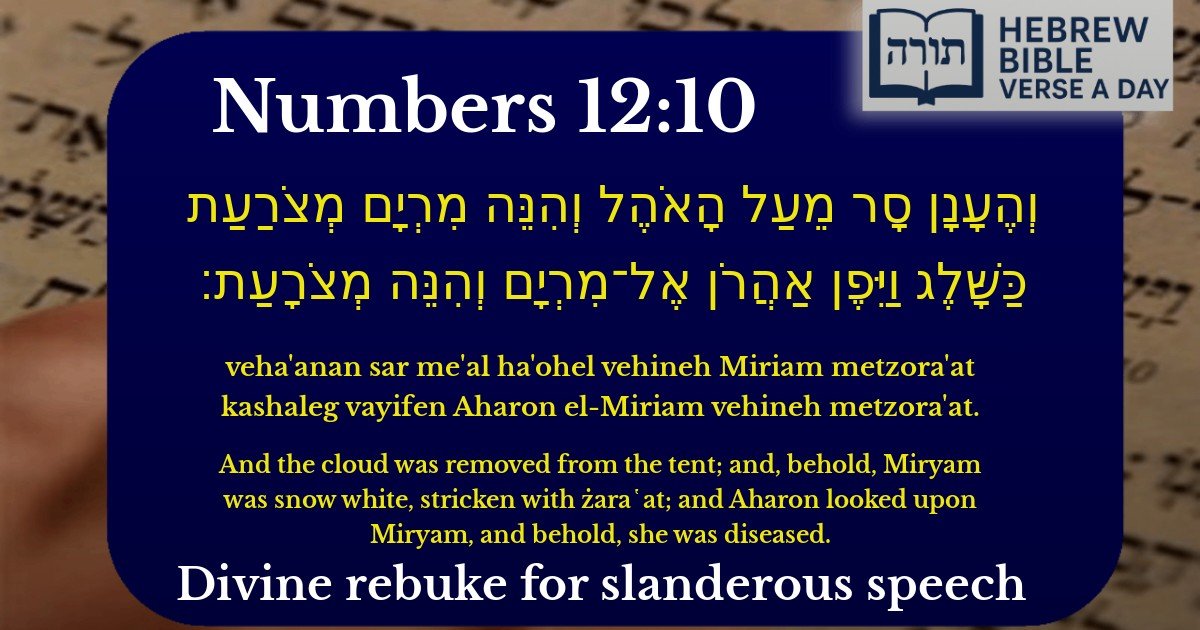

Numbers 12:10 - Divine rebuke for slanderous speech

Numbers 12:10 - במדבר 12:10

Hebrew Text

וְהֶעָנָן סָר מֵעַל הָאֹהֶל וְהִנֵּה מִרְיָם מְצֹרַעַת כַּשָּׁלֶג וַיִּפֶן אַהֲרֹן אֶל־מִרְיָם וְהִנֵּה מְצֹרָעַת׃

English Translation

And the cloud was removed from the tent; and, behold, Miryam was snow white, stricken with żara῾at; and Aharon looked upon Miryam, and behold, she was diseased.

Transliteration

Veha'anan sar me'al ha'ohel vehineh Miriam metzora'at kashaleg vayifen Aharon el-Miriam vehineh metzora'at.

Hebrew Leining Text

וְהֶעָנָ֗ן סָ֚ר מֵעַ֣ל הָאֹ֔הֶל וְהִנֵּ֥ה מִרְיָ֖ם מְצֹרַ֣עַת כַּשָּׁ֑לֶג וַיִּ֧פֶן אַהֲרֹ֛ן אֶל־מִרְיָ֖ם וְהִנֵּ֥ה מְצֹרָֽעַת׃

🎵 Listen to leining

Parasha Commentary

The Incident of Miriam's Tzara'at

The verse describes the immediate consequence of Miriam speaking negatively about her brother Moshe (as recounted in Bamidbar 12:1-10). The removal of the cloud signifies the Divine Presence departing, followed by Miriam being stricken with tzara'at (often mistranslated as leprosy), appearing "white as snow."

Rashi's Explanation

Rashi (Bamidbar 12:10) notes that the cloud's removal was a sign of Hashem's displeasure, as the cloud represented the Divine Presence that accompanied Bnei Yisrael in the wilderness. The whiteness of Miriam's affliction was particularly severe, indicating the seriousness of her transgression in speaking against Moshe.

The Nature of Tzara'at

According to Rambam (Hilchot Tumat Tzara'at 16:10), tzara'at was not a natural illness but a supernatural affliction sent as punishment for specific sins, particularly lashon hara (evil speech). The Talmud (Arachin 15b) teaches that Miriam's case serves as a warning about the severe consequences of speaking improperly about others.

Aaron's Reaction

The Torah emphasizes that Aaron "looked upon Miriam" - the Midrash (Tanchuma Tzav 13) explains that Aaron was particularly shocked because:

  • Miriam had shown great kindness (saving Moshe as a baby)
  • She was a prophetess in her own right
  • The affliction appeared immediately after the cloud departed

Symbolism of "White as Snow"

The description of the tzara'at being white like snow carries symbolic meaning. The Sforno explains that this extreme whiteness:

  • Showed the purity of Moshe's character that had been questioned
  • Demonstrated that Miriam's words were completely unfounded
  • Served as a visible rebuke that couldn't be ignored

Halachic Implications

The Ramban (Bamidbar 12:10) notes that this incident established important halachic principles about tzara'at:

  • It could affect even the most righteous if they transgressed
  • The condition could appear suddenly as Divine retribution
  • Even family members of leaders were not exempt from punishment

📚 Talmud Citations

This verse is quoted in the Talmud.

📖 Moed Katan 28a
The verse is referenced in a discussion about the severity of leprosy and the punishment of Miriam for speaking against Moses.
📖 Sotah 9b
The verse is cited in a discussion about the consequences of slander and the divine punishment that befell Miriam.
📖 Arakhin 16a
The verse is mentioned in the context of discussing the various forms of divine retribution and the specific case of Miriam's leprosy.

Frequently Asked Questions

Q: Why was Miriam punished with tzara'at (leprosy)?
A: Miriam was punished with tzara'at because she spoke negatively (lashon hara) about her brother Moshe (Moses). The Torah teaches that even though she was a prophetess and Aharon (Aaron) was the Kohen Gadol (High Priest), they were held accountable for speaking improperly about Moshe's personal life (Rashi on Numbers 12:1). This teaches us the severity of lashon hara in Jewish tradition.
Q: Why does the verse mention the cloud lifting before Miriam's punishment?
A: The cloud lifting signifies the departure of the Divine Presence (Shechinah) from the Mishkan (Tabernacle), showing that God was displeased with Miriam and Aharon's words. According to the Midrash (Bamidbar Rabbah 7:4), this demonstrates that when there is discord or sin among the Jewish people, it affects the entire camp and the Divine Presence withdraws.
Q: Why is Miriam's tzara'at described as 'white as snow'?
A: The description 'white as snow' emphasizes the severity of her tzara'at. In Jewish law (Rambam, Hilchot Tumat Tzara'at 1:2), the whitest form of tzara'at is the most severe, indicating a higher level of spiritual impurity. This shows how serious her transgression was in speaking against Moshe.
Q: What can we learn from Aharon's reaction to Miriam's tzara'at?
A: When Aharon saw Miriam's condition, he immediately recognized the wrongdoing and sought repentance. The Talmud (Arachin 16a) teaches that tzara'at comes as a wake-up call for teshuva (repentance). Aharon's reaction models how we should respond when we realize we've done wrong - with immediate awareness and a desire to correct our ways.
Q: How does this story about Miriam apply to us today?
A: This incident teaches us several important lessons: 1) The severity of lashon hara (negative speech), 2) That even great people must be careful with their words, 3) The importance of recognizing our mistakes and doing teshuva, and 4) That leadership comes with greater responsibility (as Miriam was a leader of the women). The Chofetz Chaim's works elaborate on how these principles guide Jewish speech ethics today.