Frequently Asked Questions
Q: What is the context of Numbers 12:11?
A: Numbers 12:11 occurs after Miriam and Aharon spoke against Moshe. When Miriam was punished with tzara'at (a spiritual skin affliction), Aharon pleaded with Moshe to forgive them for their sin of speaking improperly. This teaches the severity of lashon hara (evil speech) and the importance of seeking forgiveness (Rashi, Bamidbar 12:11).
Q: Why did Aharon say 'we have sinned' if only Miriam was punished?
A: Aharon included himself in the confession because he also participated in speaking against Moshe, even if his punishment was less severe. This teaches the principle of taking responsibility for one's actions and not minimizing one's role in wrongdoing (Rambam, Hilchot Teshuvah 1:1).
Q: What can we learn from Aharon's plea for forgiveness?
A: Aharon's immediate admission of wrongdoing and sincere plea for mercy demonstrates the proper way to do teshuvah (repentance): acknowledging the sin, expressing remorse, and asking for forgiveness. This sets an example for how we should approach repentance (Talmud, Yoma 86b).
Q: Why does Aharon call Moshe 'my lord' in this verse?
A: Aharon showed humility and respect by addressing Moshe as 'my lord' after realizing their mistake. This teaches that even though they were siblings, Aharon recognized Moshe's elevated status as Hashem's chosen prophet, especially after their error (Sifrei Bamidbar 12:11).
Q: How does this verse apply to conflicts between people today?
A: This verse teaches that when we wrong others - especially through speech - we must humbly acknowledge our mistake, sincerely apologize, and seek reconciliation. The Torah emphasizes repairing relationships, as seen in Aharon's immediate attempt to make amends (Pirkei Avot 4:13).

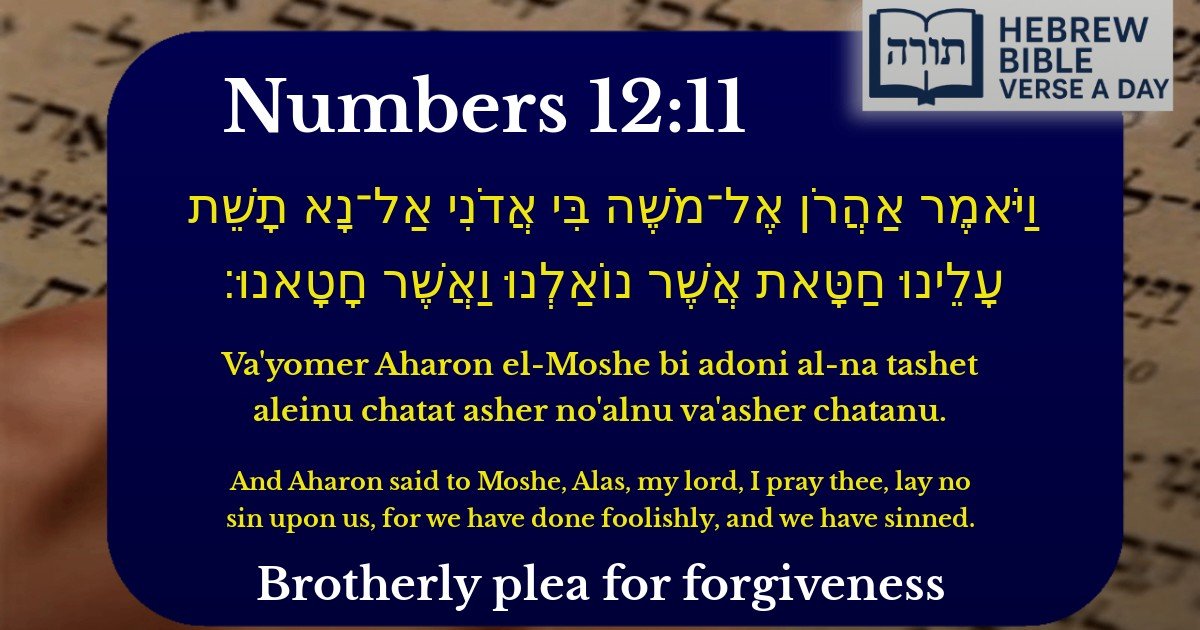

Context of the Verse
This verse (Bamidbar 12:11) appears in the episode where Miriam and Aharon spoke critically of Moshe. After Miriam is stricken with tzara'at (a spiritual affliction often associated with slander), Aharon pleads with Moshe to intercede on their behalf, acknowledging their wrongdoing.
Aharon's Humble Admission
Rashi explains that Aharon's words demonstrate sincere repentance. By saying "Al na tashet aleinu chatat" ("lay no sin upon us"), Aharon accepts responsibility rather than making excuses. The double language of "nōalnu" ("we have done foolishly") and "chatanu" ("we have sinned") reflects two aspects of their transgression:
Aharon's Respectful Appeal
The Sforno highlights how Aharon addresses Moshe as "bi adoni" ("I pray, my lord"), showing deference despite being the elder brother. This models proper conduct when seeking forgiveness - approaching with humility and respect.
The Nature of Their Sin
The Talmud (Arachin 15b) derives from this episode the severity of lashon hara (evil speech). Midrash Tanchuma (Tzav 13) emphasizes that even righteous individuals like Miriam and Aharon were punished for speaking improperly about Moshe, demonstrating that no one is above accountability for their words.
Lessons in Repentance
Rambam (Hilchot Teshuvah 2:5) cites this as a model of complete repentance - acknowledging the sin, expressing remorse, and pleading for forgiveness. The Netziv notes that Aharon's immediate admission, without attempting to justify their actions, exemplifies the proper path of teshuvah.