

Join Our Newsletter To Be Informed When New Videos Are Posted
Hebrew Text
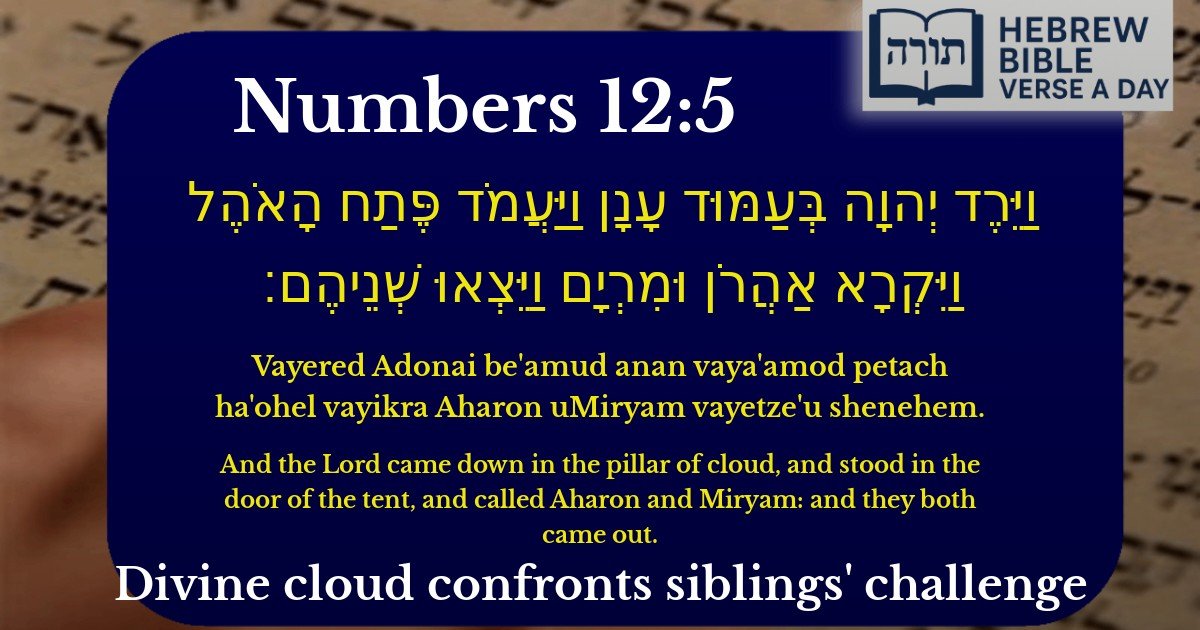
וַיֵּרֶד יְהוָה בְּעַמּוּד עָנָן וַיַּעֲמֹד פֶּתַח הָאֹהֶל וַיִּקְרָא אַהֲרֹן וּמִרְיָם וַיֵּצְאוּ שְׁנֵיהֶם׃
English Translation
And the Lord came down in the pillar of cloud, and stood in the door of the tent, and called Aharon and Miryam: and they both came out.
Transliteration
Vayered Adonai be'amud anan vaya'amod petach ha'ohel vayikra Aharon uMiryam vayetze'u shenehem.
Hebrew Leining Text
וַיֵּ֤רֶד יְהֹוָה֙ בְּעַמּ֣וּד עָנָ֔ן וַֽיַּעֲמֹ֖ד פֶּ֣תַח הָאֹ֑הֶל וַיִּקְרָא֙ אַהֲרֹ֣ן וּמִרְיָ֔ם וַיֵּצְא֖וּ שְׁנֵיהֶֽם׃
🎵 Listen to leining
Parasha Commentary
📚 Talmud Citations
This verse is quoted in the Talmud.
📖 Sotah 9a
The verse is referenced in a discussion about the humility of Moses and the incident involving Miriam and Aaron speaking against Moses.
The Divine Presence in the Cloud
The verse describes Hashem descending in a pillar of cloud to address Aharon and Miriam. Rashi (Bamidbar 12:5) explains that this cloud was the same Anan HaKavod (Cloud of Glory) that accompanied Bnei Yisrael in the wilderness, demonstrating that Hashem's presence was constantly with them. The Midrash Tanchuma (Tzav 13) elaborates that this cloud served multiple purposes: it guided them by day, protected them from enemies, and purified the air.
The Significance of the Tent's Entrance
Hashem stood at the entrance of the tent, which Ramban (Bamidbar 12:5) interprets as a sign of honor and distinction. The Ohel Moed (Tent of Meeting) was the place of prophecy, and by positioning Himself at its entrance, Hashem showed that He was summoning Aharon and Miriam for an important communication. The Kli Yakar adds that this location symbolized that prophecy is accessible only to those who properly prepare themselves to "enter" the realm of divine communication.
The Calling of Aharon and Miriam
The fact that both Aharon and Miriam were called together carries deep significance. The Talmud (Sotah 12b) teaches that Miriam was a prophetess in her own right, and Aharon was the Kohen Gadol. The Malbim explains that their joint summons demonstrated that their earlier criticism of Moshe (mentioned in preceding verses) required both to hear Hashem's response together, as they had spoken jointly. This teaches the principle of tochacha (rebuke) being delivered with unity of purpose.
The Pillar of Cloud as a Symbol
The Netziv (Ha'amek Davar) notes that the pillar of cloud represents divine judgment (middat hadin), indicating that this was a serious moment of heavenly rebuke. However, the fact that it appeared at the tent's entrance - a place associated with mercy (middat harachamim) through the sacrifices - shows the balance between justice and compassion in Hashem's dealings with His people.