

Join Our Newsletter To Be Informed When New Videos Are Posted
Hebrew Text
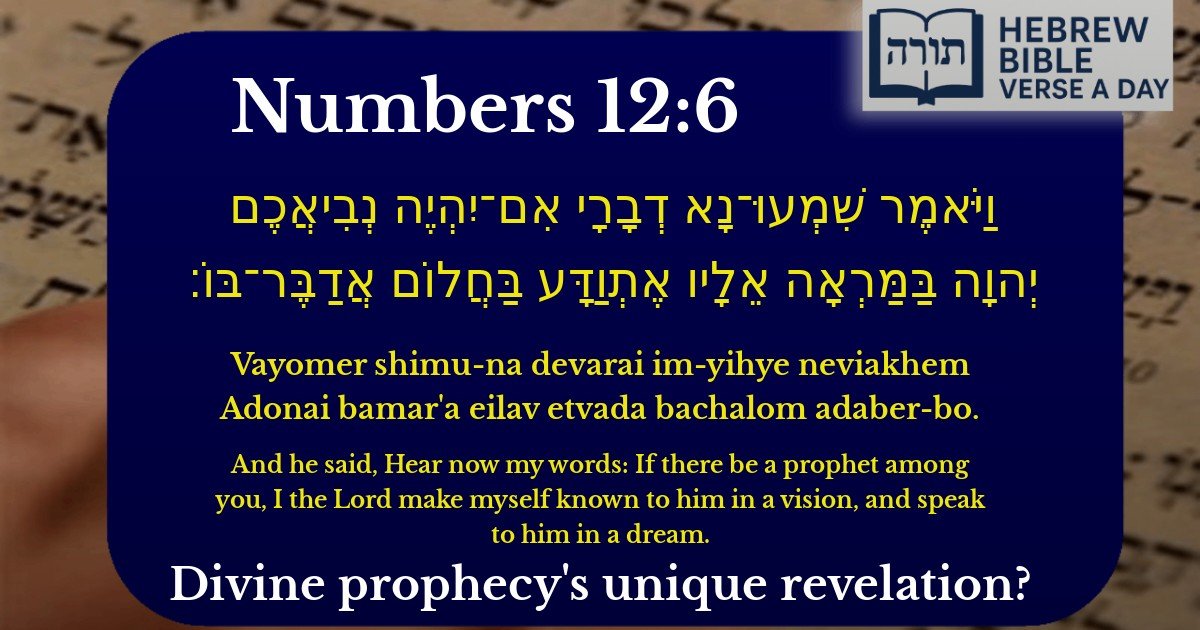
וַיֹּאמֶר שִׁמְעוּ־נָא דְבָרָי אִם־יִהְיֶה נְבִיאֲכֶם יְהוָה בַּמַּרְאָה אֵלָיו אֶתְוַדָּע בַּחֲלוֹם אֲדַבֶּר־בּוֹ׃
English Translation
And he said, Hear now my words: If there be a prophet among you, I the Lord make myself known to him in a vision, and speak to him in a dream.
Transliteration
Vayomer shimu-na devarai im-yihye neviakhem Adonai bamar'a eilav etvada bachalom adaber-bo.
Hebrew Leining Text
וַיֹּ֖אמֶר שִׁמְעוּ־נָ֣א דְבָרָ֑י אִם־יִֽהְיֶה֙ נְבִ֣יאֲכֶ֔ם יְהֹוָ֗ה בַּמַּרְאָה֙ אֵלָ֣יו אֶתְוַדָּ֔ע בַּחֲל֖וֹם אֲדַבֶּר־בּֽוֹ׃
🎵 Listen to leining
Parasha Commentary
📚 Talmud Citations
This verse is quoted in the Talmud.
📖 Berakhot 55b
The verse is referenced in a discussion about dreams and prophecy, illustrating how God communicates with prophets through visions and dreams.
📖 Sanhedrin 89a
Cited in the context of discussing the nature of prophecy and the different ways God reveals Himself to prophets.
Context of the Verse
This verse (Numbers 12:6) is part of Hashem's response to Miriam and Aaron's criticism of Moshe Rabbeinu. Hashem distinguishes between Moshe's unique level of prophecy and that of other prophets, emphasizing the superiority of Moshe's direct communication with the Divine.
Rashi's Explanation
Rashi explains that this verse contrasts the prophecy of Moshe with that of other prophets. While other prophets receive divine communication through visions and dreams (as stated in the verse), Moshe speaks with Hashem "mouth to mouth" (Numbers 12:8) - clearly and directly, without the intermediary of dreams or visions.
Rambam's Perspective
In Moreh Nevuchim (2:45), Rambam elaborates that prophecy generally comes in dreams or visions because the prophet's physical senses are dormant, allowing the intellect to receive divine inspiration. However, Moshe's prophecy was unique in that he could receive prophecy while fully awake and conscious.
Talmudic Insight
The Talmud (Yevamot 49b) states: "All prophets saw through an unclear glass (aspaklaria she'eina me'ira), but Moshe saw through a clear glass (aspaklaria hame'ira)." This emphasizes that while other prophets received messages that required interpretation, Moshe received clear, unambiguous communication from Hashem.
Midrashic Interpretation
The Midrash (Bamidbar Rabbah 15:10) notes that the phrase "in a vision" (בַּמַּרְאָה) hints that prophets would see their prophecies like one looking into a mirror - the image is present but not perfectly clear. This contrasts with Moshe who saw "the likeness of Hashem" (Numbers 12:8) clearly.
Key Differences in Prophecy
Halachic Implications
The Rambam (Yesodei HaTorah 7:6) derives from this verse that we must believe in prophecy in general, while recognizing Moshe's unique status. This forms the basis for accepting both the written Torah (given through Moshe) and the words of other prophets recorded in Tanach.