

Join Our Newsletter To Be Informed When New Videos Are Posted
Hebrew Text
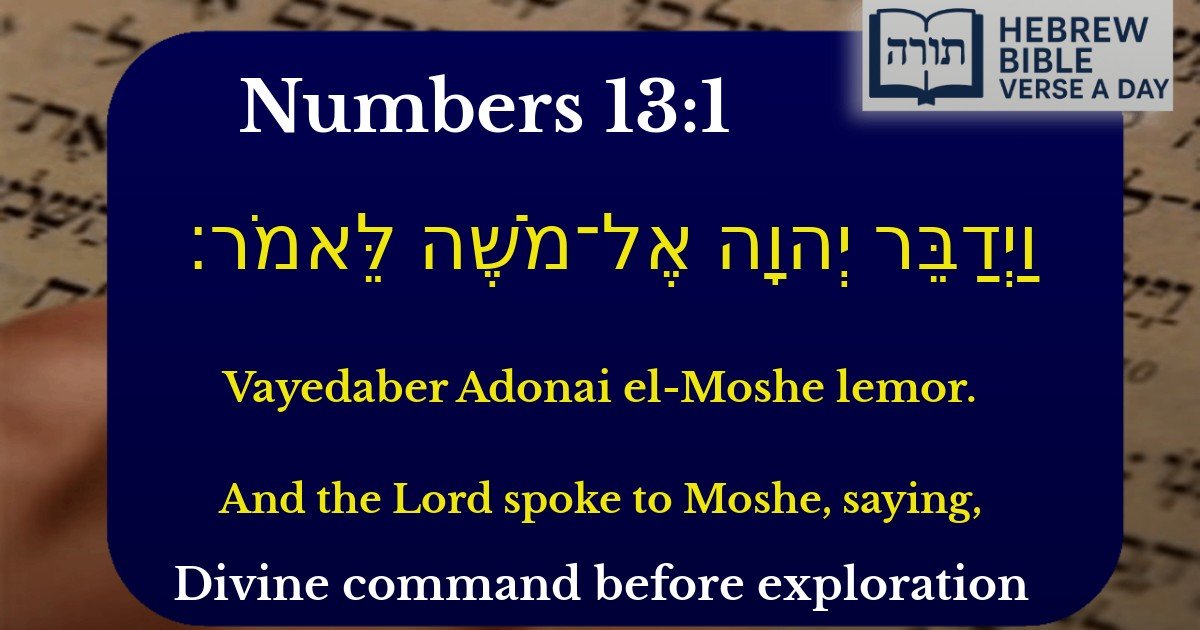
וַיְדַבֵּר יְהוָה אֶל־מֹשֶׁה לֵּאמֹר׃
English Translation
And the Lord spoke to Moshe, saying,
Transliteration
Vayedaber Adonai el-Moshe lemor.
Hebrew Leining Text
וַיְדַבֵּ֥ר יְהֹוָ֖ה אֶל־מֹשֶׁ֥ה לֵּאמֹֽר׃
🎵 Listen to leining
Parasha Commentary
📚 Talmud Citations
This verse is not quoted in the Talmud.
The Divine Communication to Moshe
The verse "וַיְדַבֵּר יְהוָה אֶל־מֹשֶׁה לֵּאמֹר" ("And the Lord spoke to Moshe, saying") appears frequently in the Torah, marking the beginning of divine commandments or revelations. Rashi (on Shemot 6:2) explains that this phrase emphasizes the direct and clear communication between Hashem and Moshe, distinguishing it from other forms of prophecy, which might be through visions or dreams (see Bamidbar 12:6-8). Moshe's prophecy was unique—"פה אל פה אדבר בו" ("mouth to mouth I speak with him").
The Significance of "לֵּאמֹר" ("Saying")
The word "לֵּאמֹר" indicates that Moshe was to relay the divine message to Bnei Yisrael. Ramban (on Bereishit 8:15) notes that this term often implies transmission to others, highlighting Moshe's role as the intermediary between Hashem and the people. The Sforno adds that this underscores Moshe's faithfulness in accurately conveying Hashem's words without alteration.
Context in the Chain of Tradition
The Talmud (Yoma 4b) derives from this phrasing the principle of "משה מפי הגבורה"—that Moshe received Torah directly from the Almighty. This is foundational to the Orthodox Jewish belief in the divine origin of the Torah. The Rambam (Hilchos Yesodei HaTorah 7:6) elaborates that Moshe's prophecy was of a higher level than all other prophets, as he communicated with Hashem while fully awake and cognizant.
Midrashic Insights