
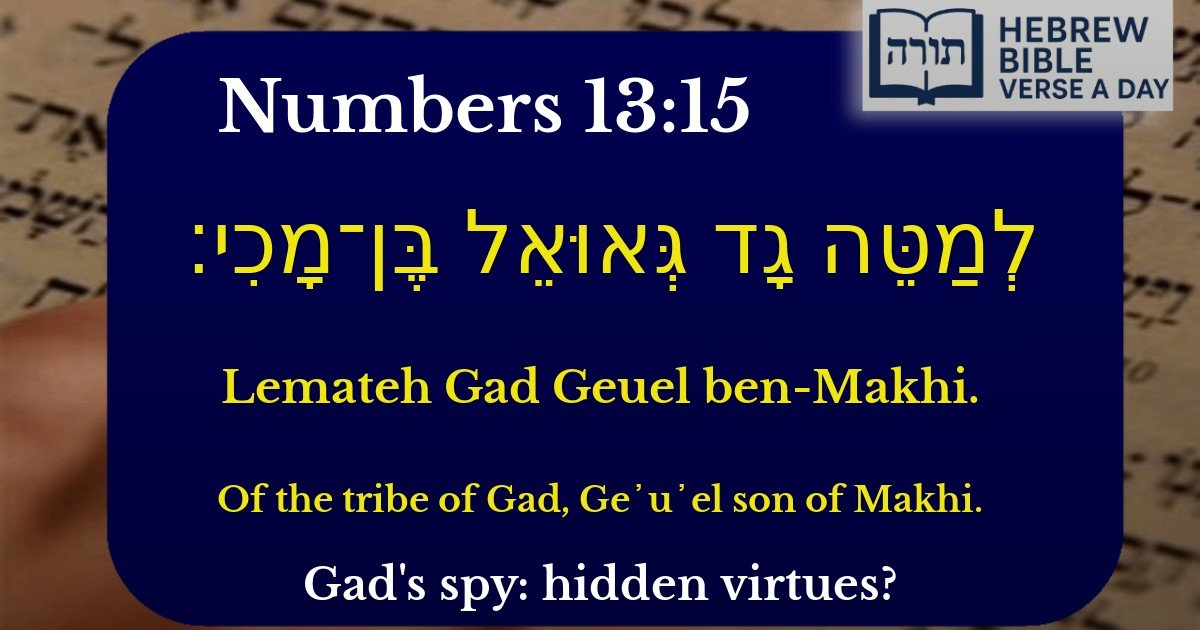

Numbers 13:15 - Gad's spy: hidden virtues?

Numbers 13:15 - במדבר 13:15

Hebrew Text

לְמַטֵּה גָד גְּאוּאֵל בֶּן־מָכִי׃

English Translation

Of the tribe of Gad, Ge᾽u᾽el son of Makhi.

Transliteration

Lemateh Gad Geuel ben-Makhi.

Hebrew Leining Text

לְמַטֵּ֣ה גָ֔ד גְּאוּאֵ֖ל בֶּן־מָכִֽי׃

🎵 Listen to leining

Parasha Commentary

Context in the Torah

The verse "לְמַטֵּה גָד גְּאוּאֵל בֶּן־מָכִי" (Bamidbar 13:15) appears in the list of the twelve spies sent by Moshe to scout the Land of Israel. Ge'uel ben Machi is identified as the representative of the tribe of Gad.

Meaning of the Name "Ge'uel"

Rashi explains that "Ge'uel" is derived from the root גאל, meaning "redemption" or "to redeem." This name may allude to his role as a representative of his tribe, tasked with assessing the Land's potential for the future redemption and settlement of Bnei Yisrael.

The Tribe of Gad's Representation

The Midrash (Bamidbar Rabbah 16:11) notes that each tribe's representative was chosen based on their virtues. Gad was known for its warriors (as later seen in their role in conquering the Land), and Ge'uel may have been selected for his strength or leadership qualities.

Ge'uel's Role Among the Spies

  • Unlike Yehoshua (from Ephraim) and Calev (from Yehudah), Ge'uel did not stand against the majority report of the spies.
  • The Talmud (Sotah 34b) discusses how the spies' negative report led to tragedy, emphasizing that even righteous individuals like Ge'uel were influenced by the group's sinful outlook.

Lessons from Ge'uel's Story

The Rambam (Hilchot De'ot 6:1) derives a lesson about the dangers of peer influence: even a leader like Ge'uel could falter when surrounded by negativity. This underscores the importance of choosing righteous companions and standing firm in emunah (faith).

📚 Talmud Citations

This verse is not quoted in the Talmud.

Frequently Asked Questions

Q: Who was Ge'uel ben Makhi mentioned in Numbers 13:15?
A: Ge'uel ben Makhi was the representative from the tribe of Gad chosen to be one of the twelve spies sent by Moshe (Moses) to scout the land of Canaan (Numbers 13:1-16). According to Rashi, each spy was a leader of their respective tribe, showing the importance of this mission.
Q: Why does the Torah list the names of all the spies in Numbers 13?
A: The Torah lists the names of the spies to emphasize that they were all respected leaders of their tribes (Rashi on Numbers 13:3). This teaches us that even great people can make mistakes, as ten of the spies later brought back a negative report about the Land of Israel, showing the danger of losing faith in Hashem's promises.
Q: What can we learn from the tribe of Gad's participation in the spies' mission?
A: The inclusion of Gad's representative teaches that all tribes had a stake in the future of Eretz Yisrael. The Midrash notes that each tribe's unique qualities were meant to contribute to the collective mission. Later in history, Gad settled east of the Jordan but still fought alongside other tribes to conquer the land (Joshua 22:1-4), showing unity.
Q: How is the name 'Ge'uel' significant in this verse?
A: The name Ge'uel (גְּאוּאֵל) comes from the root meaning 'exaltation of G-d.' Names in Torah often reflect character traits or destinies. Here, it reminds us that even when leaders fail (as most spies did), we must ultimately exalt Hashem's will. The Sages teach that names carry spiritual significance about a person's role in the world.