

Join Our Newsletter To Be Informed When New Videos Are Posted
Hebrew Text
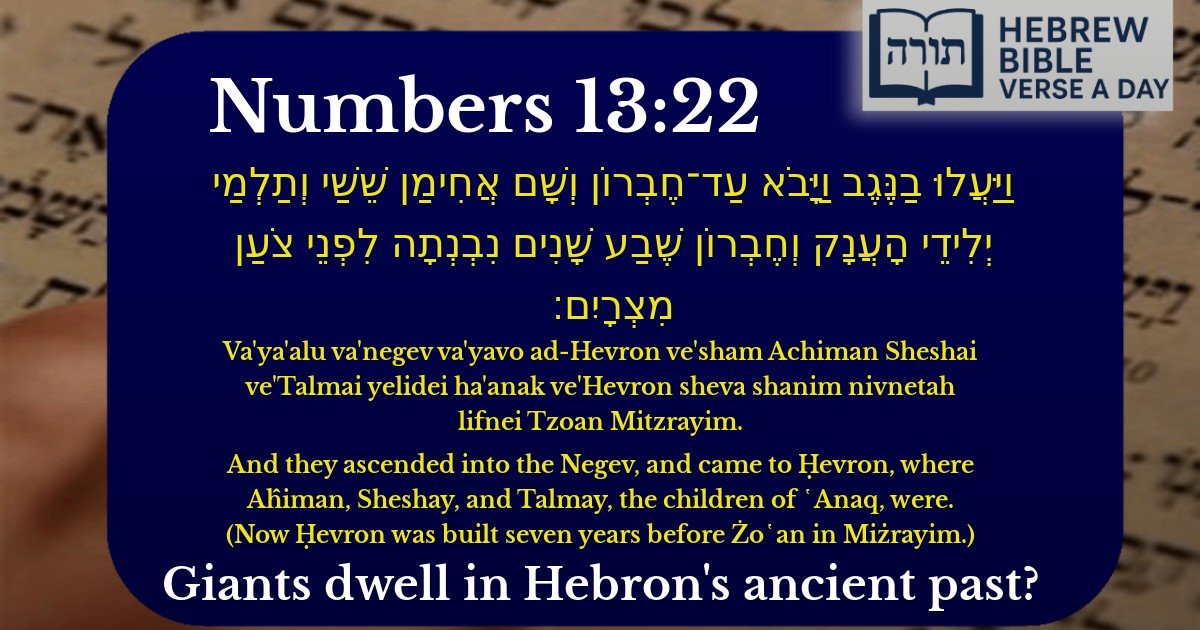
וַיַּעֲלוּ בַנֶּגֶב וַיָּבֹא עַד־חֶבְרוֹן וְשָׁם אֲחִימַן שֵׁשַׁי וְתַלְמַי יְלִידֵי הָעֲנָק וְחֶבְרוֹן שֶׁבַע שָׁנִים נִבְנְתָה לִפְנֵי צֹעַן מִצְרָיִם׃
English Translation
And they ascended into the Negev, and came to Ḥevron, where Aĥiman, Sheshay, and Talmay, the children of ῾Anaq, were. (Now Ḥevron was built seven years before Żo῾an in Miżrayim.)
Transliteration
Va'ya'alu va'negev va'yavo ad-Hevron ve'sham Achiman Sheshai ve'Talmai yelidei ha'anak ve'Hevron sheva shanim nivnetah lifnei Tzoan Mitzrayim.
Hebrew Leining Text
וַיַּעֲל֣וּ בַנֶּ֘גֶב֮ וַיָּבֹ֣א עַד־חֶבְרוֹן֒ וְשָׁ֤ם אֲחִימַן֙ שֵׁשַׁ֣י וְתַלְמַ֔י יְלִידֵ֖י הָעֲנָ֑ק וְחֶבְר֗וֹן שֶׁ֤בַע שָׁנִים֙ נִבְנְתָ֔ה לִפְנֵ֖י צֹ֥עַן מִצְרָֽיִם׃
🎵 Listen to leining
Parasha Commentary
📚 Talmud Citations
This verse is quoted in the Talmud.
📖 Sotah 34b
The verse is referenced in the discussion about the spies sent by Moses to scout the land of Canaan, particularly mentioning Hebron and the Anakim.
The Spies' Journey to Hebron
The verse (Bamidbar 13:22) describes the journey of the meraglim (spies) sent by Moshe to scout the Land of Israel. Their arrival in Hebron is significant, as it was a key city with deep historical and spiritual connections to the Jewish people.
The Giants of Hebron: Aḥiman, Sheshai, and Talmai
Rashi explains that these three individuals—Aḥiman, Sheshai, and Talmai—were descendants of the giant Anak (ענק), a race known for their imposing stature (see Devarim 9:2). Their presence in Hebron symbolized the formidable challenges the spies perceived in conquering the land. The Midrash (Bamidbar Rabbah 16:11) elaborates that their names hinted at their nature:
Hebron's Antiquity: Built Before Zoan in Egypt
The verse notes that Hebron was built seven years before Zoan (צוען), an ancient Egyptian city. Rashi, citing the Sifrei, explains that this detail emphasizes Hebron's great age, underscoring its importance. The Ramban adds that this historical note highlights the land's inherent holiness, as Hebron was already a significant city in the time of the Avot (Patriarchs).
Spiritual Significance of Hebron
Hebron is intrinsically linked to Avraham Avinu, who purchased the Cave of Machpelah as a burial site for Sarah (Bereishit 23). The Talmud (Sotah 34b) teaches that Kalev, one of the spies, separated from the group to pray at the graves of the Avot, demonstrating his faith in Hashem's promise despite the intimidating giants. This contrasts with the other spies, who were swayed by fear.
Lessons from the Verse
The mention of the giants and Hebron's antiquity serves as a test of faith. The spies' failure was not in recognizing the challenges but in doubting Hashem's ability to fulfill His promise. As the Rambam (Hilchot De'ot 1:4) teaches, true trust in Hashem requires recognizing that all obstacles are ultimately under divine providence.