

Join Our Newsletter To Be Informed When New Videos Are Posted
Hebrew Text
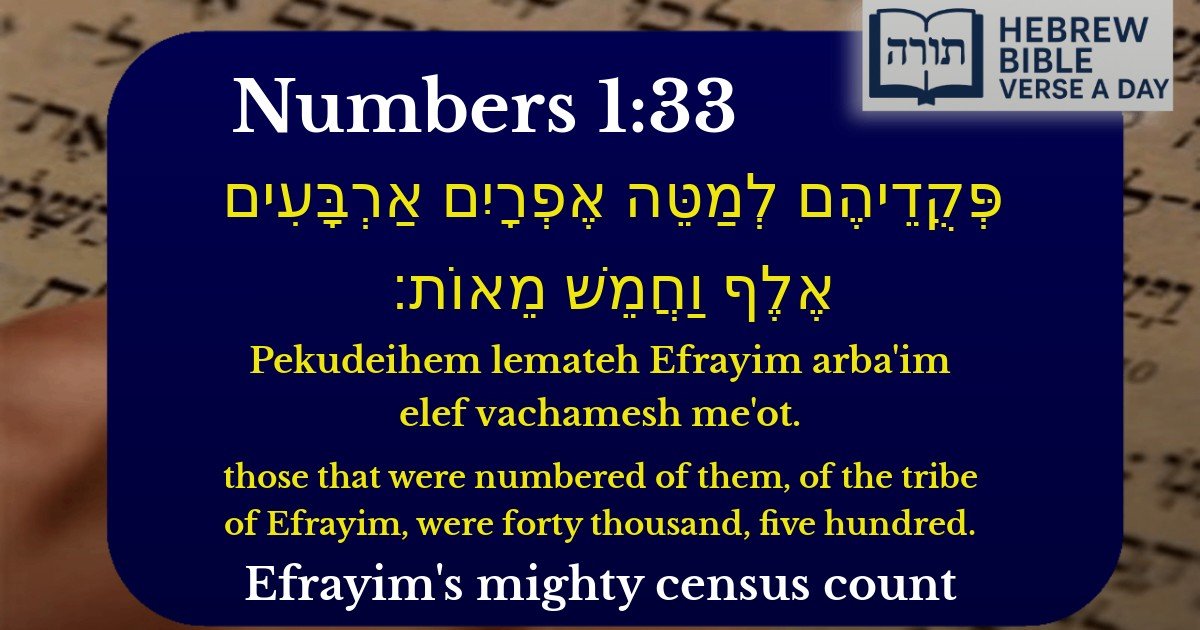
פְּקֻדֵיהֶם לְמַטֵּה אֶפְרָיִם אַרְבָּעִים אֶלֶף וַחֲמֵשׁ מֵאוֹת׃
English Translation
those that were numbered of them, of the tribe of Efrayim, were forty thousand, five hundred.
Transliteration
Pekudeihem lemateh Efrayim arba'im elef vachamesh me'ot.
Hebrew Leining Text
פְּקֻדֵיהֶ֖ם לְמַטֵּ֣ה אֶפְרָ֑יִם אַרְבָּעִ֥ים אֶ֖לֶף וַחֲמֵ֥שׁ מֵאֽוֹת׃ {פ}
🎵 Listen to leining
Parasha Commentary
📚 Talmud Citations
This verse is not quoted in the Talmud.
Context in the Torah
The verse (Bamidbar 1:33) records the census count of the tribe of Ephraim during the wilderness journey. This count was part of the larger census of the twelve tribes conducted by Moshe and Aharon at Hashem's command (Bamidbar 1:1-3). The tribe of Ephraim, descended from Yosef's younger son, was one of the most prominent tribes, often symbolizing leadership among the northern tribes.
Rashi's Commentary
Rashi (Bamidbar 1:33) notes that the number "forty thousand and five hundred" reflects the military-age males (20 years and older) fit for service. He emphasizes that this count was precise—neither rounded nor approximate—demonstrating the Divine care in accounting for each individual. Rashi also connects this to the broader theme of Hashem's love for Bnei Yisrael, as He counts them frequently (see Rashi on Shemot 30:12).
Symbolism of the Number
Ephraim's Distinction
The Ramban (Bamidbar 1:33) highlights that Ephraim's count was smaller than Menashe's (Bamidbar 1:35), despite Yaakov's blessing placing Ephraim first (Bereishit 48:19-20). This teaches that spiritual precedence (Ephraim's greater potential) does not always translate to numerical superiority. The Kli Yakar adds that Ephraim's modest numbers reflect humility, a trait that made them worthy of leadership.
Historical & Future Significance
The Midrash Tanchuma (Bamidbar 12) connects Ephraim's census to their future role in Jewish history. Their descendants, like Yehoshua, would lead Bnei Yisrael into Eretz Yisrael, fulfilling the promise of Yaakov's blessing. The Malbim further notes that Ephraim's military readiness here foreshadows their later strength in defending the northern kingdom of Israel.