

Join Our Newsletter To Be Informed When New Videos Are Posted
Hebrew Text
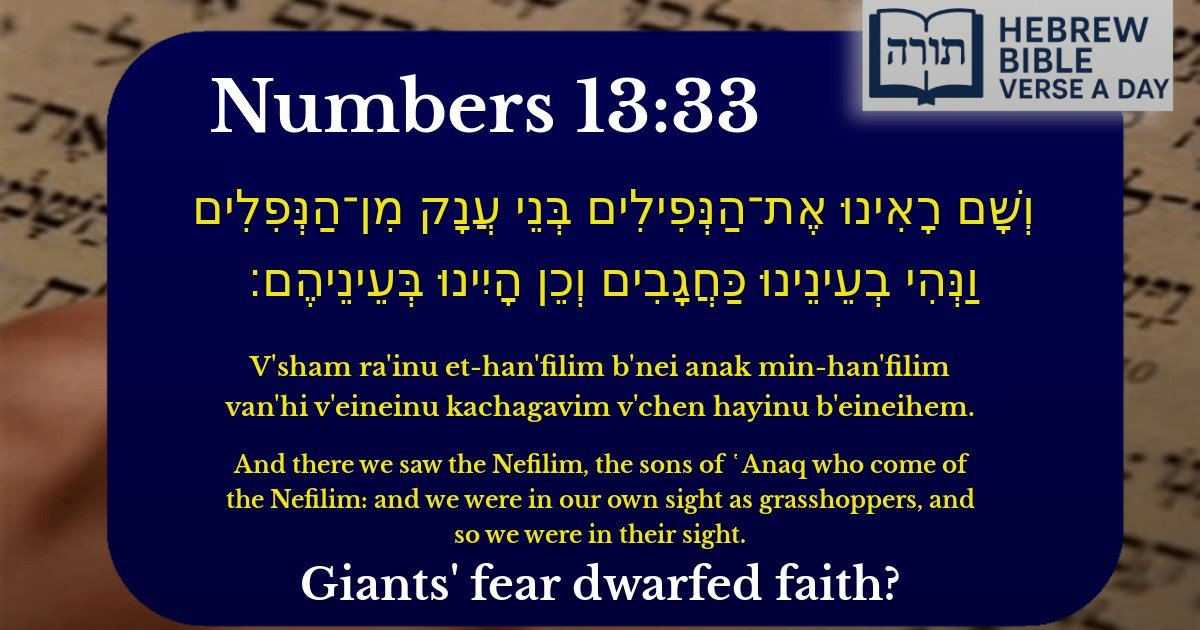
וְשָׁם רָאִינוּ אֶת־הַנְּפִילִים בְּנֵי עֲנָק מִן־הַנְּפִלִים וַנְּהִי בְעֵינֵינוּ כַּחֲגָבִים וְכֵן הָיִינוּ בְּעֵינֵיהֶם׃
English Translation
And there we saw the Nefilim, the sons of ῾Anaq who come of the Nefilim: and we were in our own sight as grasshoppers, and so we were in their sight.
Transliteration
V'sham ra'inu et-han'filim b'nei anak min-han'filim van'hi v'eineinu kachagavim v'chen hayinu b'eineihem.
Hebrew Leining Text
וְשָׁ֣ם רָאִ֗ינוּ אֶת־הַנְּפִילִ֛ים בְּנֵ֥י עֲנָ֖ק מִן־הַנְּפִלִ֑ים וַנְּהִ֤י בְעֵינֵ֙ינוּ֙ כַּֽחֲגָבִ֔ים וְכֵ֥ן הָיִ֖ינוּ בְּעֵינֵיהֶֽם׃
🎵 Listen to leining
Parasha Commentary
📚 Talmud Citations
This verse is quoted in the Talmud.
📖 Sotah 34b
The verse is discussed in the context of the spies' report about the land of Canaan, emphasizing their fear and the perception of themselves as grasshoppers compared to the inhabitants.
The Nefilim and Bnei Anak
The verse describes the spies' report about encountering the Nefilim and Bnei Anak (sons of Anak) in the land of Canaan. Rashi (Bamidbar 13:33) explains that the term Nefilim refers to giants, deriving from the root nafal (to fall), as they caused fear and trembling in those who saw them. The Midrash (Bamidbar Rabbah 16:11) connects them to the fallen angels mentioned in Bereishit 6:4, suggesting they were descendants of the angelic beings who intermingled with humanity before the Flood.
The Psychological Impact on the Spies
The spies describe feeling like grasshoppers in their own eyes and in the eyes of the Nefilim. Ramban (Bamidbar 13:33) emphasizes that this was a projection of their own fear—since they saw themselves as insignificant, the inhabitants of the land perceived them the same way. The Talmud (Sotah 35a) teaches that this was a failure of faith, as Hashem had promised them the land, yet they allowed their insecurities to distort reality.
The Sin of the Spies
The spies' report reflects a lack of trust in Hashem's promise. The Midrash Tanchuma (Shelach 7) states that their comparison to grasshoppers was an exaggeration meant to instill fear in Bnei Yisrael. The Maharal (Gur Aryeh, Bamidbar 13:33) explains that their mistake was viewing the conquest of the land as dependent on their own strength rather than Divine assistance.
Lessons in Emunah (Faith)
This episode serves as a cautionary tale about the dangers of self-doubt and forgetting Hashem's power. The Kli Yakar (Bamidbar 13:33) notes that the spies' statement "and so we were in their sight" was speculative—they had no way of knowing how the Nefilim truly perceived them. This teaches that fear and negativity often stem from our own perceptions rather than objective reality.