

Join Our Newsletter To Be Informed When New Videos Are Posted
Hebrew Text
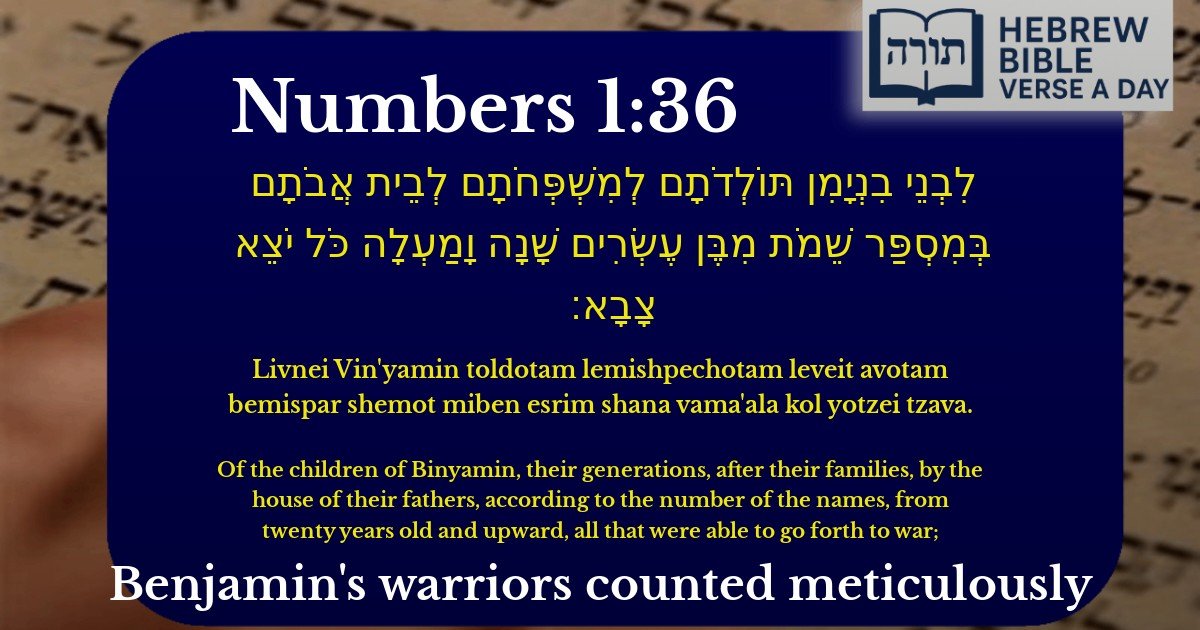
לִבְנֵי בִנְיָמִן תּוֹלְדֹתָם לְמִשְׁפְּחֹתָם לְבֵית אֲבֹתָם בְּמִסְפַּר שֵׁמֹת מִבֶּן עֶשְׂרִים שָׁנָה וָמַעְלָה כֹּל יֹצֵא צָבָא׃
English Translation
Of the children of Binyamin, their generations, after their families, by the house of their fathers, according to the number of the names, from twenty years old and upward, all that were able to go forth to war;
Transliteration
Livnei Vin'yamin toldotam lemishpechotam leveit avotam bemispar shemot miben esrim shana vama'ala kol yotzei tzava.
Hebrew Leining Text
לִבְנֵ֣י בִנְיָמִ֔ן תּוֹלְדֹתָ֥ם לְמִשְׁפְּחֹתָ֖ם לְבֵ֣ית אֲבֹתָ֑ם בְּמִסְפַּ֣ר שֵׁמֹ֗ת מִבֶּ֨ן עֶשְׂרִ֤ים שָׁנָה֙ וָמַ֔עְלָה כֹּ֖ל יֹצֵ֥א צָבָֽא׃
🎵 Listen to leining
Parasha Commentary
📚 Talmud Citations
This verse is not quoted in the Talmud.
Context of the Verse
This verse (Bamidbar 1:36) is part of the census taken of the tribes of Israel in the wilderness, specifically focusing on the tribe of Binyamin. The Torah enumerates the tribes by their families, households, and names, counting men aged twenty and older who were fit for military service.
Rashi's Commentary
Rashi explains that the phrase "תּוֹלְדֹתָם לְמִשְׁפְּחֹתָם" (their generations, after their families) emphasizes that the census was conducted with meticulous attention to lineage. This ensured that each individual's tribal affiliation was verified, as tribal purity was essential for inheritance and other halachic matters.
Regarding "כֹּל יֹצֵא צָבָא" (all that were able to go forth to war), Rashi notes that this excludes those who were physically or halachically unfit for battle, such as the elderly, the ill, or those with certain deformities (based on Talmud Yoma 72b).
Rambam's Perspective
Rambam (Hilchot Melachim 7:4) derives from this verse that military service is obligatory for men above the age of twenty, provided they meet the physical and spiritual requirements. He emphasizes that the army of Israel must be composed of those who are morally upright and dedicated to the sanctity of the nation.
Midrashic Insights
Halachic Implications
The age of twenty, as specified in the verse, is significant in Halacha. The Talmud (Chagigah 6a) explains that this is the age when a man reaches full physical and spiritual maturity, making him eligible for communal obligations, including military service and participation in public mitzvot.
Symbolism of Binyamin's Tribe
The tribe of Binyamin is often associated with the Beit HaMikdash (Temple), as it was located in their territory. The careful counting of their warriors may allude to their future role in defending and upholding the sanctity of the Temple (see Zevachim 118b).