

Join Our Newsletter To Be Informed When New Videos Are Posted
Hebrew Text
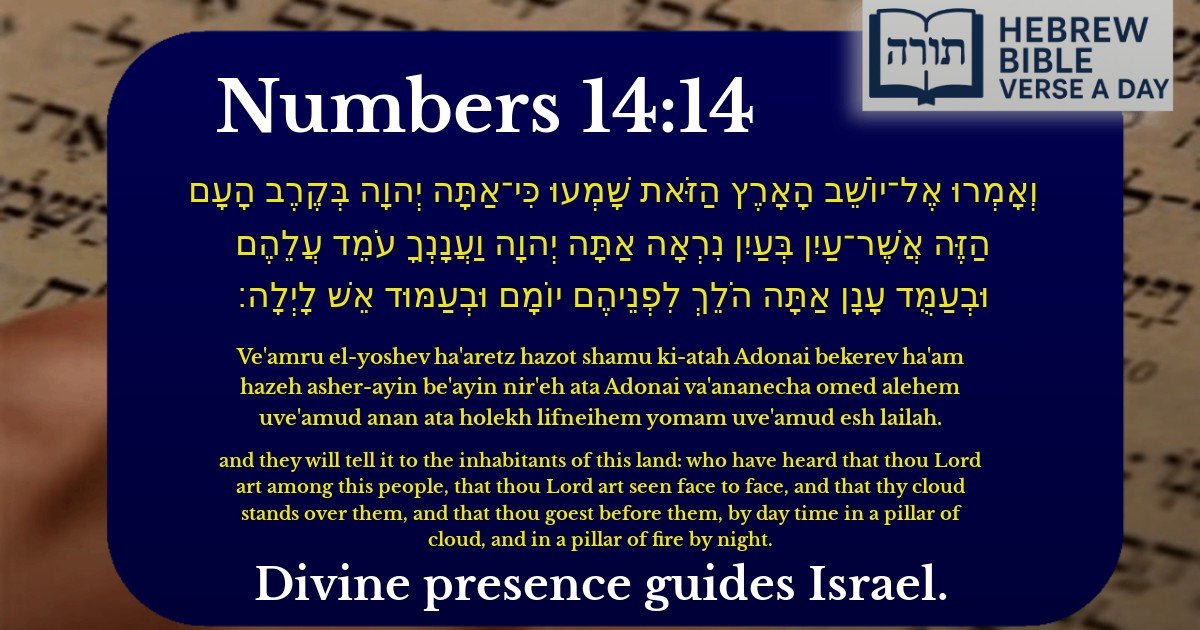
וְאָמְרוּ אֶל־יוֹשֵׁב הָאָרֶץ הַזֹּאת שָׁמְעוּ כִּי־אַתָּה יְהוָה בְּקֶרֶב הָעָם הַזֶּה אֲשֶׁר־עַיִן בְּעַיִן נִרְאָה אַתָּה יְהוָה וַעֲנָנְךָ עֹמֵד עֲלֵהֶם וּבְעַמֻּד עָנָן אַתָּה הֹלֵךְ לִפְנֵיהֶם יוֹמָם וּבְעַמּוּד אֵשׁ לָיְלָה׃
English Translation
and they will tell it to the inhabitants of this land: who have heard that thou Lord art among this people, that thou Lord art seen face to face, and that thy cloud stands over them, and that thou goest before them, by day time in a pillar of cloud, and in a pillar of fire by night.
Transliteration
Ve'amru el-yoshev ha'aretz hazot shamu ki-atah Adonai bekerev ha'am hazeh asher-ayin be'ayin nir'eh ata Adonai va'ananecha omed alehem uve'amud anan ata holekh lifneihem yomam uve'amud esh lailah.
Hebrew Leining Text
וְאָמְר֗וּ אֶל־יוֹשֵׁב֮ הָאָ֣רֶץ הַזֹּאת֒ שָֽׁמְעוּ֙ כִּֽי־אַתָּ֣ה יְהֹוָ֔ה בְּקֶ֖רֶב הָעָ֣ם הַזֶּ֑ה אֲשֶׁר־עַ֨יִן בְּעַ֜יִן נִרְאָ֣ה ׀ אַתָּ֣ה יְהֹוָ֗ה וַעֲנָֽנְךָ֙ עֹמֵ֣ד עֲלֵהֶ֔ם וּבְעַמֻּ֣ד עָנָ֗ן אַתָּ֨ה הֹלֵ֤ךְ לִפְנֵיהֶם֙ יוֹמָ֔ם וּבְעַמּ֥וּד אֵ֖שׁ לָֽיְלָה׃
🎵 Listen to leining
Parasha Commentary
📚 Talmud Citations
This verse is not quoted in the Talmud.
Context in the Torah
This verse appears in Bamidbar (Numbers) 14:14, where Moshe pleads with Hashem not to destroy Bnei Yisrael after the sin of the spies. Moshe argues that the nations of Canaan will hear of Hashem's miraculous presence among the Jewish people and interpret their destruction as a failure of Hashem's power.
Hashem's Visible Presence
The phrase "asher ayin b'ayin nir'ah atah Hashem" ("that You, Hashem, are seen face to face") is interpreted by Rashi as referring to the intimate and direct relationship between Hashem and Bnei Yisrael, particularly through the Ananei HaKavod (Clouds of Glory) and the Amud HaEsh (Pillar of Fire). The Ramban elaborates that this visibility was unique to the generation of the wilderness, where Hashem's presence was manifest in a way unparalleled in later generations.
The Pillars of Cloud and Fire
Moshe's Argument
Moshe's plea emphasizes that the nations would perceive Bnei Yisrael's destruction as a reflection on Hashem's ability to protect them (Ibn Ezra). The Ohr HaChaim notes that Moshe frames this as a Chillul Hashem (desecration of Hashem's name), as the nations would doubt Hashem's power if His people were wiped out.
Theological Implications
The Malbim highlights that this verse underscores the principle of Kiddush Hashem (sanctification of Hashem's name) through the visible miracles of the wilderness. The presence of the Anan and Esh was not merely for Bnei Yisrael's benefit but also to proclaim Hashem's sovereignty to the world.