

Join Our Newsletter To Be Informed When New Videos Are Posted
Hebrew Text
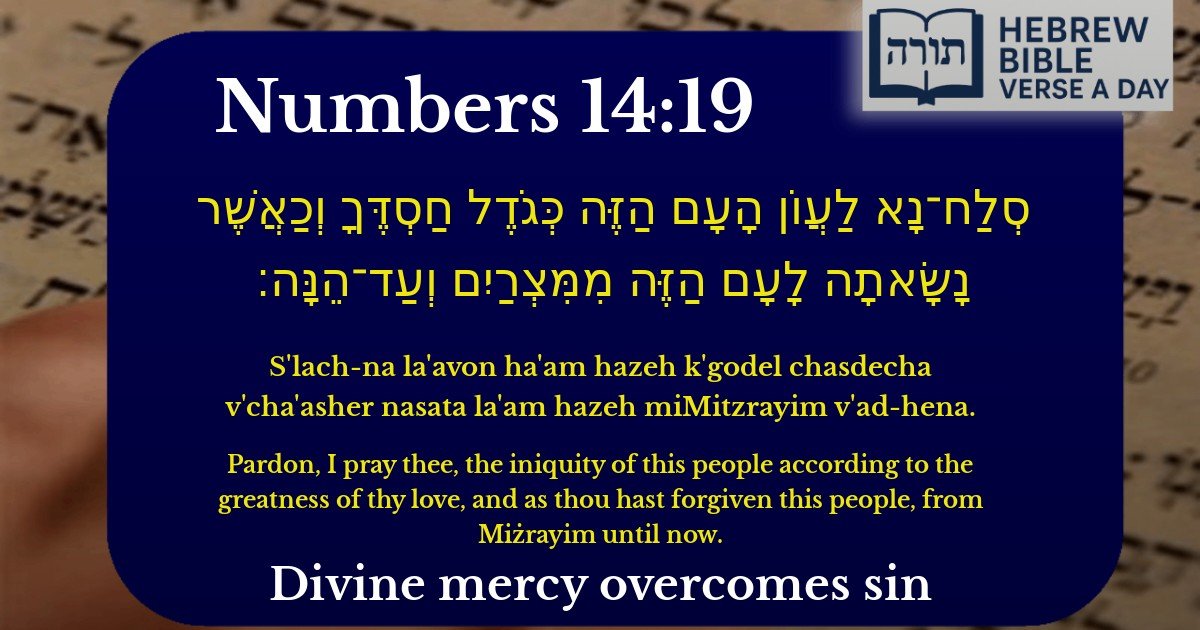
סְלַח־נָא לַעֲוֺן הָעָם הַזֶּה כְּגֹדֶל חַסְדֶּךָ וְכַאֲשֶׁר נָשָׂאתָה לָעָם הַזֶּה מִמִּצְרַיִם וְעַד־הֵנָּה׃
English Translation
Pardon, I pray thee, the iniquity of this people according to the greatness of thy love, and as thou hast forgiven this people, from Miżrayim until now.
Transliteration
S'lach-na la'avon ha'am hazeh k'godel chasdecha v'cha'asher nasata la'am hazeh miMitzrayim v'ad-hena.
Hebrew Leining Text
סְלַֽח־נָ֗א לַעֲוֺ֛ן הָעָ֥ם הַזֶּ֖ה כְּגֹ֣דֶל חַסְדֶּ֑ךָ וְכַאֲשֶׁ֤ר נָשָׂ֙אתָה֙ לָעָ֣ם הַזֶּ֔ה מִמִּצְרַ֖יִם וְעַד־הֵֽנָּה׃
🎵 Listen to leining
Parasha Commentary
📚 Talmud Citations
This verse is quoted in the Talmud.
📖 Yoma 36b
The verse is referenced in the context of discussing the power of repentance and God's forgiveness, particularly in relation to the High Priest's service on Yom Kippur.
📖 Sanhedrin 111a
The verse is cited in a discussion about God's mercy and the extent to which He forgives the sins of the Israelites, drawing a parallel to His past forgiveness.
Context of the Verse
This verse (Numbers 14:19) is part of Moshe Rabbeinu's plea to Hashem after the sin of the Meraglim (the spies), when Bnei Yisrael rejected the Land of Israel and displayed a lack of faith. Moshe intercedes on their behalf, asking for divine forgiveness.
Key Themes in Moshe's Prayer
Midrashic Insights
The Midrash Tanchuma (Shelach 10) highlights that Moshe's plea mirrors the Thirteen Attributes of Mercy (Exodus 34:6-7). By invoking Hashem's past forgiveness "from Egypt until now," Moshe emphasizes that divine compassion has consistently outweighed judgment.
Halachic and Philosophical Implications
The Rambam (Hilchot Teshuvah 2:1) derives from this verse that sincere repentance, coupled with divine mercy, can achieve full atonement even for severe sins. Moshe's prayer serves as a model for how leaders—and all Jews—should advocate for others before Hashem.
Linguistic Nuances
The phrase "מִמִּצְרַיִם וְעַד־הֵנָּה" (from Egypt until now) is interpreted by the Kli Yakar as a reminder that Bnei Yisrael had already tested Hashem's patience multiple times (e.g., at the Red Sea, with the manna), yet He continued to sustain them—proof that His mercy endures.